
FAQ · Walsall, Sutton Coldfield & nearby
Insulation and mould questions, answered honestly.
These are the questions I'm asked most on home visits across Walsall and Sutton Coldfield. If yours isn't here, ring or WhatsApp me on 07763 789272.
On this page 10 sections
How much does internal wall insulation cost in Walsall and Sutton Coldfield?
With aPlastering, internal wall insulation starts from about £2,000 per wall: PIR systems around £2,000–£3,000 over 3–4 days, breathable systems around £3,000 over about 5 days. Bay window insulation starts from about £1,700 per bay. Exact prices follow a free home visit and moisture modelling of your wall.
The visit and quotes
Is the home visit free?
Yes. The home visit and the written proposal are free, with no obligation. I come to your home, listen to what's bothering you and look at the walls, damp and ventilation before suggesting anything. See how it works for the full journey.
Why can't you give me a price over the phone?
Because the right system depends on your wall. Construction, condition, damp, ventilation and the space you can spare all change what's safe and what it costs. A phone price would be a guess, and I'd rather give you one figure you can rely on after I've seen the room.
What will the written proposal include?
A clear quote showing the system, thickness, preparation and finish, plus my public liability insurance details, a pre-start information guide and the guarantee that applies. The length of the guarantee depends on the service and is set out in the quote. Any ventilation I recommend is listed too.
Internal wall insulation
What is internal wall insulation?
It's an insulating layer fixed to the inside face of an external wall, then plastered so the room looks normal again. It slows heat escaping through the wall and makes the surface you touch warmer, so the room heats up quicker and holds warmth for longer. More on the internal wall insulation page.
What's the difference between breathable and PIR insulation?
Breathable (vapour-open) systems such as wood fibre, cork and lime let water vapour move through, which helps an old solid wall keep drying out. PIR is vapour-closed and insulates well for its thickness, which helps where space is tight. For traditional solid walls I usually prefer breathable, but moisture modelling for your wall decides.
How much room space will I lose?
It depends on the system. PIR gives more insulation per millimetre, so it's thinner for the same performance. Breathable boards need more thickness. In my case study bedroom, the main wall had 40mm wood fibre plus lime base and finish coats. I'll show you the exact build-up for your wall before you decide.
What happens to my sockets, radiators and skirting?
They come off and go back on the new wall surface. If you want me to manage the whole job, I organise an electrician for sockets and a plumber for radiators, and the original skirting can often be refitted. It's all listed in the quote, so there are no surprises once work starts.
Bay windows
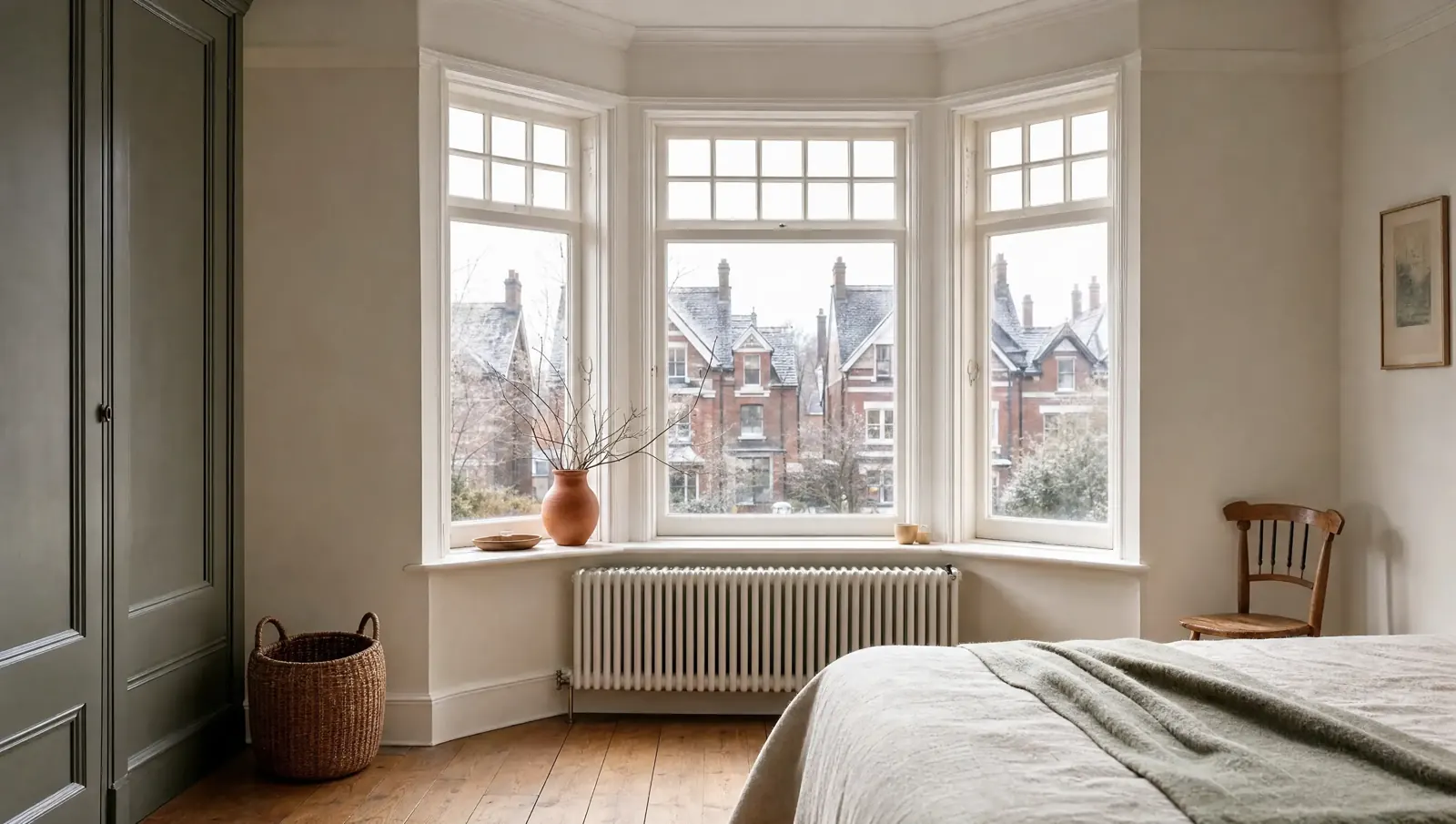
Why is my bay window so cold?
In many 1930s bays, the wall under the window is a lightweight timber frame with tiles outside and a thin plaster lining inside, sometimes only around half an inch thick, with little or no insulation. Once that lining comes off, you can often feel the wind coming through. The guide to a cold bay window explains more.
How much does bay window insulation cost?
Bay window insulation starts from about £1,700 per bay and usually takes 3–5 days. The final price depends on the size of the bay, its construction and the system chosen, so I confirm it in writing after the free home visit. See bay window insulation.
Will my bedroom look the same afterwards?
It will look like a normal, freshly plastered room, ready for you to decorate. Reveals, corners and window boards are finished neatly, and skirting is refitted. The wall sits slightly further into the room by the thickness of the insulation, which I'll show you before you commit.
Condensation and mould
Why does black mould keep coming back after I clean it?
Because cleaning, bleach and anti-mould paint treat the surface, not the cause. Mould returns where a wall stays cold and damp, usually a mix of cold surfaces and moist air with nowhere to go. Warming the wall and improving ventilation tackles those conditions. See condensation and mould.
Will insulation stop condensation and mould?
It can help a lot where cold surfaces are the main cause, because a warmer wall is less likely to reach the point where moisture condenses. It works best alongside good ventilation. If the damp comes from a leak, gutter or failed pointing, that needs repairing first, and I'll tell you if that's the case.
Do you fit extractor fans and trickle vents?
I don't fit them myself. Where ventilation needs improving, I recommend what's needed, such as trickle vents, extractor fans, door undercuts or heat recovery, and organise trusted trades to install it as part of the project, so you still have one person coordinating everything.
I'm a landlord. Does Awaab's Law apply to me?
Awaab's Law currently applies to social landlords in England. Its extension to private rented homes is not yet in force. Private landlords still have existing duties on damp and mould under the Housing Health and Safety Rating System and the Homes (Fitness for Human Habitation) Act 2018, so recurring mould is worth dealing with properly.
Costs and grants
How much does internal wall insulation cost?
Internal wall insulation starts from about £2,000 per wall. PIR systems are around £2,000–£3,000 and take 3–4 days; breathable systems are around £3,000 and take about 5 days. Your exact price comes in writing after the free home visit, once I know the wall and the details involved.
Will insulation lower my heating bills?
It reduces heat loss through the insulated wall, and in my case study the calculated loss through the main wall fell by about 71%. That is not the same as your total bill, which depends on the whole house and how you heat it. Most customers find the bigger change is comfort: a room that warms up and stays warm.
Can I get a grant such as ECO4?
ECO4 grants exist for eligible households, usually based on income, benefits and the home's energy rating, and it's worth checking whether you qualify. I work privately for homeowners who want the wall assessed, designed and finished carefully, and I'm happy to talk through the difference honestly.
During the work
Do I need to move out while you work?
No. I work room by room wherever possible, so the rest of your home stays in normal use. The room being insulated will be out of action for the job and the drying time, and I'll tell you both in advance.
How messy is it?
Stripping plaster and insulating a wall is dusty work, so we protect floors, furniture and doorways before anything starts and tidy the work area every day. The aim is to keep the mess in the room we're working in, not spread through your home.
Do you decorate the room afterwards?
No, I hand the room back ready to decorate. At handover I'll explain how long to leave the walls and which paints suit the new finish, because a breathable lime surface needs a breathable paint to keep working as intended.
Spray cork
What is spray cork?
A coating made from cork particles and binders, sprayed onto a prepared surface to give a continuous, textured finish. It's used as an external render finish, a roof coating and, in trowelled form, as an internal cork plaster. I'm a SprayCork UK approved applicator. See spray cork.
Can cork go over my existing render?
Often, if the render underneath is sound. Loose, hollow or badly cracked areas need repairing or removing first, and cracks need their cause assessing. I check the surface before recommending anything and explain which areas can stay and what needs repair.
Lime and plastering
Why use lime plaster on an older house?
Lime lets moisture move through and evaporate, which suits solid brick and stone walls that were built to dry out. Gypsum and cement-based finishes can hold moisture against an old wall. I trained in lime and thermal upgrading at Ty-Mawr. See lime plastering.
Do you still do ordinary plastering and skimming?
Yes. Plastering is where I started, and I still skim walls and ceilings, repair damaged plaster, plaster over Artex and fit plasterboard. For a modern room, standard gypsum plaster is often exactly right; for an older solid wall, I may suggest lime.
Can you keep the original plaster in a period home?
Where it's sound, often yes. I check what can be kept, what needs local repair and what has to come off. Keeping sound historic plaster is usually better for the building and its character, and it can reduce the cost of the job.
Soundproofing
Can you soundproof a wall between me and my neighbours?
Yes, with an independent wall lining or acoustic build-up designed for the noise you're dealing with. It's a proper construction job, not a thin layer of material, so it takes up some room space. See wall soundproofing.
How much does soundproofing cost?
It's a significant investment. As an industry reference, the specialist firm Quietco says around 80% of its domestic projects fall between £5,000 and £20,000. I price each job after a free home visit, because the build-up depends on the type of noise, the wall and the space available.
Areas
Which areas do you cover?
I'm based in Walsall and cover Sutton Coldfield, Great Barr, Aldridge, Solihull, Lichfield, Cannock, Wolverhampton and Birmingham, generally within about an hour to an hour and a half. If you're just outside that, ring and ask; I'd rather tell you honestly whether I can fit you in than say no straight away. See all areas.
Do you work in Sutton Coldfield?
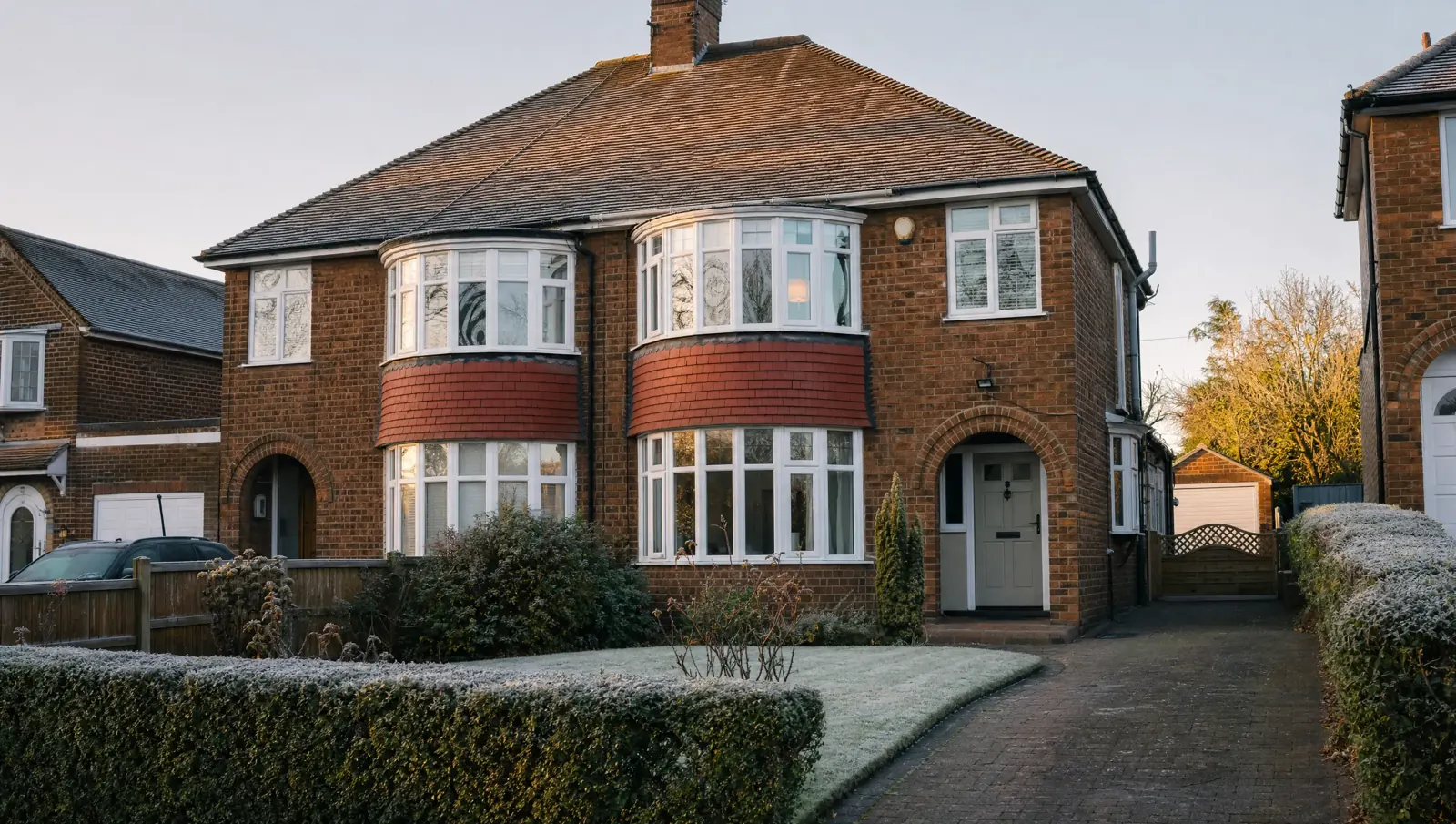
Yes, a lot. Sutton Coldfield has many 1930s semis with bay windows and solid walls, which is exactly the kind of house I insulate most. The free home visit covers Sutton Coldfield the same as Walsall.
Your questions, answered.
Anything else, ring me on 07763 789272. Happy to talk it through.
Get a free quoteIs the home visit free?
Yes. The home visit and the written proposal are free, with no obligation. I come to your home, listen to what's bothering you and look at the walls, damp and ventilation before suggesting anything. See how it works for the full journey.
What is internal wall insulation?
It's an insulating layer fixed to the inside face of an external wall, then plastered so the room looks normal again. It slows heat escaping through the wall and makes the surface you touch warmer, so the room heats up quicker and holds warmth for longer. More on the internal wall insulation page.
What's the difference between breathable and PIR insulation?
Breathable (vapour-open) systems such as wood fibre, cork and lime let water vapour move through, which helps an old solid wall keep drying out. PIR is vapour-closed and insulates well for its thickness, which helps where space is tight. For traditional solid walls I usually prefer breathable, but moisture modelling for your wall decides.
Why is my bay window so cold?
In many 1930s bays, the wall under the window is a lightweight timber frame with tiles outside and a thin plaster lining inside, sometimes only around half an inch thick, with little or no insulation. Once that lining comes off, you can often feel the wind coming through. The guide to a cold bay window explains more.
How much does bay window insulation cost?
Bay window insulation starts from about £1,700 per bay and usually takes 3–5 days. The final price depends on the size of the bay, its construction and the system chosen, so I confirm it in writing after the free home visit. See bay window insulation.
Why does black mould keep coming back after I clean it?
Because cleaning, bleach and anti-mould paint treat the surface, not the cause. Mould returns where a wall stays cold and damp, usually a mix of cold surfaces and moist air with nowhere to go. Warming the wall and improving ventilation tackles those conditions. See condensation and mould.
Will insulation stop condensation and mould?
It can help a lot where cold surfaces are the main cause, because a warmer wall is less likely to reach the point where moisture condenses. It works best alongside good ventilation. If the damp comes from a leak, gutter or failed pointing, that needs repairing first, and I'll tell you if that's the case.
How much does internal wall insulation cost?
Internal wall insulation starts from about £2,000 per wall. PIR systems are around £2,000–£3,000 and take 3–4 days; breathable systems are around £3,000 and take about 5 days. Your exact price comes in writing after the free home visit, once I know the wall and the details involved.
Do I need to move out while you work?
No. I work room by room wherever possible, so the rest of your home stays in normal use. The room being insulated will be out of action for the job and the drying time, and I'll tell you both in advance.
Which areas do you cover?
I'm based in Walsall and cover Sutton Coldfield, Great Barr, Aldridge, Solihull, Lichfield, Cannock, Wolverhampton and Birmingham, generally within about an hour to an hour and a half. If you're just outside that, ring and ask; I'd rather tell you honestly whether I can fit you in than say no straight away. See all areas.
Let's sort that cold room out.
Free, no-obligation quote. I'll come and look at the room, tell you honestly what's going on and give you a written quotation.
- TodayI read your message and call or WhatsApp you back.
- This weekA free home visit at a time that suits you.
- Within daysA clear written quote. No pressure, no chasing.

Wojtek, Retrofit AssessorUsually replies the same day
Tell me what's going on. It takes about a minute.
Get a free quote 07763 789272 Or send photos on WhatsApp