Heat loss
Why does my house feel cold with the heating on?
A house feels cold with the heating on when the walls, floors and windows stay cold even though the air has warmed up. Your body loses heat to those cold surfaces and to draughts, so the thermostat can read 20°C while you still reach for a jumper.

Wojtek Pankowski, Retrofit AssessorUpdated 1 October 2026 · 6 min read
On this page 9 sections
- Why does my house feel cold even with the heating on?
- What actually makes a room feel warm?
- Why are the walls so cold in older houses?
- Why are my feet always cold?
- How can I find the cold spots in my house?
- Do damp walls make a house colder?
- Why doesn't turning the thermostat up help?
- What can I do today to make my house feel warmer?
- What actually makes a cold house feel warm?
Why does my house feel cold even with the heating on?
Because comfort depends on the surfaces around you, not just the air. Uninsulated walls, cold floors and draughts pull heat from your body, so a room at 20°C can feel closer to 17°C or 18°C. Turning the heating up warms the air, but the walls stay cold until the building loses heat more slowly.
Why does my house feel cold even with the heating on?
Because the thermostat measures the air, but your body also feels the walls, the floor and any moving air. If those are cold, you feel cold, whatever the number on the wall says.
This is one of the most common things I hear from homeowners in Sutton Coldfield, especially in older semis and terraces. The boiler is fine, the radiators get hot, and the house still never feels properly comfortable. In most cases nothing is broken. The building is simply losing heat faster than the heating can make the surfaces warm.
What actually makes a room feel warm?
Four things together: the air temperature, the temperature of the surfaces around you, how much the air is moving, and to a lesser degree how humid it is. The first two matter most.
A useful rule of thumb is that the temperature you feel is roughly halfway between the air and the average surface temperature around you. That is why the same thermostat setting can feel very different in two rooms.
| Room | Air | Walls | Feels roughly like |
|---|---|---|---|
| Uninsulated solid brick, 0°C outside | 20°C | about 14.5°C | 17°C to 18°C |
| Same wall after internal insulation | 20°C | about 18.4°C | about 19°C |
| Uninsulated, thermostat turned up | 22°C | about 16°C | about 19°C, and costs more |
The wall temperatures come from the calculations in my 1930s bedroom case study. The feel figures are simplified, but the pattern is real: warm walls give comfort that hot air alone cannot.
Why are the walls so cold in older houses?
Because many older walls let heat through several times faster than modern ones. How fast a wall loses heat is measured by its U-value; the lower the number, the better.
- 225mm solid brick, uninsulated: about 2.1 W/m²K.
- Unfilled cavity wall: about 1.5.
- Filled cavity wall: about 0.5 to 0.6.
- A new-build wall today: around 0.18 to 0.26.
So an old solid wall can lose around ten times as much heat as a new one. Heat flows through it all winter, and its inside surface never gets properly warm.
Worth knowingYou can often tell a solid wall from a cavity wall by the brick pattern outside. If some bricks are laid end-on, showing their short face, the wall is probably solid. If every brick shows its long side, it is probably a cavity wall. Measuring the wall thickness at a window or door helps too: about 225mm usually means solid brick.
Why are my feet always cold?
Because the coldest air in a room sinks to the floor. Warm air rises from the radiator to the ceiling, while air cooled against cold walls and windows slides down and spreads across the floor as a slow draught.
Older houses add two more causes. Suspended timber floors have a ventilated void underneath, and gaps between the boards and under the skirting let cold air straight in. Many people fill the gaps at the skirting with a flexible sealant and put down a rug, which is cheap and often makes a noticeable difference. Never block the air bricks outside, though: the void needs ventilation to keep the joists dry.
How can I find the cold spots in my house?
Walk round on a cold morning with the heating on and use your hands, or better, a cheap infrared thermometer. The surfaces that read coldest are where your heat is going and where condensation will show first.
- External walls compared with internal walls in the same room. A gap of 4°C or more is a sign of high heat loss.
- Corners where two external walls meet, which are always colder than the middle of the wall.
- Window reveals and the panel under a bay window.
- Behind wardrobes and beds on outside walls.
- Skirting boards and floor edges, where draughts come in.
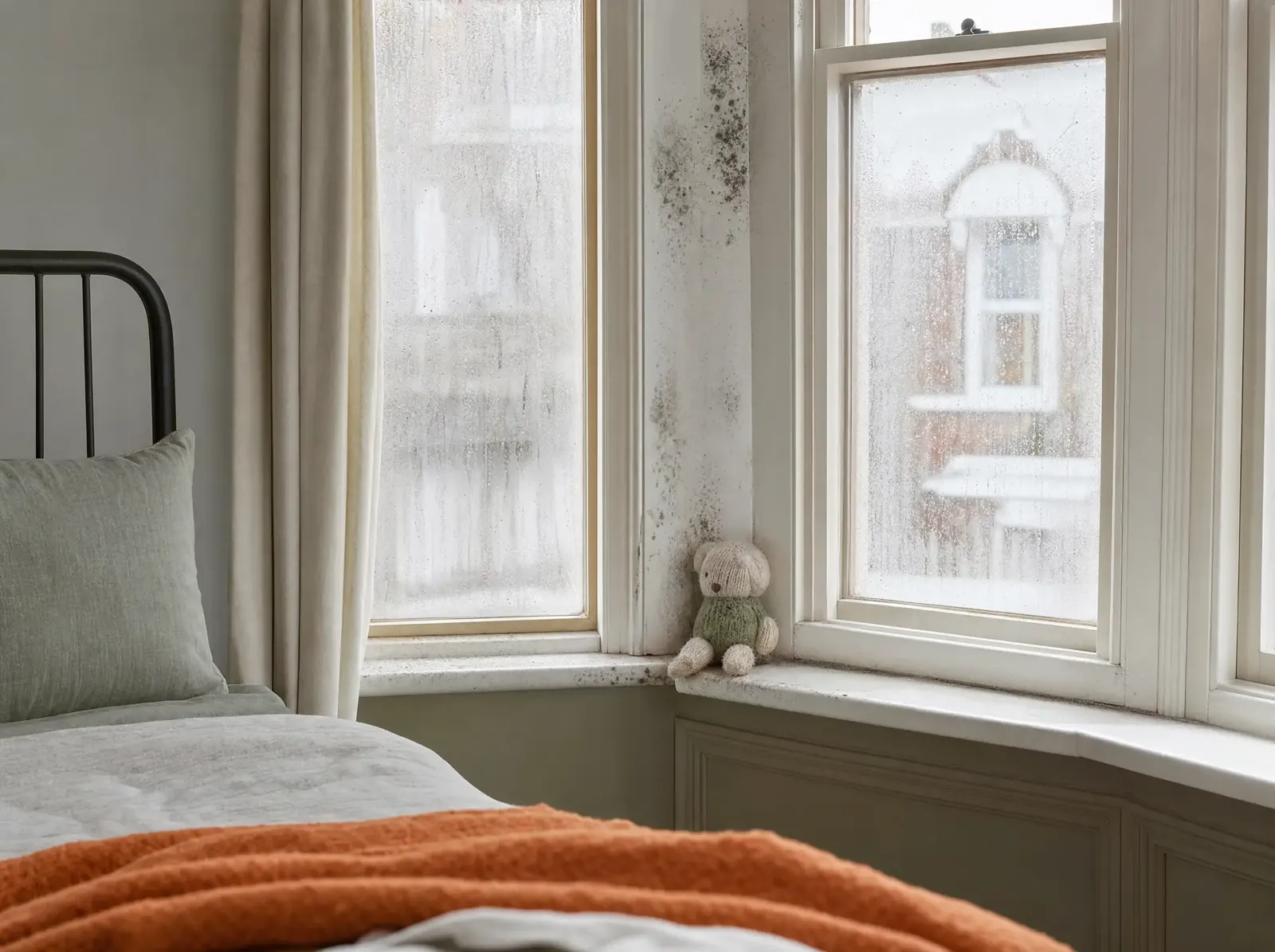
Write the readings down room by room. You will quickly see a pattern, and if you later get a survey it gives the assessor a useful head start. Black specks or a musty smell in any of those places mean moisture is already settling there, and my guide on stopping mould is worth reading next.
Do damp walls make a house colder?
Yes. Water conducts heat far better than dry brick or plaster, so a wall that is wet from a leaking gutter, failed pointing or trapped moisture loses more heat than the same wall when dry.
This is one reason I always look for water getting in before recommending insulation, and why the insulation system has to suit how the wall handles moisture. Keeping a solid wall dry is part of keeping it warm.
Walk round the outside after heavy rain. Overflowing gutters, water running down the brickwork, cracked render and open mortar joints are all worth fixing before winter, whatever else you plan to do.
Why doesn't turning the thermostat up help?
It warms the air, but it barely changes the walls, and it makes the house lose heat faster. Heat loss rises with the difference between inside and outside, so every extra degree costs more than the last one.
The position of the thermostat can also mislead you. One in a warm hallway or near a radiator switches the boiler off while the bedrooms are still cold. If that sounds familiar, read why one room is colder than the rest, and for the cost side, why heating bills are so high.
What can I do today to make my house feel warmer?
Start with draughts and surfaces, because those are what you feel. These are worth doing in any home:
- Draught-proof doors, windows, the loft hatch and gaps at skirting boards.
- Close curtains at dusk and open them fully in the morning.
- Move sofas and beds a little away from cold external walls.
- Keep radiators clear of furniture and long curtains.
- Check the loft insulation is around 270mm deep.
- Keep background ventilation running; very damp air makes the house harder to heat and encourages mould.
What actually makes a cold house feel warm?
Warmer surfaces. When the walls lose heat more slowly, their inside faces rise closer to the room temperature, and the house feels warmer at the same setting or even a lower one.
For solid-walled homes that usually means internal wall insulation, room by room, starting where it is coldest. I design each system around the wall after a free home visit and moisture modelling, choosing breathable materials such as wood fibre or slimmer boards such as PIR depending on what the wall needs. If your home is Victorian or older, my guide to insulating a Victorian home covers the extra care those walls need.
Common questions
What temperature should my house be?
Around 18°C to 21°C suits most people, with bedrooms often a little cooler and living rooms a little warmer. Older people and babies may need the warmer end. If you need to set the thermostat above 21°C to feel comfortable, that is usually a sign the walls or floors are cold, or there are draughts.
Why does my house get cold so quickly when the heating goes off?
Because the heat escapes through the walls, roof, windows and gaps faster than the building can hold it. Uninsulated solid walls cool quickly overnight, so rooms feel chilly again by morning. Insulating the walls slows that loss, which is why people often say an insulated room holds its warmth for longer after the heating switches off.
Is my 1930s house solid wall or cavity?
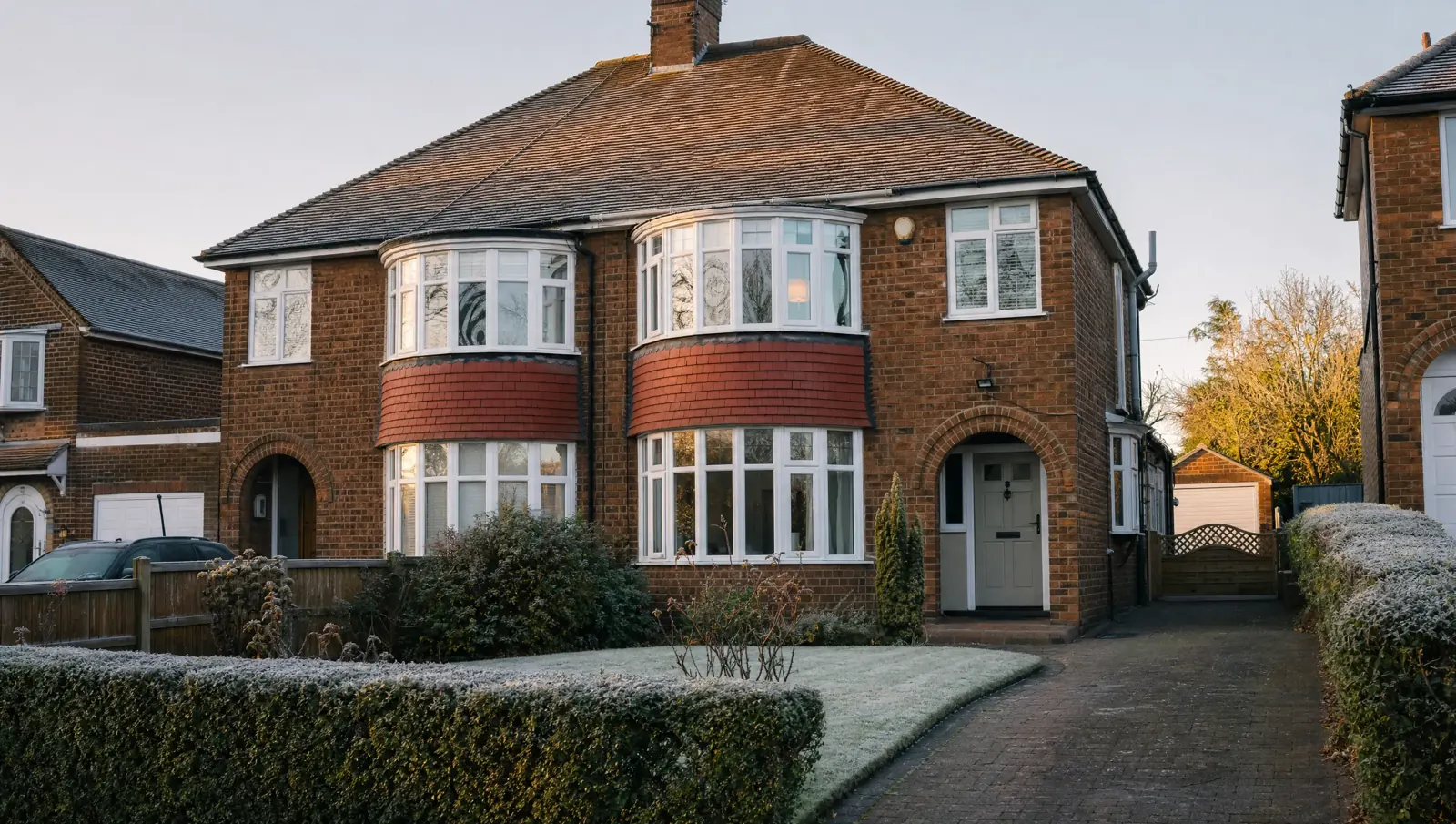
It can be either. Many 1930s semis around Sutton Coldfield and Great Barr have cavity walls, but some have solid brick, and bays are often lightweight timber panels. Check the brick pattern outside and the wall thickness at a window. Your EPC also lists the wall type, though it is not always right, so a survey is the reliable answer.
Will new double glazing make my house warmer?
It helps if the current windows are single glazed, draughty or failed, and it cuts cold down-draughts near the glass. But walls usually cover far more area than windows, so in a solid-walled house new windows alone rarely make it feel properly warm. Think about windows and walls together, including how the new frames meet the insulation at the reveals.
Can a house be too airtight after insulating?
It can, which is why insulation and ventilation are planned together. As you cut draughts and add insulation, you also remove some of the accidental fresh air. Moist air then needs a planned way out: trickle vents, working extractor fans, door undercuts or heat recovery. I recommend what is needed and organise it with trusted trades.