Cold rooms
Why is my bay window so cold?
A bay window is usually cold because it is built differently from the rest of the house: a thin, often uninsulated panel under the window, three exposed sides, a lot of glass and a small roof above. Turning the heating up warms the air, but it cannot stop those surfaces losing heat to the outside.

Wojtek Pankowski, Retrofit AssessorUpdated 1 October 2026 · 7 min read
On this page 8 sections
- Why is my bay window colder than the rest of the room?
- What is actually under the window?
- How much heat does a bay window lose?
- Why does the whole room feel cold, not just the bay?
- Why does condensation and mould start in the bay?
- What can I do about a cold bay window myself?
- How is a cold bay window properly insulated?
- When should I get a professional to look at it?
Why is my bay window so cold?
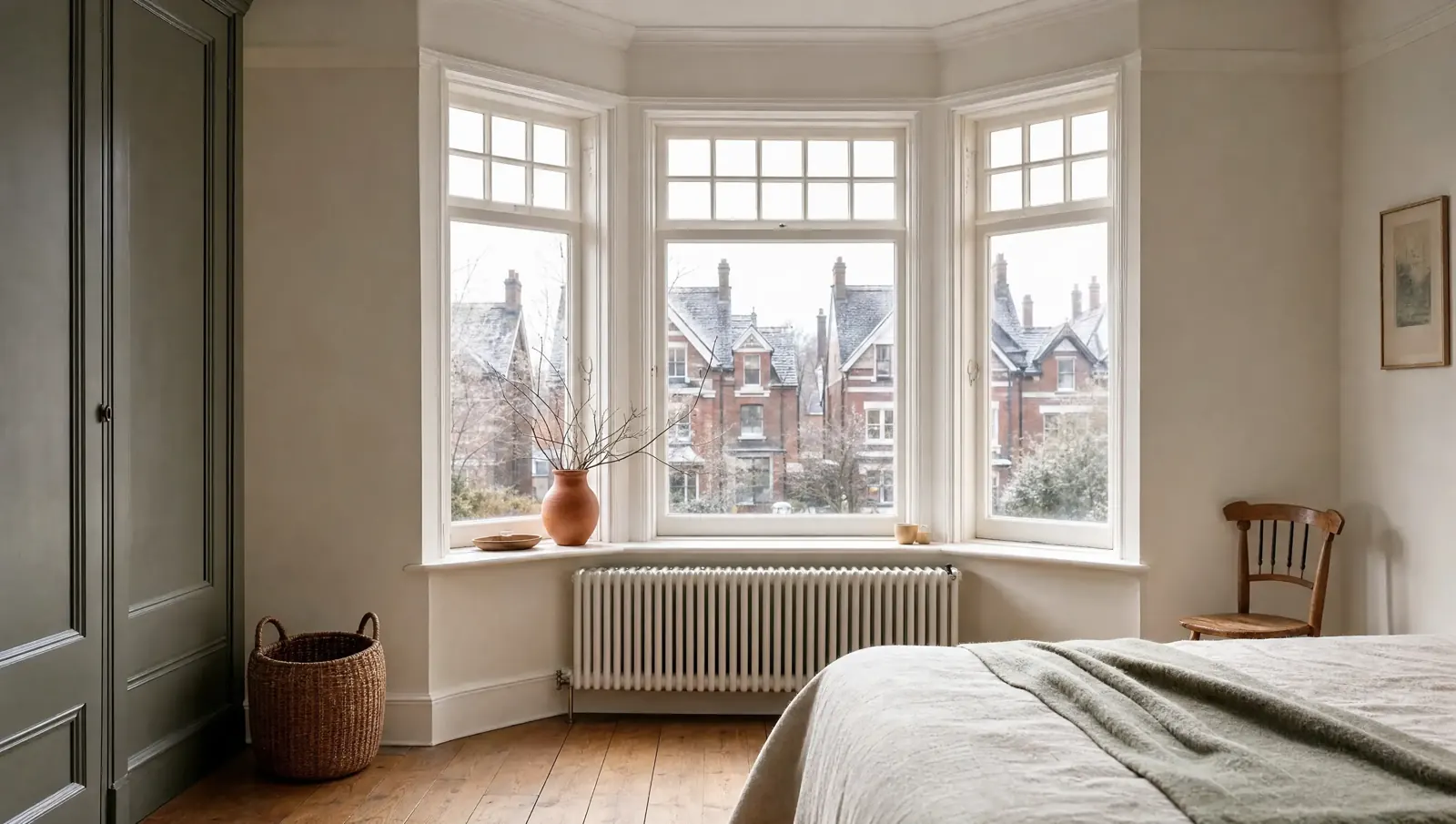
Most bay windows lose heat far faster than the main walls. The panel under the window is often a light timber frame with tiles outside and a thin plaster lining inside, with little or no insulation. Add three exposed faces, large areas of glass and an uninsulated bay roof, and the bay becomes the coldest part of the room.
Why is my bay window colder than the rest of the room?
Your bay window is colder because it has more outside surface, thinner construction and usually less insulation than any other part of the room. Heat always takes the easiest route out, and in a bay there are several easy routes at once.
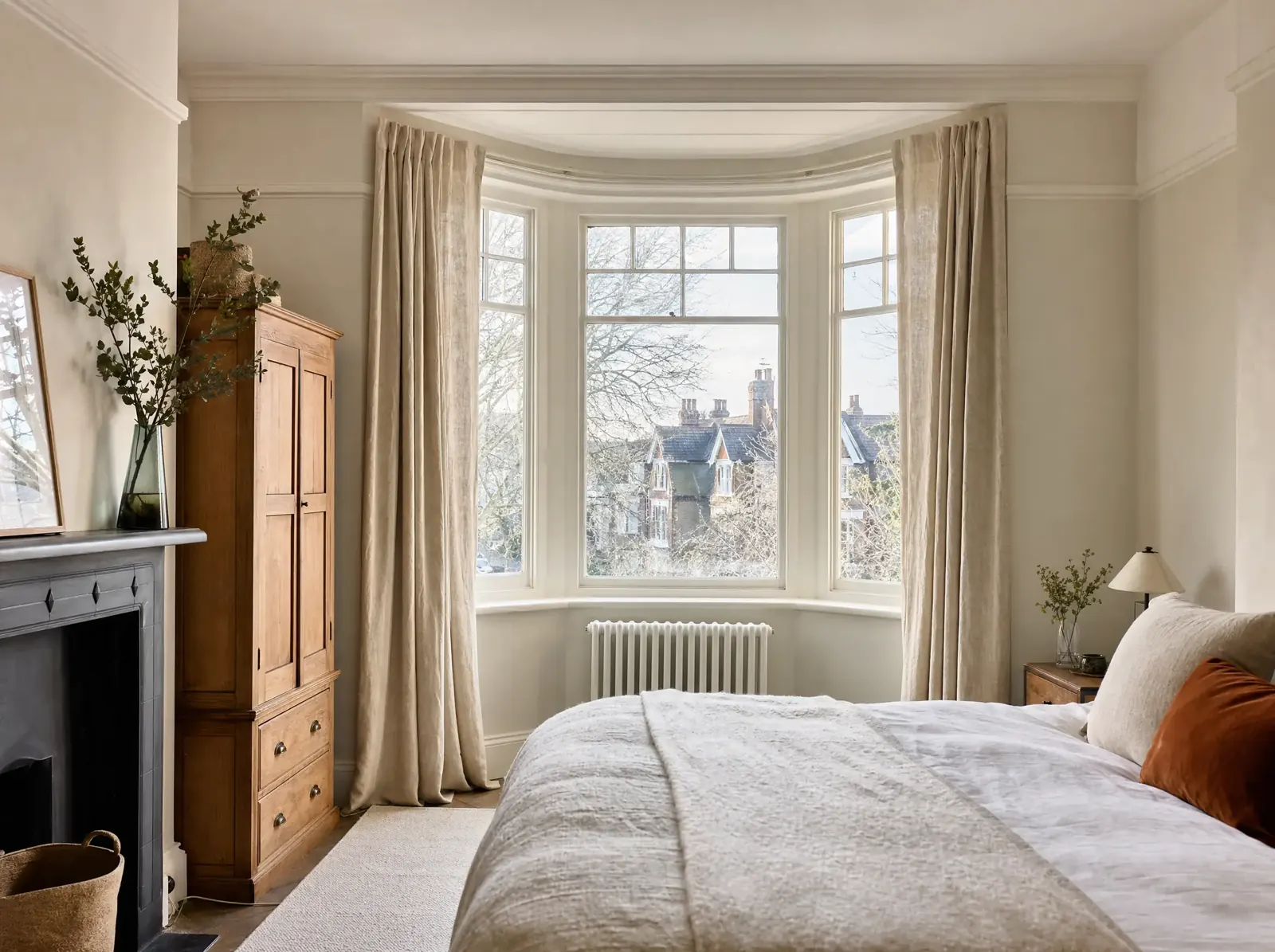
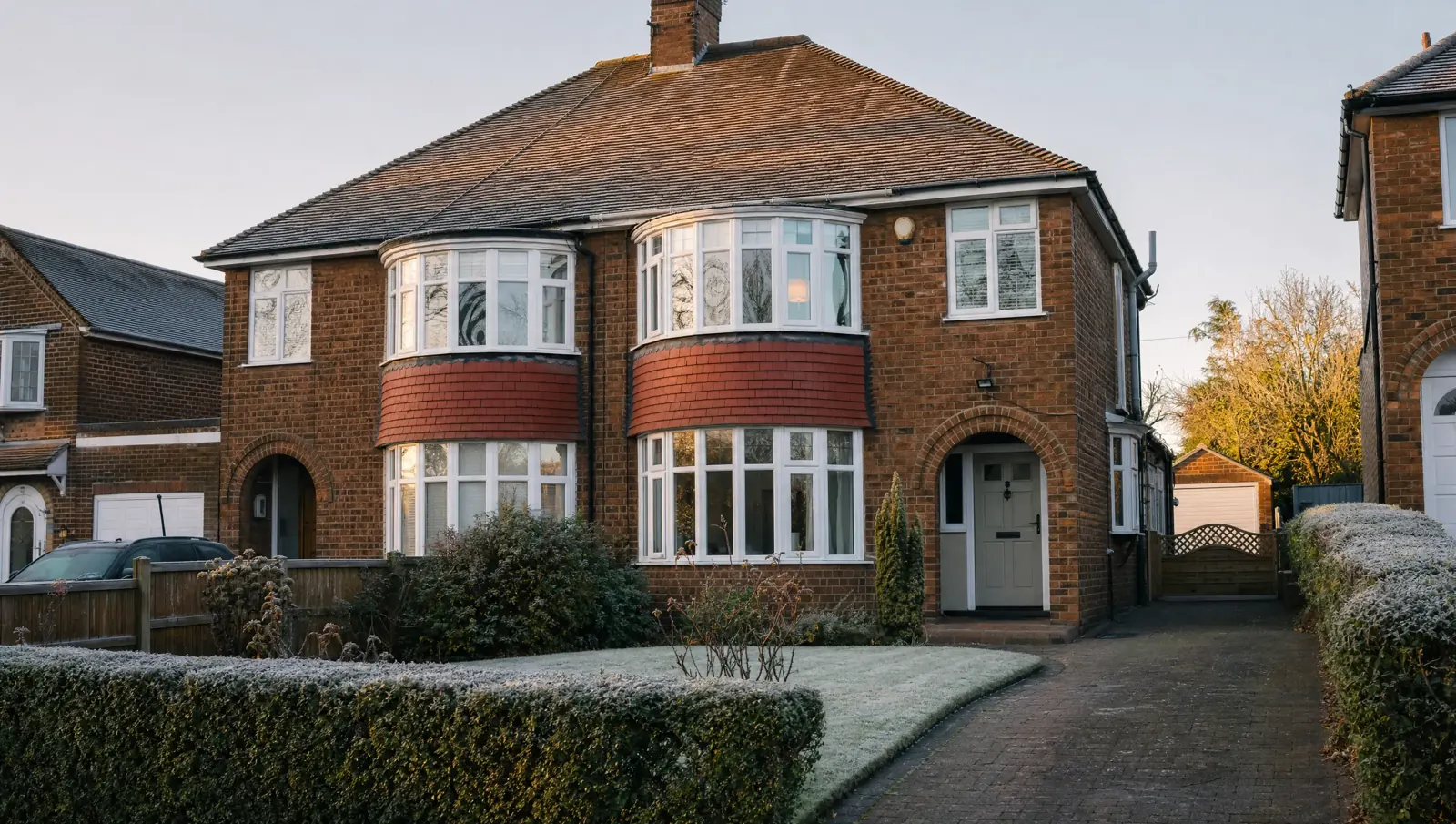
Think of the main wall of a 1930s semi as a thick coat. The bay is more like a shirt with the sleeves rolled up: it faces the weather on three sides, it is mostly glass, and the solid parts are often much thinner than they look from inside the room.
Sutton Coldfield, Great Barr and Solihull have thousands of these houses, and the cold bay bedroom is the single most common complaint I hear about them. The room is decorated, the curtains are lovely, and the bay is still freezing.
What is actually under the window?
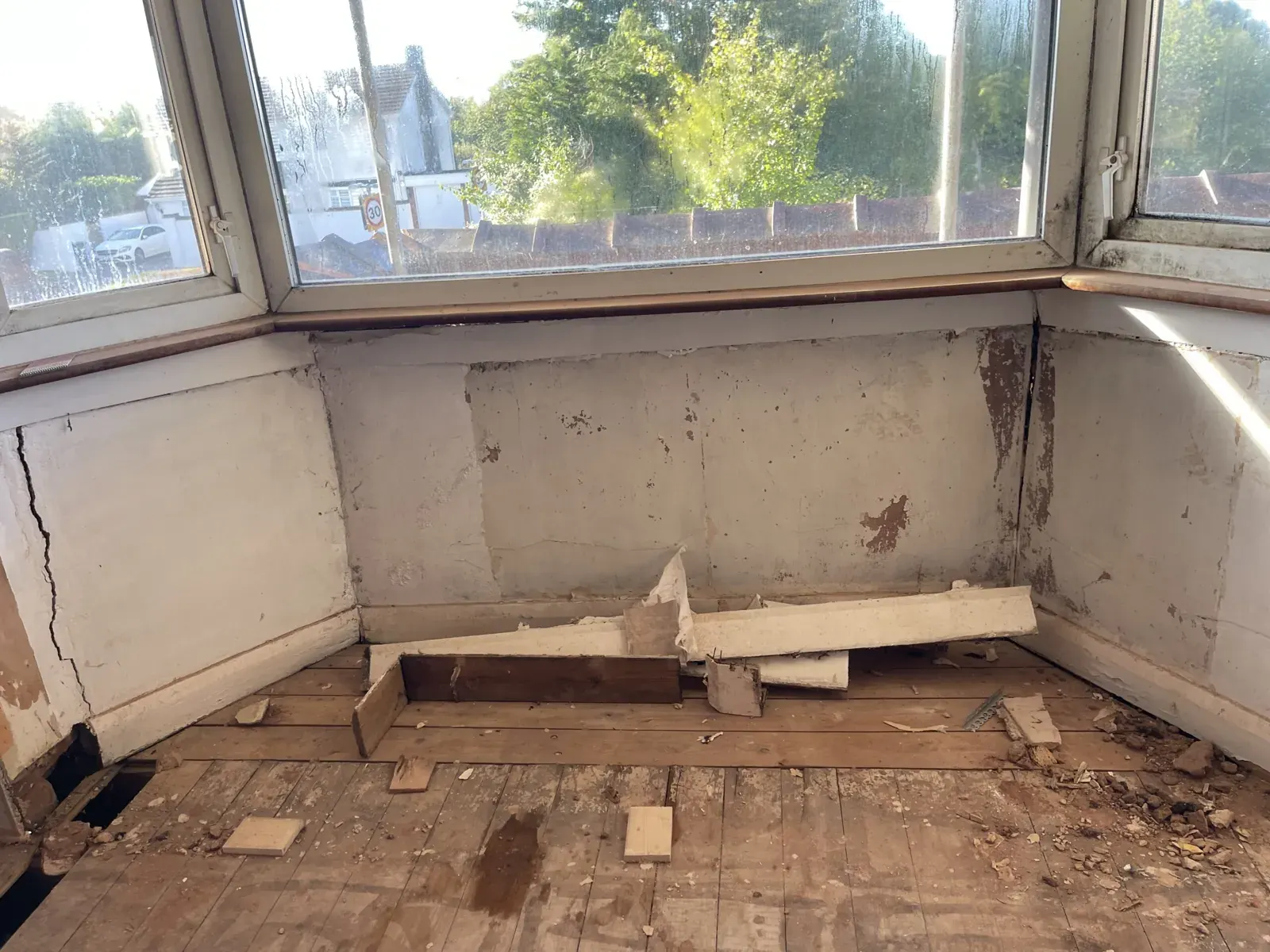
In many bays I open up, the wall under the window is not brick at all. It is a lightweight timber frame with clay tiles hung on the outside and a thin plaster or board lining on the inside, with little or nothing in between.
From inside a decorated bedroom you cannot tell. It looks like the same wall as the rest of the house. In some cases the lining is only around half an inch thick, and once it comes off you can feel the wind coming through the frame.
The usual weak points in a typical bay are:
- The panel under the window: timber frame, tiles, thin lining, often no insulation.
- The side cheeks and corners: where the bay meets the main wall, heat escapes through the junction.
- The glass: even good double glazing loses several times more heat than an insulated wall.
- The bay roof and ceiling: a small flat or pitched roof that is often left out when the loft is insulated.
- Gaps and draughts: around the window board, skirting and frame joints.
How much heat does a bay window lose?
A lot more than you would guess from its size. Heat loss through any part of a building is roughly the U-value, times the area, times the temperature difference between inside and outside. The U-value tells you how easily heat passes through; lower is better.
| Part of the room | Typical U-value (W/m²K) |
|---|---|
| Old single glazing | about 5 |
| Older double glazing | about 2.8 |
| 225mm solid brick, uninsulated | about 2.1 |
| Uninsulated timber bay panel | often similar to solid brick, worse with draughts |
| Modern double glazing | about 1.2 to 1.4 |
| A well insulated wall | about 0.3 to 0.6 |
These are typical figures, not measurements of your house. The point is the scale: on a 0°C night with the room at 20°C, every square metre of uninsulated wall at U 2.1 lets through about 42 watts. Bring the same wall down to around 0.6 and that falls to about 12 watts.
Why does the whole room feel cold, not just the bay?
Because your body loses heat to cold surfaces even when the air is warm. This is called radiant heat loss, and it is why you can feel a cold bay from the other side of the bed.
You feel temperature as a mix of the air around you and the surfaces you can see. If the air is 20°C but the bay surfaces are 12°C to 14°C, the room feels noticeably cooler than the thermostat says. On top of that, air cooled against the glass and the cold panel drops to the floor and rolls across the room as a slow, chilly draught.
That is why people turn the heating up, feel slightly better for an hour and then feel cold again. The air has warmed; the surfaces have not changed.
Why does condensation and mould start in the bay?
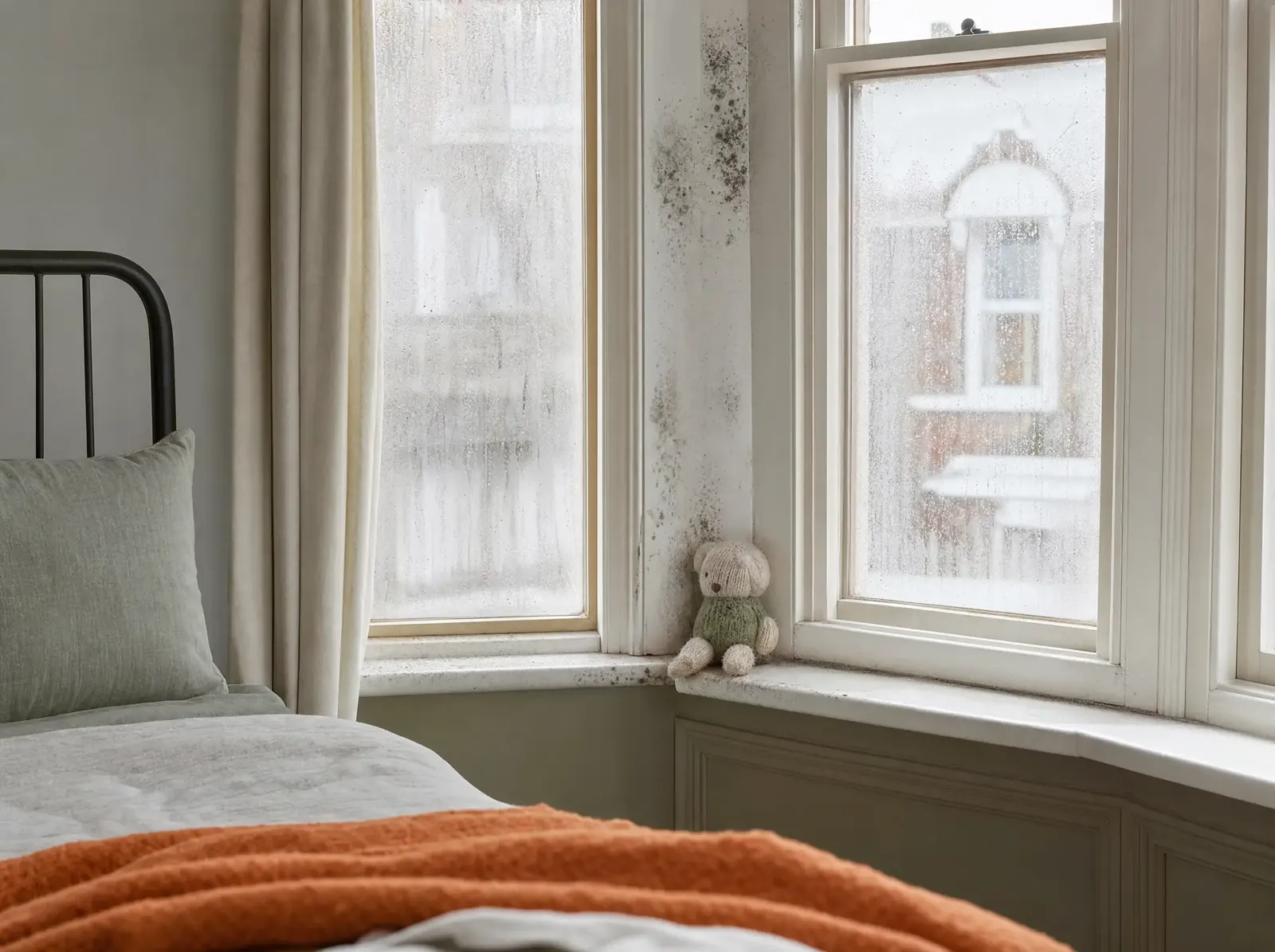
Condensation starts where the surface is coldest, and in most bedrooms that is the bay. Warm indoor air carries moisture from breathing, showers and drying washing. When it touches a surface below its dew point, the moisture turns back into water.
At 20°C and 60% relative humidity, the dew point is about 12°C. On a frosty night the corners of an uninsulated bay, the window reveals and the area behind closed curtains can easily fall to that. Mould does not even need visible water: a surface that stays damp and cool for long periods is enough.
If you already have black spots on the reveals or the ceiling of the bay, read my guide on how to stop mould coming back before you repaint.
Worth knowingHeavy curtains closed across a bay at night trap the glass and the cold panel on the outside of the curtain. The air there gets colder and damper, which is why the worst condensation and mould are often found behind curtains in the morning. Close them at dusk for warmth, but open them fully and air the room each morning.
What can I do about a cold bay window myself?
There are several cheap checks worth doing before you spend any money on building work. They will not insulate the bay, but they can take the edge off and stop things getting worse.
- Seal gaps around the window board and skirting with a flexible decorator's caulk. Feel for draughts with the back of a wet hand on a windy day.
- Check the window seals and that the trickle vents open and close. Keep them open in bedrooms.
- Keep the radiator under the window clear. Curtains that sit over the radiator send its heat straight behind the curtain and against the glass.
- Pull furniture a few centimetres away from the bay walls so air can move behind it.
- Look outside: slipped tiles, blocked gutters or a split bay roof covering let water in and make everything colder.
- Check whether the bay ceiling void has any insulation. Sometimes it can be reached from the loft or from the bay roof.
How is a cold bay window properly insulated?
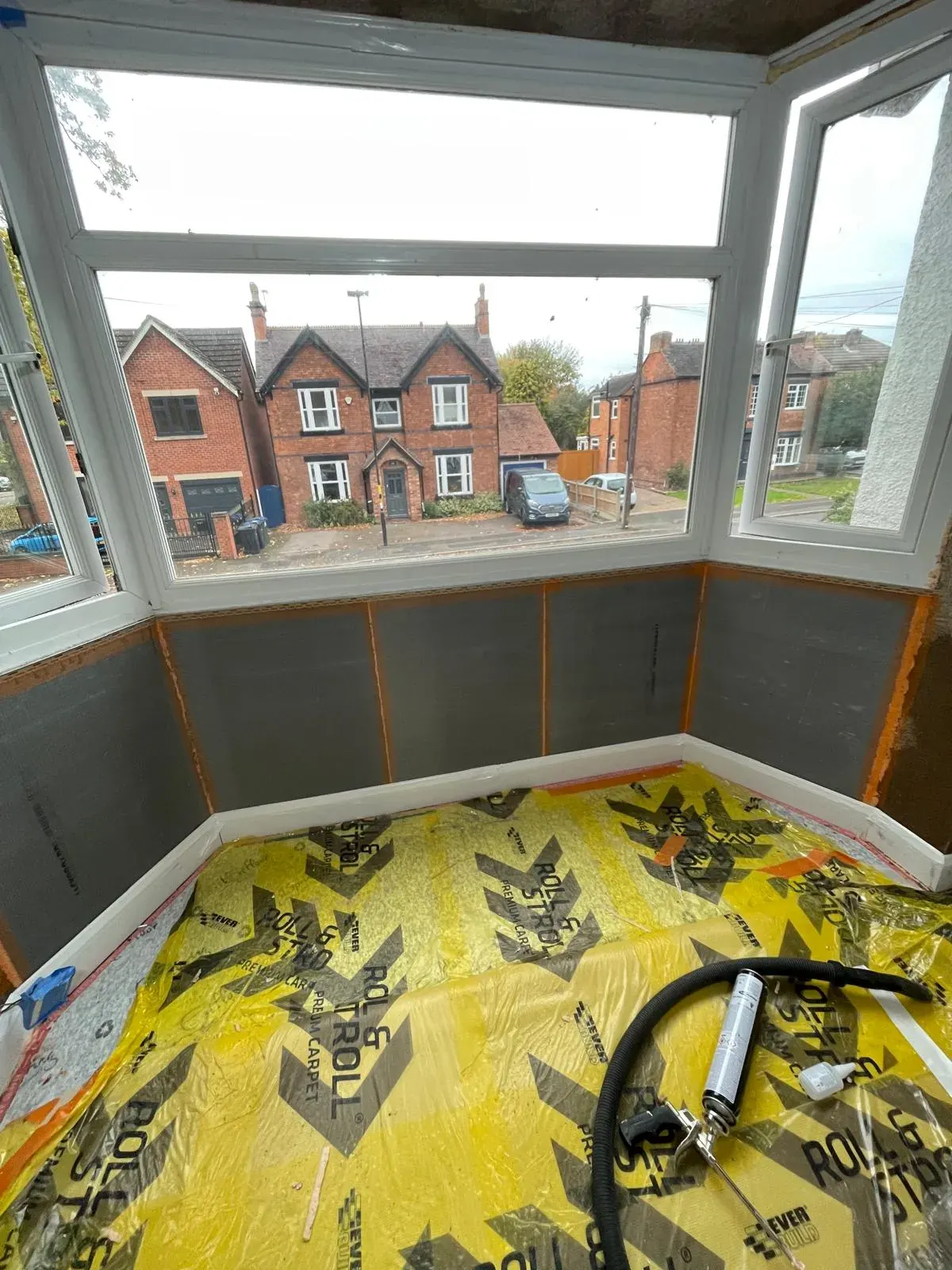
A proper fix removes the thin lining, deals with whatever is behind it, insulates and seals the bay, and plasters it back ready to decorate. The aim is to turn the weakest part of the room into one of the better ones.
On a typical job I strip the lining under and beside the window, check the timber frame for rot and damp, fill the frame with insulation, add an insulated board layer across it, and detail the reveals, window board and corners so no cold edges are left behind. The choice between a breathable build-up, such as wood fibre, and a slimmer board such as PIR depends on what I find and on moisture modelling, not on habit.
Most bays take 3 to 5 days, and my bay window insulation starts from about £1,700 per bay after a free home visit. Where the main walls are also solid brick, it often makes sense to look at internal wall insulation for the same room at the same time.
When should I get a professional to look at it?
Get it looked at when the bay is cold and something else is going on too. These are signs the problem is in the construction, not in how you use the room:
- Mould returns to the same corner every winter, even after cleaning and anti-mould paint.
- You can feel moving air at the skirting or window board.
- The plaster under the window sounds hollow or crumbles.
- There are damp patches that appear after rain rather than after cold nights.
- You have stopped using the room in winter.
A good survey should explain which of these is happening before anyone talks about products. If you want to see how a cold room was put right, the 1930s bedroom case study walks through the whole process.
Common questions
Will new windows fix a cold bay?
New windows help with the glass and the draughts around the frames, but they do nothing for the uninsulated panel under the window, the side cheeks or the bay roof. Many people replace the windows and are surprised the bay is still cold. The best results come from treating the solid parts of the bay and the glazing as one job, or at least planning them together.
How much room will I lose if the bay is insulated?
Usually very little, because the insulation goes into the timber frame itself and a board layer goes on top. The finished surface typically comes in by a few centimetres. I check the window board depth, radiator position and curtain track during the free home visit, so you know exactly how the bay will look before any work starts.
How much does bay window insulation cost?
My bay window insulation starts from about £1,700 per bay and usually takes 3 to 5 days. The final price depends on the size and shape of the bay, what is found behind the lining and whether the bay ceiling needs work too. You get a written quote after a free home visit, with no obligation.
Is it safe to insulate a bay myself?
Filling the frame with insulation looks simple, but the risk is trapping moisture against timber or leaving gaps that become cold, damp spots. The vapour control, the junctions and the reveals matter as much as the insulation itself. If you do attempt it, get advice on the build-up first and never cover signs of rot or water getting in.
Why is there mould on my bay window ceiling?
The small ceiling inside a bay is often under a flat roof with little or no insulation, so it is one of the coldest surfaces in the room. Moist air rises, meets that cold ceiling and condenses. Check the bay roof for leaks first, then look at insulating the void above and improving ventilation in the room.
Is the rest of the room affected by a cold bay?
Yes. Cold air drops off the bay and spreads across the floor, and your body loses heat to the cold surfaces wherever you sit. That is why the whole room feels cooler than the thermostat reading. Fixing the bay often makes the entire bedroom feel more even, not just the area near the window.