
Plastering · Sutton Coldfield, Walsall & nearby
Plastering over Artex, safely and smoothly.
Most Artex ceilings and walls can be plastered over for a smooth, modern finish without removing the texture. If the coating went on before 2000, I have it tested for asbestos first, then choose between a skim and overboarding based on the result and the state of the surface.
Free home visit. Written quotation. No pressure.
Rated 5 out of 5 on Google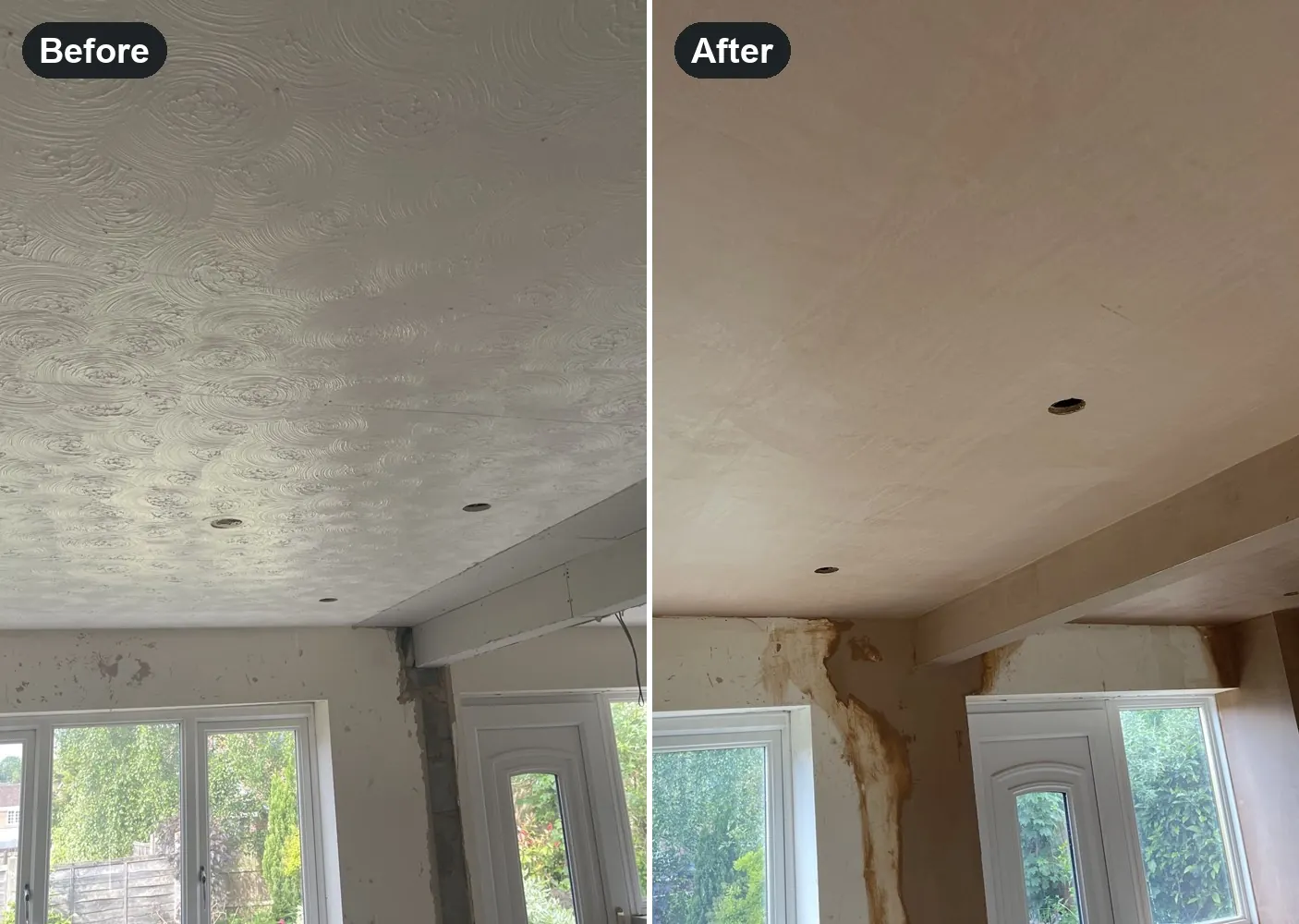
 Wojtek, Retrofit AssessorAssesses, designs and fits every job himself
On this page 6 sections
Can you plaster over Artex?
Yes. Sound Artex can usually be skimmed over or overboarded with plasterboard and skimmed, giving a smooth finish without removing it. Artex applied before 2000 may contain a small amount of asbestos, so it should be tested before anything that could disturb it, such as sanding, scraping or knocking back the peaks.
Does old Artex contain asbestos?
Some does. Textured coatings like Artex could contain a small amount of asbestos until it was banned in the UK in 1999, so any coating applied before 2000 should be treated as possibly containing it until a test says otherwise.
This is not a reason to panic. The Health and Safety Executive's view is that textured coatings in good condition, left undisturbed, pose very little risk. The risk comes from creating dust: sanding, scraping, wire-brushing or drilling it without precautions. Steamers and chemical strippers sold for removing texture can also release fibres as the coating breaks down. So if you have an Artex ceiling from the 1970s or 1980s, please do not start sanding it off yourself.
The sensible first step is a test. A small sample is taken carefully and sent to an accredited laboratory, and results usually come back within a few days. I arrange this as part of the job, and the result decides how we prepare the surface.
Why I test firstMost preparation for skimming Artex involves some scraping or knocking back of the sharpest peaks. That is only done once a test confirms the coating is asbestos-free. If it is not, the method changes so nothing is disturbed.
Skim over Artex or overboard it?
It depends on the pattern, the condition of the ceiling and the test result. Both give a smooth, flat finish ready to decorate.
| Skim over | Overboard and skim | |
|---|---|---|
| Best for | Light to medium patterns on a sound surface | Heavy patterns, cracked or uneven ceilings |
| How it works | Bonding primer, then one or two coats to bury the texture | New plasterboard screwed through to the joists, then skimmed |
| Height lost | A few millimetres | About 12–15mm |
| With asbestos present | Possible, without scraping peaks | Often the cleaner option, with careful fixing |
| Also fixes | Tired, dated texture | Cracks, sagging areas and poor old ceilings |
Skimming is usually quicker and cheaper. Overboarding costs a little more but gives a truly flat ceiling and is often the better choice where the old ceiling has cracks, bulges or a deep, swirled pattern that would take several coats to lose.
Does Artex need removing before plastering?
Rarely. Covering Artex with plaster or plasterboard seals it in, and that is the normal approach for sound surfaces.
Removal makes sense only if the ceiling itself is failing or you are taking it down for other work. If the coating contains asbestos, removal is specialist work for a trained asbestos contractor following HSE guidance, and I can point you in the right direction. If Artex has been covered over and contains asbestos, keep a note of it for any future work, such as fitting downlights or new cabling, so the next trade knows.
How does plastering over Artex work?
Once the test result is in and the method agreed, the job follows a clear order.
- Protect the room fully: floors, furniture and fittings covered, light fittings taken down safely.
- Check the ceiling for loose areas, cracks and sagging.
- If the test is clear, knock back the sharpest peaks; if not, leave the surface untouched.
- Apply a bonding primer so the plaster grips the smooth, painted texture, or fix new boards.
- Tape joints and cracks with scrim.
- Skim in two coats, or more on deep patterns, to a smooth, flat finish.
An average ceiling usually takes one to two days, plus drying time before decorating. The finish is the same as any new skim, so the first coat of paint should be a mist coat.
What affects the cost of plastering over Artex?
Mainly the method and the size of the ceiling. Skimming a light pattern on a sound ceiling is the simplest job; overboarding a large, cracked ceiling with a deep pattern is the biggest.
- whether the coating needs testing, and the result
- how deep the pattern is, and so how many coats it needs
- cracks, sagging or loose areas to deal with first
- light fittings, coving and anything that needs taking down and refitting
I price after a free home visit, and the quote explains the method and why I have chosen it.
Can you plaster over Artex on walls too?
Yes. Textured walls are handled the same way as ceilings: test first if the coating is older, then skim or board. Walls are often easier because the work is at a comfortable height, though heavy patterns may still need two coats.
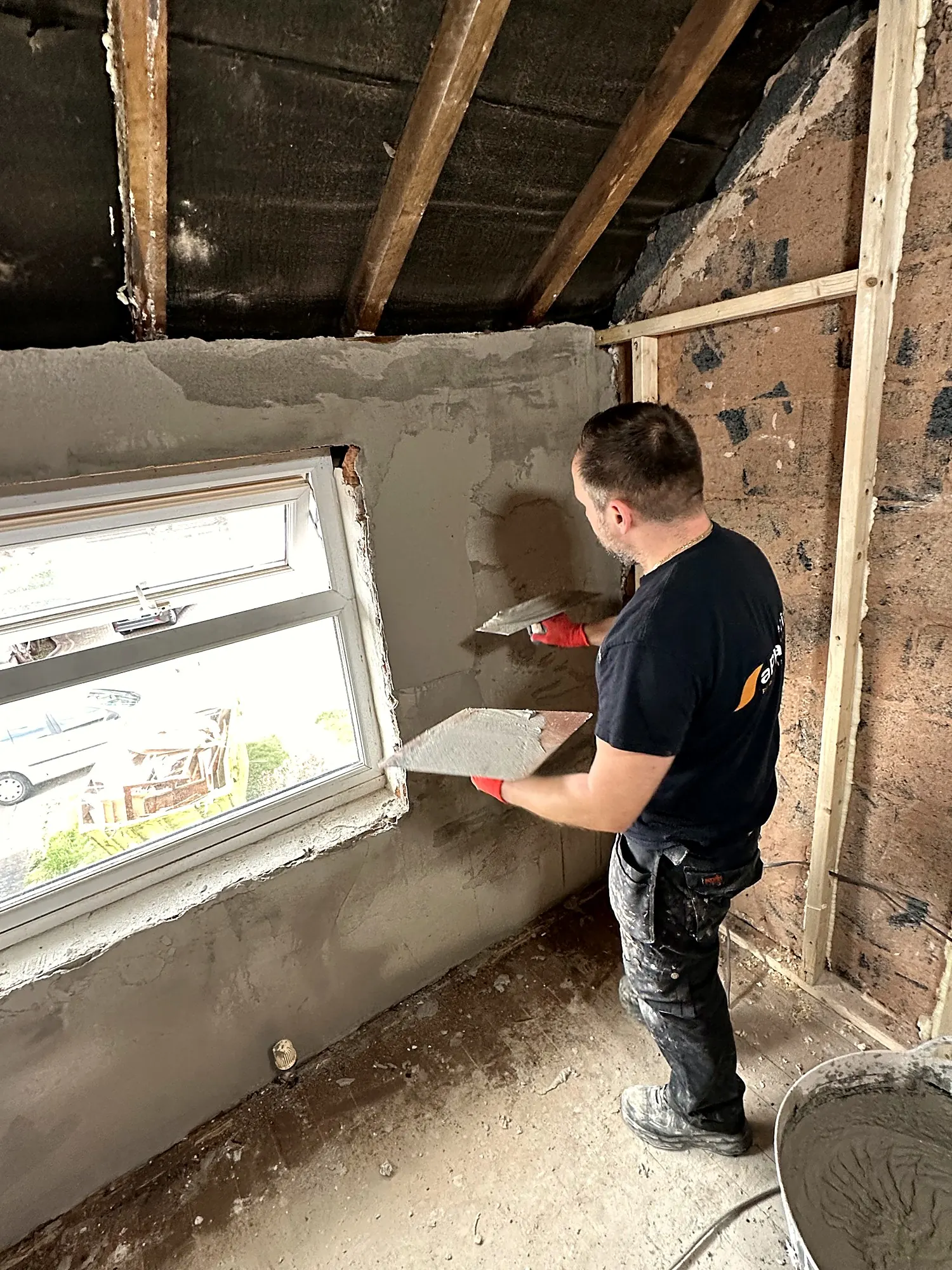
Many 1930s and post-war homes around Sutton Coldfield, Walsall and Great Barr still have at least one Artex ceiling, often in a hallway or living room. Getting rid of it is one of the quickest ways to make a room feel brighter and more modern. It is part of my wider plastering service, and I often combine it with repairs elsewhere in the house.
Homeowners who called me.
Real reviews from homeowners across the West Midlands, all 5 stars on Google, where you can read every one.
“We had insulation done in our main bedroom, outside wall including bay. From his initial visit, to quotation process and actually doing the work, he was very efficient. It was a pleasure to have Wojtek working in our house.”
“We had our house insulated recently and the difference is honestly amazing. Before, it used to take forever to warm the house up, we’d got to the point where we were even talking about selling because it was just that cold.”
“We’d had black mould forming on our bay window for years and had almost given up trying to clean it off. Nothing we tried ever worked. Then we came across Wojtek at aPlastering.”
“We recently had two rooms insulated by aPlastering, and honestly, they were brilliant from start to finish. They explained everything clearly, the communication was great, and the price was straightforward with no surprises.”
“Our experience with aPlastering was exceptional from start to finish. Wojciech did a thorough survey prior to providing a quote and was crystal clear on what was required. The price was fair for the work required.”
“A very professional and reliable service throughout. From initial enquiry to completion, communication was prompt, with a clear quotation and timeline provided.”
“Excellent professional service, great time keeping, and perfect job. I had insulated plasterboard fitted, soundproof plasterboard and all skimming to a large ground floor, excellent finish throughout and more importantly 3 years in and no cracks.”
“We were let down last minute and he came out to provide a quote the very same day and had our bedroom beautifully plastered the following day, all to an incredibly high standard.”

Free download · 16 pages
Why is my room so cold?
Most cold rooms in 1930s and Victorian homes are cold because their outside walls lose heat fast and stay cold on the surface. This free guide from Retrofit Assessor Wojtek Pankowski helps you find out what's happening in your home and what to do about it, before you spend a penny.
Get the free guideYour questions, answered.
Anything else, ring me on 07763 789272. Happy to talk it through.
Get a free quoteHow do I know if my Artex contains asbestos?
You cannot tell by looking. The only way to know is to have a sample tested by an accredited laboratory. As a rule, coatings applied before 2000 might contain it, and those from the 1970s and 1980s are the most likely. I arrange the test as part of the job, and the result decides how the surface is prepared.
Is it safe to live with an Artex ceiling that contains asbestos?
Generally yes, if it is in good condition and left alone. The risk comes from dust created by sanding, scraping or drilling. Covering it with plaster or plasterboard seals it in further. Avoid disturbing it yourself, and tell anyone working on the ceiling in future, such as an electrician fitting lights.
Will the Artex pattern show through after plastering?
Not when it is done properly. Light patterns are lost under two coats of skim. Deep, swirled or stippled patterns may need a third coat or overboarding to get a truly flat finish. I look at the pattern at the visit and tell you which method will give you a ceiling with no trace of the old texture.
How long does it take to plaster over an Artex ceiling?
An average room usually takes one to two days, depending on the pattern and whether it is skimmed or overboarded. You need to allow a few extra days for the asbestos test result before starting, and then drying time before decorating, typically several days to a week or more depending on heating and ventilation.
Is it cheaper to remove Artex or cover it?
Covering it is almost always cheaper, quicker and less disruptive. Removing a textured coating is slow and messy, and if it contains asbestos it needs a specialist contractor. Skimming or overboarding over a sound surface gives the same smooth result without disturbing the old coating, which is why it is the usual approach.
You might also need.
Let's get rid of that Artex.
Free, no-obligation quote. I'll come and look at the room, tell you honestly what's going on and give you a written quotation.
- TodayI read your message and call or WhatsApp you back.
- This weekA free home visit at a time that suits you.
- Within daysA clear written quote. No pressure, no chasing.
Wojtek, Retrofit AssessorUsually replies the same day
Tell me what's going on. It takes about a minute.
Get a free quote 07763 789272 Or send photos on WhatsApp