Cold rooms
Why is one room colder than the rest of the house?
One room is usually colder because it loses heat faster than the others, gets less heat in, or both. Corner bedrooms, bay rooms and rooms over a garage have more cold outside surfaces, and a radiator that is undersized or not balanced cannot keep up, so the room never quite catches the rest of the house.

Wojtek Pankowski, Retrofit AssessorUpdated 1 October 2026 · 6 min read
On this page 8 sections
- Why is one room in my house always cold?
- Is it the heating or the room itself?
- Which rooms are usually the coldest?
- Why does the room feel colder than the thermometer says?
- What can I do to warm up a cold room quickly?
- Why do cold rooms get condensation and mould?
- How do you fix a cold room permanently?
- Can I insulate just one room?
Why is one room in my house colder than the others?
Either the room loses heat faster, or it gets less heat in. Rooms with two external walls, a bay window, a cold floor over a garage or a north-facing aspect lose heat quickly. A radiator that is too small, full of air or sludge, or starved by an unbalanced system cannot make up the difference.
Why is one room in my house always cold?
A room stays cold when the heat going out is greater than the heat coming in. That sounds obvious, but it gives you two separate places to look: the building around the room, and the heating inside it.
In the cold rooms I see around Sutton Coldfield, Walsall and Great Barr, the building is usually the bigger part of the story. The room has more outside wall than the others, or a weak spot such as a bay, and the heating was never sized to cover it. The good news is that the two can be checked separately, and some of the checks cost nothing.
Before you change anything, spend a week noticing when the room is cold. Is it cold all day, or only in the morning? Does it warm up at all when the radiator is on full? Is one wall or corner noticeably worse? Those answers point to the cause far more reliably than guesswork, and they are the first questions I ask at a home visit.
Is it the heating or the room itself?
Check the radiator first, because it is the cheapest thing to fix. If the radiator is hot all over and the room is still cold, the problem is almost certainly the building.
| What you notice | Likely cause | What to try |
|---|---|---|
| Radiator cold at the top, warm at the bottom | Air in the radiator | Bleed it, then check the boiler pressure |
| Radiator warm at the top, cold at the bottom or in the middle | Sludge build-up | A heating engineer can flush the system |
| Radiator only lukewarm while others are hot | System not balanced, or a sticking valve | Balance the system; free or replace the valve |
| Radiator hot all over, room still cold | Radiator too small, or the room loses heat too fast | Look at the walls, bay, floor and draughts |
| Room fine in the evening, freezing by morning | Poorly insulated walls cooling quickly | Insulation, not a bigger radiator |
Which rooms are usually the coldest?
The coldest rooms are the ones with the most surface facing the outside and the least protection. In a typical house that means:
- Corner bedrooms with two external walls instead of one.
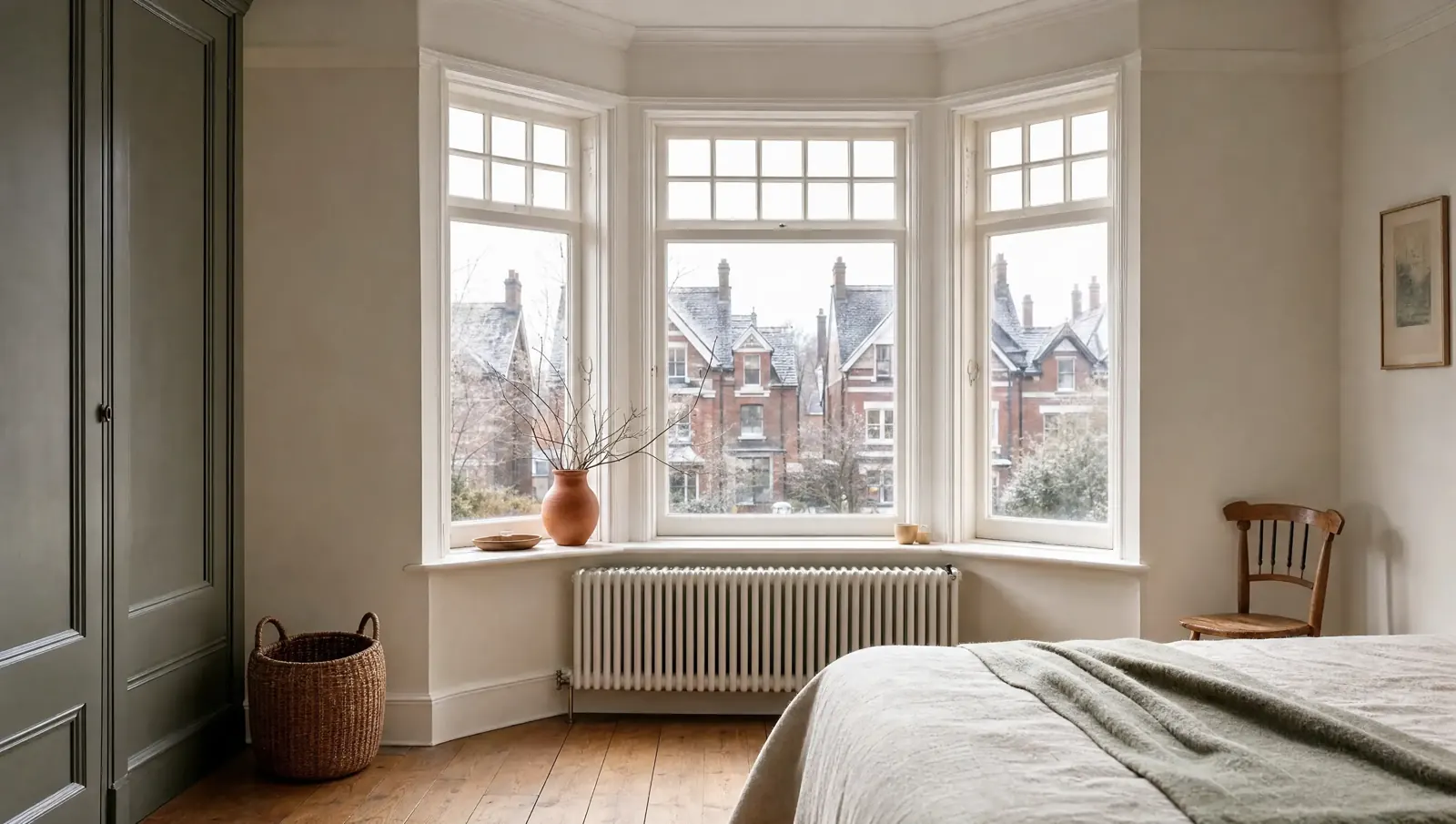
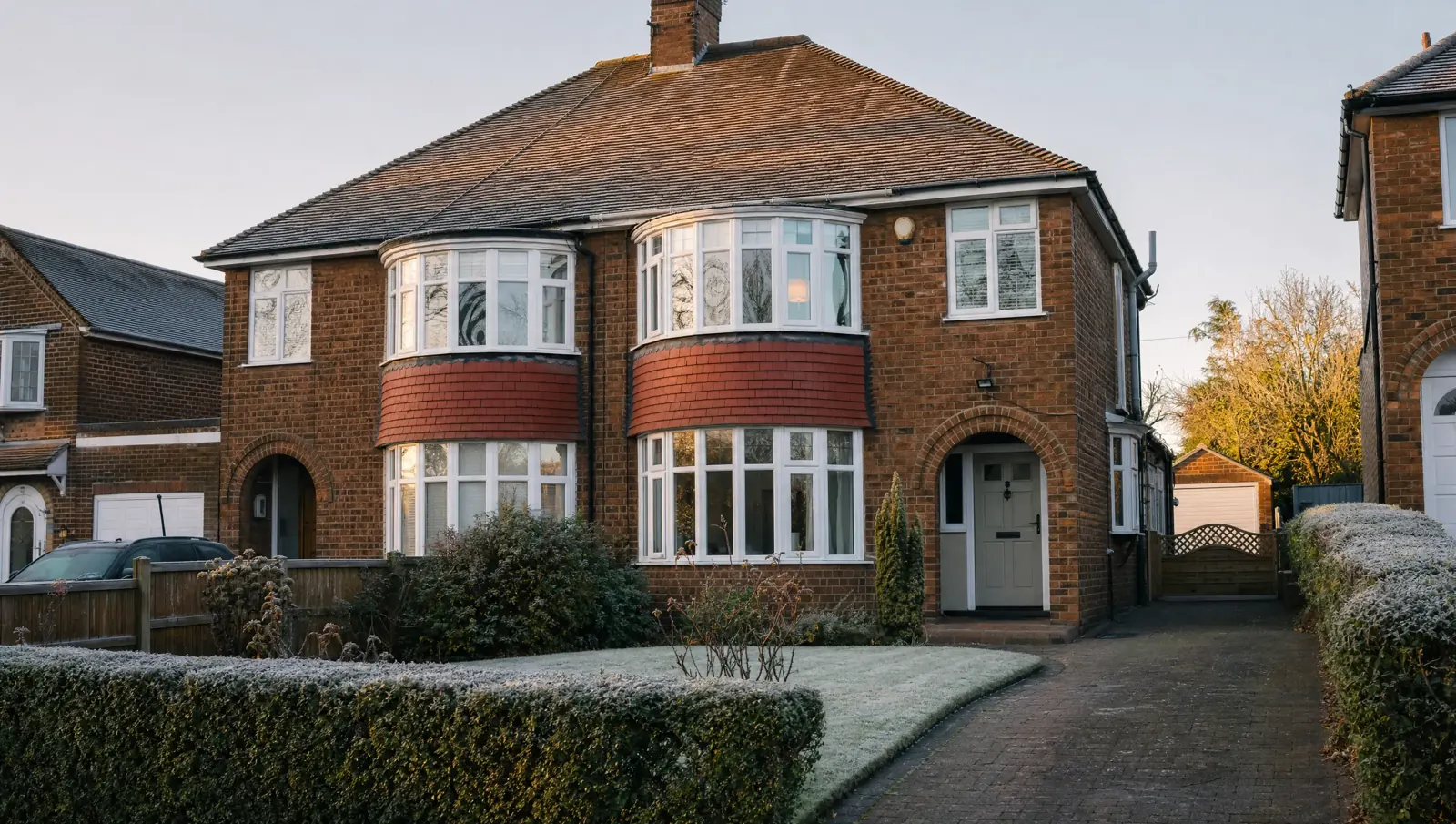
- Bay window rooms, where the panel under the window is often thin and uninsulated. See my guide on why bay windows are so cold.
- Rooms over a garage or porch, with cold air underneath as well as outside.
- North-facing rooms that never get winter sun on the walls.
- Extensions with flat roofs built before modern insulation standards.
- The box room above the stairs or front door, which often has the smallest radiator.
Why does the room feel colder than the thermometer says?
Because comfort depends on the temperature of the walls around you as well as the air. Your body radiates heat to cold surfaces, so a room with air at 20°C and cold external walls can feel two or three degrees cooler than it reads.
An uninsulated 225mm solid brick wall has a U-value of about 2.1, which means it lets heat through easily. On a 0°C day its inside surface sits at around 14.5°C, even with the room at 20°C. Insulate it and the same surface can rise to around 18°C, which is why an insulated room feels warmer at the same thermostat setting.
Worth knowingYou can test your walls yourself with an infrared thermometer, which costs around £15 to £25. On a cold morning with the heating on, point it at the external wall, then at an internal wall in the same room. A difference of 4°C or more tells you the external wall is losing a lot of heat. Check corners and behind furniture too.
What can I do to warm up a cold room quickly?
Some simple steps help a little straight away. None of them change how the walls hold heat, but together they can take the edge off while you decide on anything bigger.
- Bleed and balance the radiators, and make sure the valve in that room opens fully.
- Fit radiator reflector panels behind radiators on external walls, so less heat goes straight into the brick.
- Draught-proof the window, the skirting and any loft hatch.
- Use thick, lined curtains, closed at dusk and opened fully in the morning.
- Put a rug down on a suspended timber floor.
- Heat the room for longer on a timer rather than in short, hot bursts, so the walls do not cool right down.
Portable electric heaters work, but on most tariffs they are an expensive way to heat a room that is losing heat quickly.
Why do cold rooms get condensation and mould?
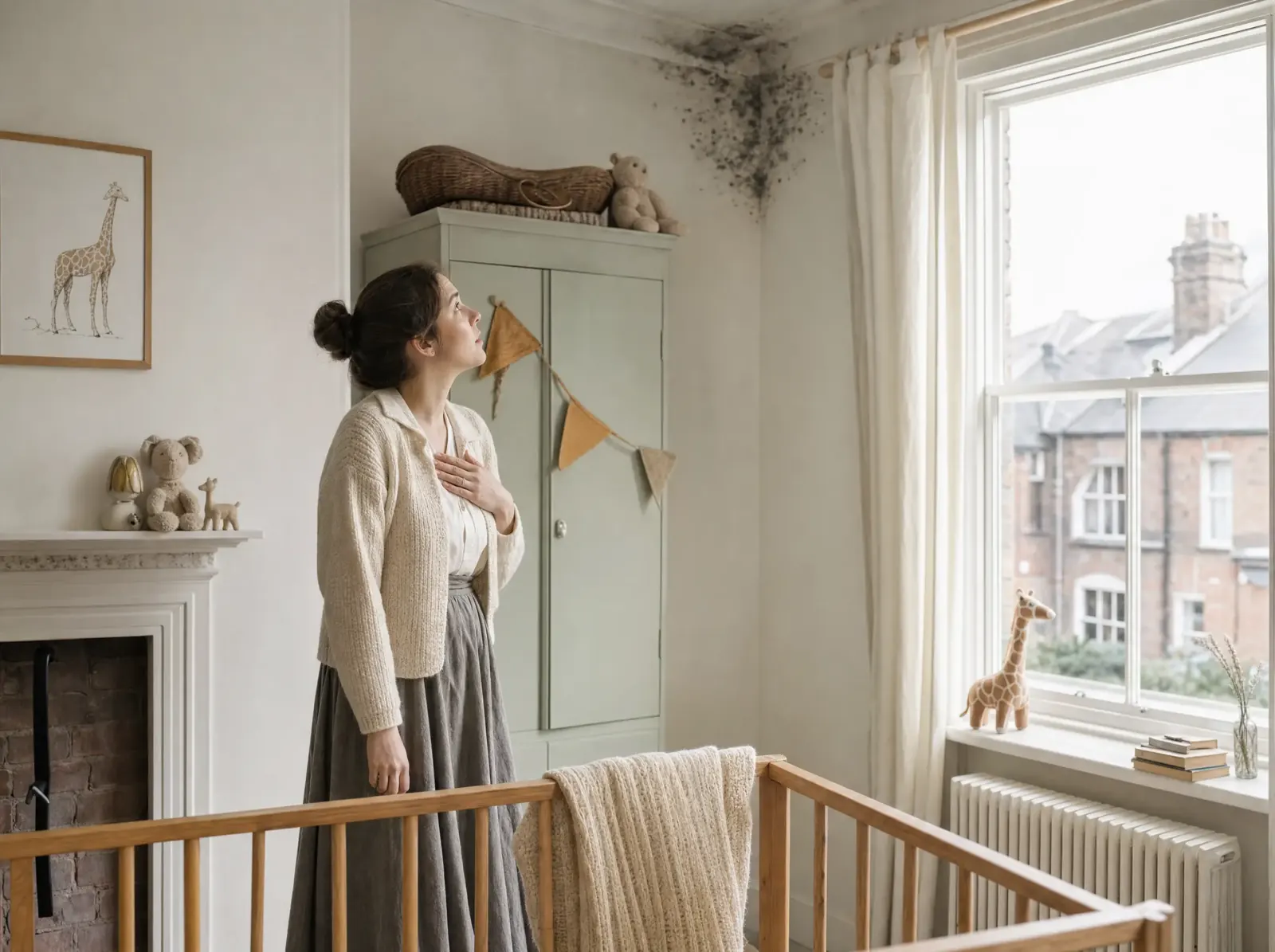
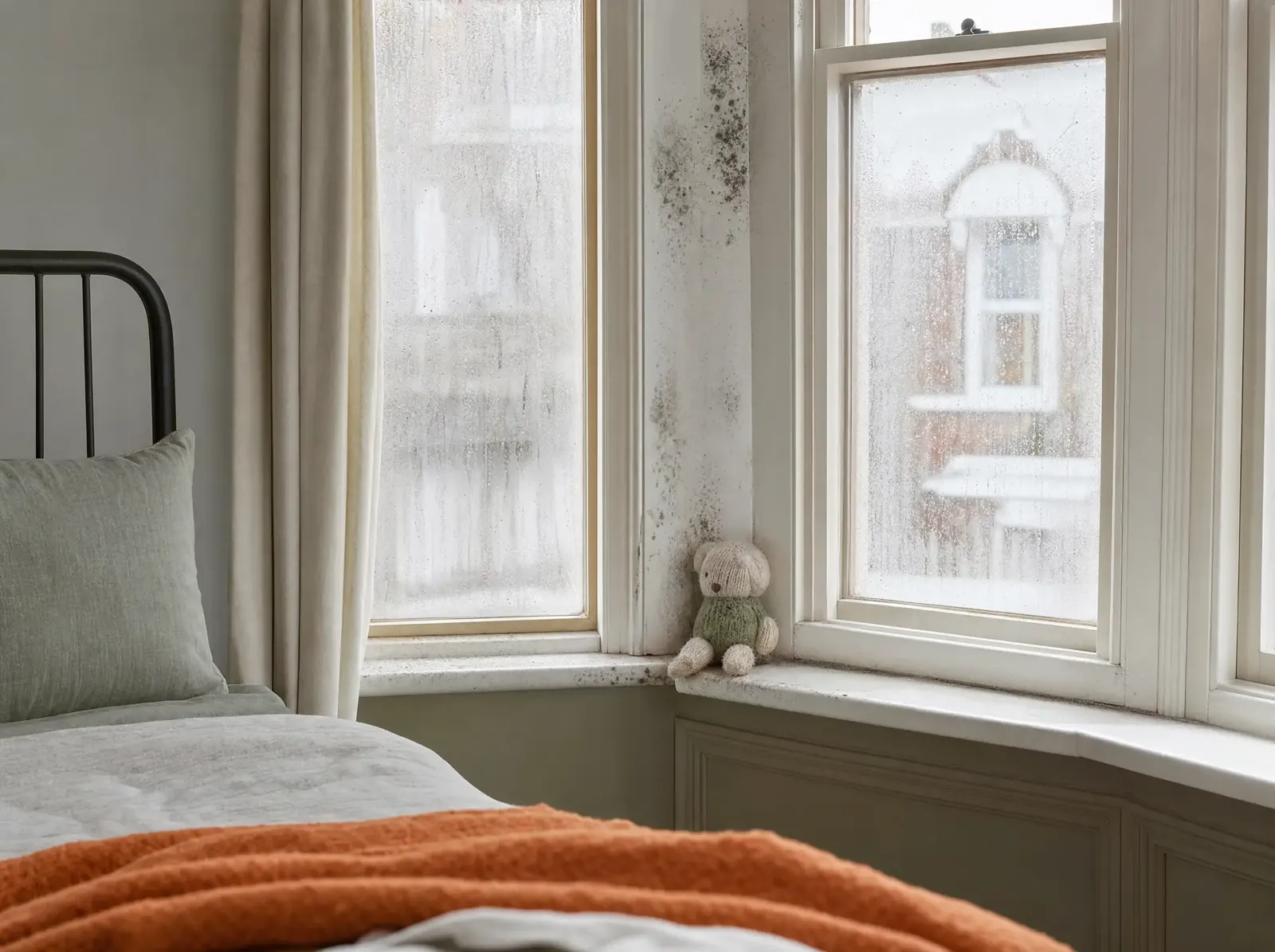
Because moisture settles on the coldest surfaces in the house, and a cold room has plenty of them. Bedrooms are the worst affected: doors closed, two people breathing all night, and walls that have cooled since the evening.
If you already see black spots in the corners or behind the wardrobe, read how to stop mould coming back. It explains the dew point, how much ventilation a home needs and what to try before spending money.
How do you fix a cold room permanently?
You stop the room losing heat so fast, usually by insulating the external walls and any weak spots such as a bay or a cold floor. Once the walls hold heat, the existing radiator is often enough.
In my 1930s bedroom case study, the owner had a room that took ages to warm up and cooled quickly. After 40mm of wood fibre on the main wall and 25mm on the adjoining wall, with a lime finish and a larger radiator, they found it warmed up faster and held its warmth for longer. The calculated heat loss through the main wall fell by about 71%.
Internal wall insulation starts from about £2,000 per wall, and bay window insulation from about £1,700 per bay.
Can I insulate just one room?
Yes, and many people do. Working room by room keeps the cost and disruption manageable, and you can start with the room that bothers you most. That said, the best long-term result comes from insulating the whole house, including the loft and floors, so I recommend planning for that in the near future.
The detail that matters is the edges. Where the insulated wall meets an uninsulated wall, floor or ceiling, heat can find a way round and leave a cold strip. A good installer insulates the window reveals, returns the insulation a short way along adjoining surfaces where the design calls for it, and seals around sockets and pipes. I plan these junctions during the survey so you know what will be done and why.
Common questions
Will a bigger radiator fix a cold room?
Sometimes. If the radiator is clearly too small for the room, a larger one helps the air warm up. But if the walls are uninsulated, the room will still cool quickly when the heating goes off and the walls will still feel cold. A bigger radiator treats the symptom; insulation reduces the loss. Often the best result is both, sized together.
Why is my bedroom colder than the living room?
Bedrooms often have two external walls, sit above a bay or garage, and get less heating during the day. Doors stay closed, so warm air from the rest of the house does not reach them. At night, two people breathing add moisture while the walls cool down. That mix makes bedrooms the most common cold and mouldy rooms in a house.
Does reflective foil behind radiators work?
It helps a little on uninsulated external walls, because it reflects some of the radiator's heat back into the room instead of into the brickwork behind it. It is cheap and easy to fit. It does nothing for the rest of the wall, though, so think of it as a small improvement rather than a fix for a genuinely cold room.
Should I keep the door of a cold room open?
During the day, keeping the door open lets warmer air from the rest of the house in and helps air move. Keep bathroom and kitchen doors closed while they are steamy, so moist air does not drift into the cold room and condense on its walls. At night, a door undercut of about 10mm helps air move even with the door shut.
How long does it take to insulate a room?
It depends on the system and the number of walls. A breathable system on one wall usually takes about 5 days including the lime plaster, and a PIR system about 3 to 4 days. A bay takes 3 to 5 days. Rooms are handed back plastered and ready to decorate, and we protect floors and furniture throughout.