
Spray cork · Inside cold walls · Sutton Coldfield & Walsall
Internal cork coating for cold, damp-feeling walls.
Internal cork coating is a thin, breathable cork plaster that takes the chill off cold wall surfaces and can be finished smooth, ready to decorate. It helps where a wall is slightly too cold; where it is very cold, full insulation will serve you better, and I'll tell you which you have.
Free home visit. Written quotation. No pressure.
Rated 5 out of 5 on Google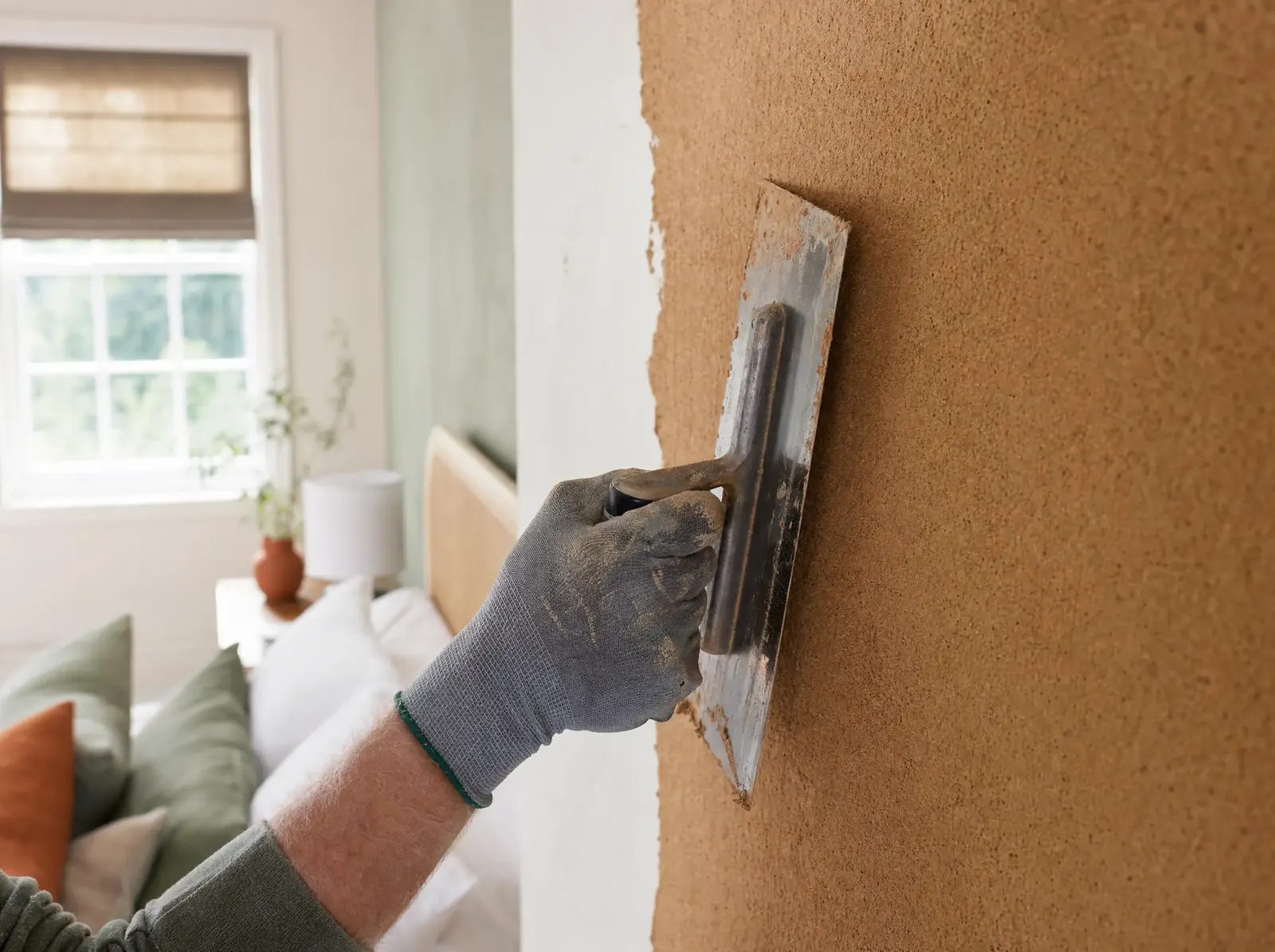
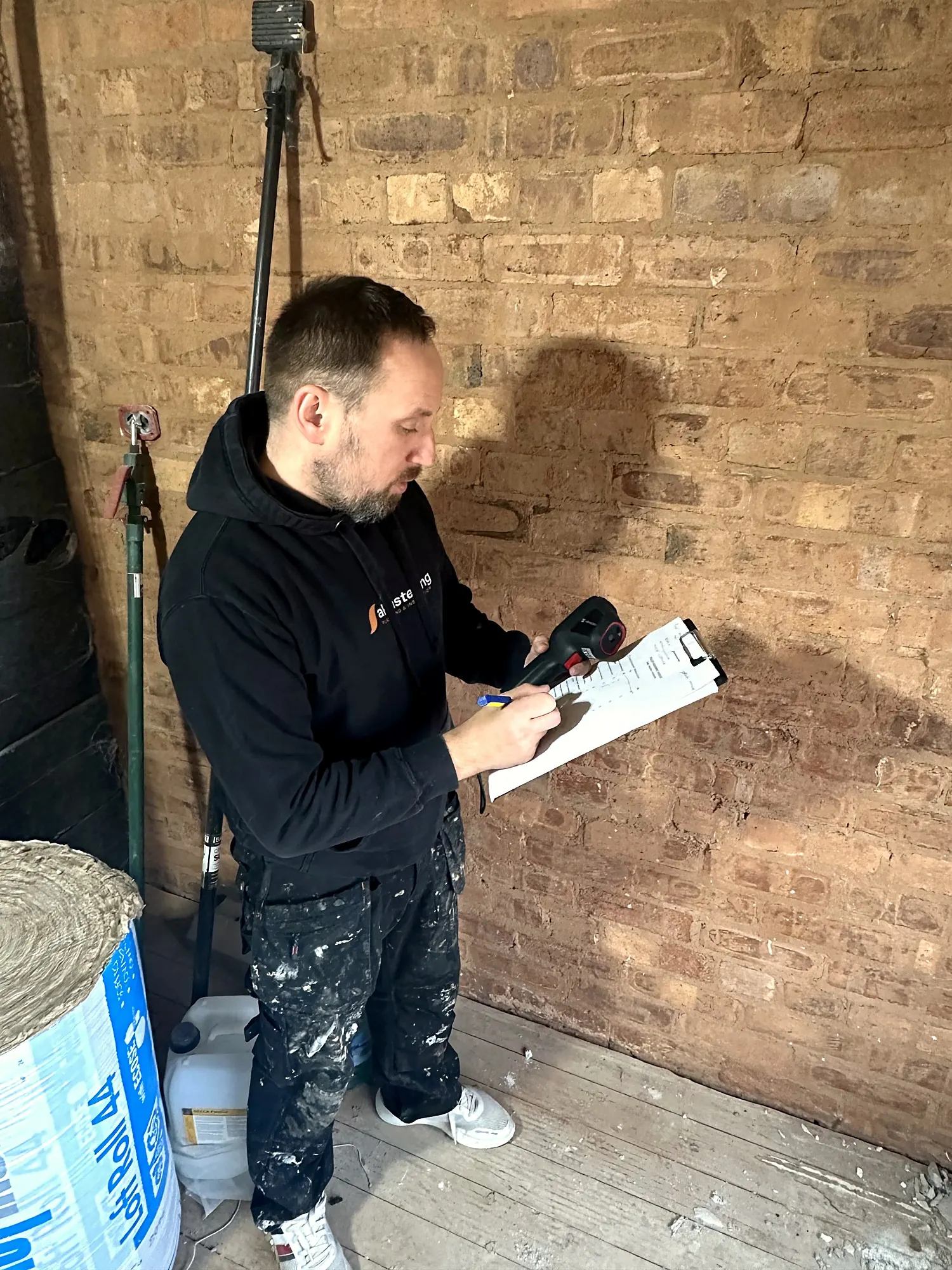
 Wojtek, Retrofit AssessorAssesses, designs and fits every job himself
On this page 5 sections
What is internal cork coating?
Internal cork coating is a cork-based plaster trowelled onto the inside face of an external wall. It adds a thin, vapour-open layer that raises the surface temperature slightly, reducing the chance of condensation on cold spots. It can be skimmed smooth so the room looks like any normal decorated wall.
Why does my wall keep getting condensation and black mould?
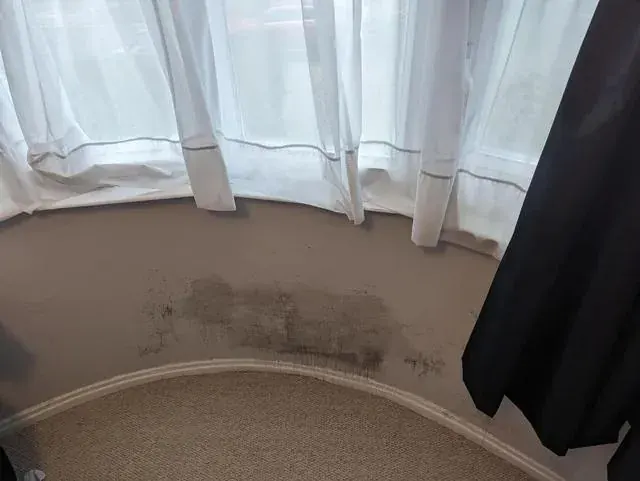
Condensation forms when warm, moist air meets a surface that is cold enough to turn that moisture back into water. If a wall stays cold and damp for long enough, black mould follows.
Most people I meet have already tried the usual fixes: bleach, anti-mould paint, a dehumidifier, opening windows. The mould comes back because none of those change the two things driving it, which are how cold the wall surface is and how much moisture is in the air. It is often worst in a child's bedroom, behind furniture, in the corners of an outside wall or around a bay window reveal.
Before anything else I check it really is condensation. Leaks, broken gutters, failed pointing and plumbing faults can all look like condensation mould, and they need fixing at source, not covering up.
What is the dew point, and why does wall temperature matter?
The dew point is the temperature at which moisture in the air starts to turn into water on a surface. Keep a wall above it, and droplets don't form.
A simple example: in a room at 20°C with 60% humidity, the dew point is roughly 12°C. Any part of the wall colder than that will run with condensation. But mould doesn't need visible droplets. It can grow where a surface stays at around 80% humidity or more for long periods, which in that same room means a wall colder than roughly 15°C.
So the aim is not just to scrape above the dew point. It is to keep the surface comfortably warm and keep indoor moisture under control, both at the same time. That is why ventilation always comes into the conversation. Cooking, showers and drying clothes indoors add a lot of moisture, and a warm wall still needs that moisture taken away.
How does internal cork coating help?
Cork slows heat moving through it, so a layer of cork plaster on the inside of a cold wall lifts the surface temperature a little. On a wall that sits just on the edge of the problem, that small lift can be the difference.
- Thin build-up. The layer is measured in millimetres, so you lose almost no room space and skirting, sockets and window boards usually need little change.
- Vapour-open. Cork plaster lets water vapour pass through, so it suits older solid walls that need to dry.
- Warmer to the touch. Cork feels less cold than bare plaster, which helps comfort near the wall.
- A normal-looking room. The supplier's internal system can take a smooth skim finish, so once decorated it looks like any other wall.
I have used cork plaster inside homes as part of my work on cold, mouldy rooms, and I apply it as a SprayCork UK approved applicator, following the supplier's specification for thickness and finishing layers.
Who is internal cork coating for?
It suits homeowners and landlords with a wall that is cold enough to cause trouble but not bitterly cold throughout. Typical examples are a chilly corner of a bedroom, a reveal around a window, or a room in an older solid-wall house where losing space to thick boards is not an option.
It is one of several cork uses I cover; the spray cork overview explains the others. If mould is your main worry, my page on condensation and black mould covers the wider fixes.
What happens when you coat a wall inside?
Most rooms take a few days, including preparation and drying between coats. Here is what to expect.
- Furniture is moved or covered, floors protected, and the room sealed off as far as possible.
- Mould is cleaned off properly and affected areas treated. Loose or blown plaster is cut out and patched.
- The wall is primed to suit the surface, then cork plaster is applied in coats to the specified thickness.
- If you want a smooth wall, a skim finish goes on top. Otherwise the natural cork texture is left.
- We tidy up, walk round together, and you get aftercare notes, including the right type of paint to keep the wall breathable.
I hand the room back ready to decorate. If ventilation needs improving, such as trickle vents, an extractor fan or door undercuts, I organise it with trusted trades rather than fitting it myself.
Thermal imaging
See where your heat really goes.
Solid walls and bays stay cold, so warmth drains out and moisture settles on them. Drag to compare the same room before and after.
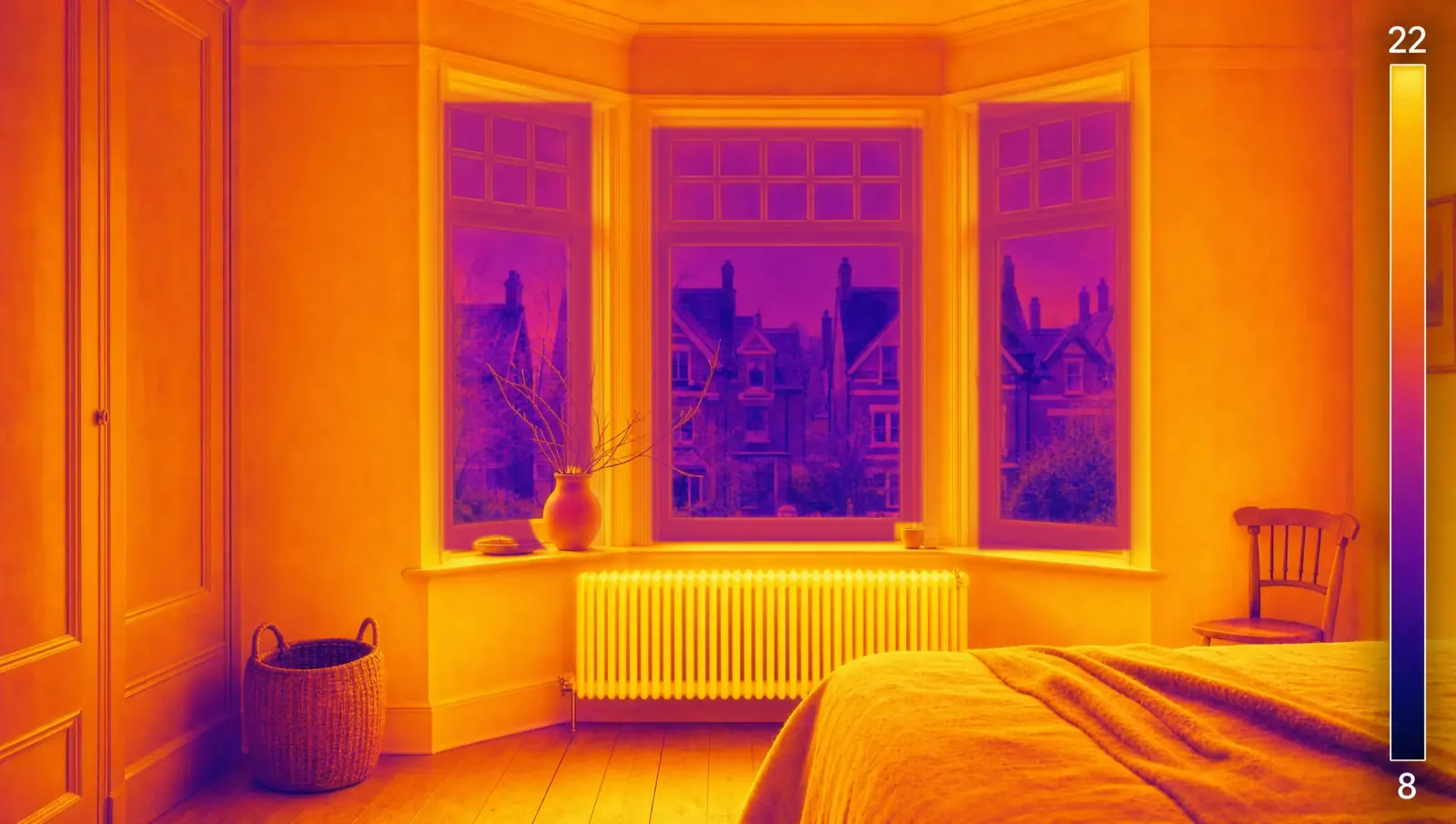
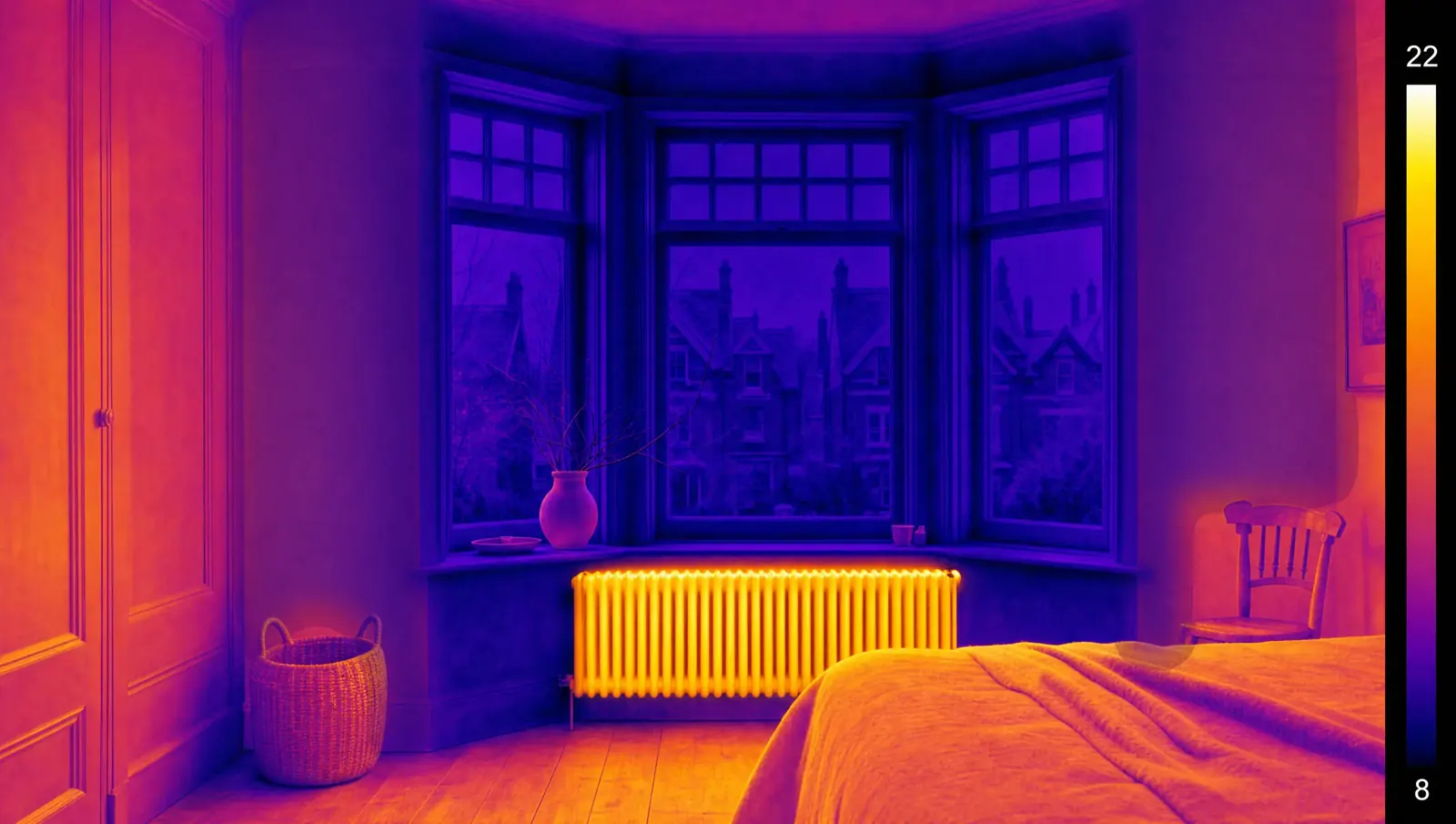
Thermal images are illustrative.
Homeowners who called me.
Real reviews from homeowners across the West Midlands, all 5 stars on Google, where you can read every one.
“We had insulation done in our main bedroom, outside wall including bay. From his initial visit, to quotation process and actually doing the work, he was very efficient. It was a pleasure to have Wojtek working in our house.”
“We had our house insulated recently and the difference is honestly amazing. Before, it used to take forever to warm the house up, we’d got to the point where we were even talking about selling because it was just that cold.”
“We’d had black mould forming on our bay window for years and had almost given up trying to clean it off. Nothing we tried ever worked. Then we came across Wojtek at aPlastering.”
“We recently had two rooms insulated by aPlastering, and honestly, they were brilliant from start to finish. They explained everything clearly, the communication was great, and the price was straightforward with no surprises.”
“Our experience with aPlastering was exceptional from start to finish. Wojciech did a thorough survey prior to providing a quote and was crystal clear on what was required. The price was fair for the work required.”
“A very professional and reliable service throughout. From initial enquiry to completion, communication was prompt, with a clear quotation and timeline provided.”
“Excellent professional service, great time keeping, and perfect job. I had insulated plasterboard fitted, soundproof plasterboard and all skimming to a large ground floor, excellent finish throughout and more importantly 3 years in and no cracks.”
“We were let down last minute and he came out to provide a quote the very same day and had our bedroom beautifully plastered the following day, all to an incredibly high standard.”
Free download · 14 pages
Before anyone insulates your walls, ask these 15 questions.
Most of the quality in internal wall insulation ends up hidden behind new plaster. This free buyer's guide from Retrofit Assessor Wojtek Pankowski gives you the questions to ask every installer, what a good answer sounds like and the red flags to watch for.
Get the free guideYour questions, answered.
Anything else, ring me on 07763 789272. Happy to talk it through.
Get a free quoteHow thick is internal cork coating?
It is a thin system, measured in millimetres rather than the 20mm to 80mm of an insulation board. The exact thickness and number of coats depend on the supplier's specification and your wall, and are set out in your quote. Because it is so thin, you keep almost all your room space and most fittings stay where they are.
Will the wall look normal afterwards?
Yes, if you want it to. The internal cork system can take a smooth skim finish, so once painted it looks like any other plastered wall. Some people like the soft natural texture of cork and leave it showing. Either way, I recommend a breathable paint so the wall can still let moisture out.
Can I paint over cork plaster?
Yes. Once it has dried, the finished surface can be decorated. I recommend a vapour-open paint, such as a good mineral or breathable emulsion, rather than vinyl or anti-mould paints that seal the surface. Your aftercare notes will list suitable options and how long to wait before decorating.
Is internal cork coating good for rented properties?
It can be a sensible, low-disruption option where a survey shows a mildly cold wall is part of a condensation problem. Landlords still need to deal with the cause properly, including ventilation and any leaks. Where walls are very cold, internal wall insulation is usually the more robust answer and easier to justify on inspection.
Will cork coating get rid of mould for good?
No coating can promise that on its own. Mould needs a cold surface and moisture, so the cure is a warmer wall plus good ventilation and sensible habits like lids on pans and extractor fans used properly. Cork helps with the first part on mildly cold walls. I explain the whole picture at the survey.
You might also need.

Tired of wiping the same wall every winter?
Free, no-obligation quote. I'll come and look at the room, tell you honestly what's going on and give you a written quotation.
- TodayI read your message and call or WhatsApp you back.
- This weekA free home visit at a time that suits you.
- Within daysA clear written quote. No pressure, no chasing.
Wojtek, Retrofit AssessorUsually replies the same day
Tell me what's going on. It takes about a minute.
Get a free quote 07763 789272 Or send photos on WhatsApp