
Plastering · Sutton Coldfield, Walsall & nearby
Plasterboarding, fixed the right way for your wall.
Plasterboarding gives you straight, solid walls and ceilings quickly, but how the boards are fixed matters as much as the boards themselves. I choose between dot and dab, battens, a metal frame or PU adhesive based on the wall, then tape and skim for a smooth finish ready to decorate.
Free home visit. Written quotation. No pressure.
Rated 5 out of 5 on Google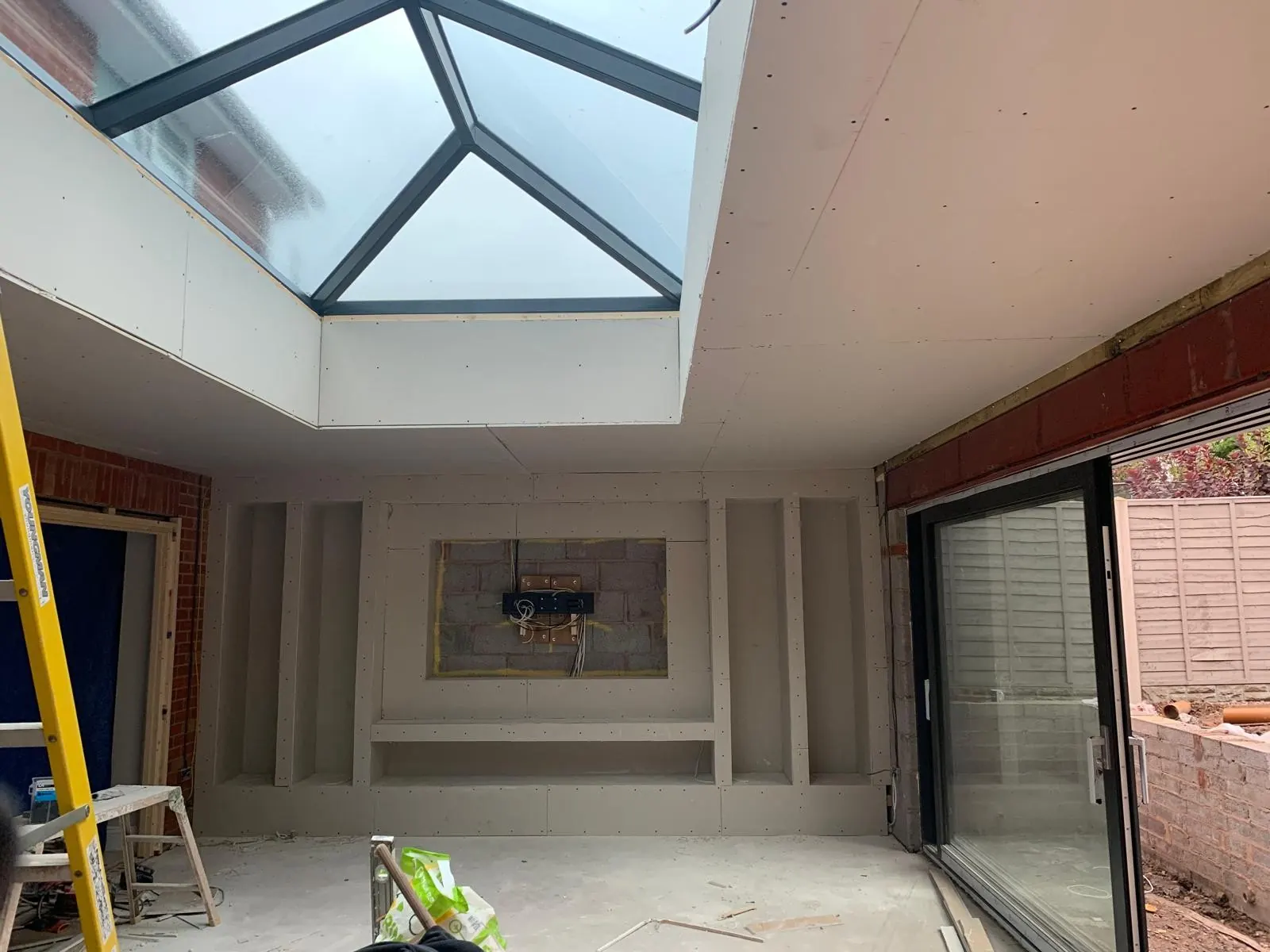
 Wojtek, Retrofit AssessorAssesses, designs and fits every job himself
On this page 7 sections
- When does boarding beat plastering?
- Dot and dab, battens, metal frame or PU adhesive: what is the difference?
- How are plasterboard joints finished?
- What about insulated plasterboard?
- Will extra plasterboard stop noise from next door?
- How long does plasterboarding take, and what affects the cost?
- What should you expect from me?
When is plasterboarding better than plastering?
Plasterboarding is usually better when a wall or ceiling is too uneven, cracked or loose to plaster economically, when you are building a new partition, or when you want less drying time. Boards are fixed to the wall, battens or a frame, then taped and skimmed, giving a flat surface in fewer days than wet plastering.
When does boarding beat plastering?
When the existing surface is the problem. Boarding gives you a new, flat surface without the time and mess of hacking off and rebuilding large areas of plaster.
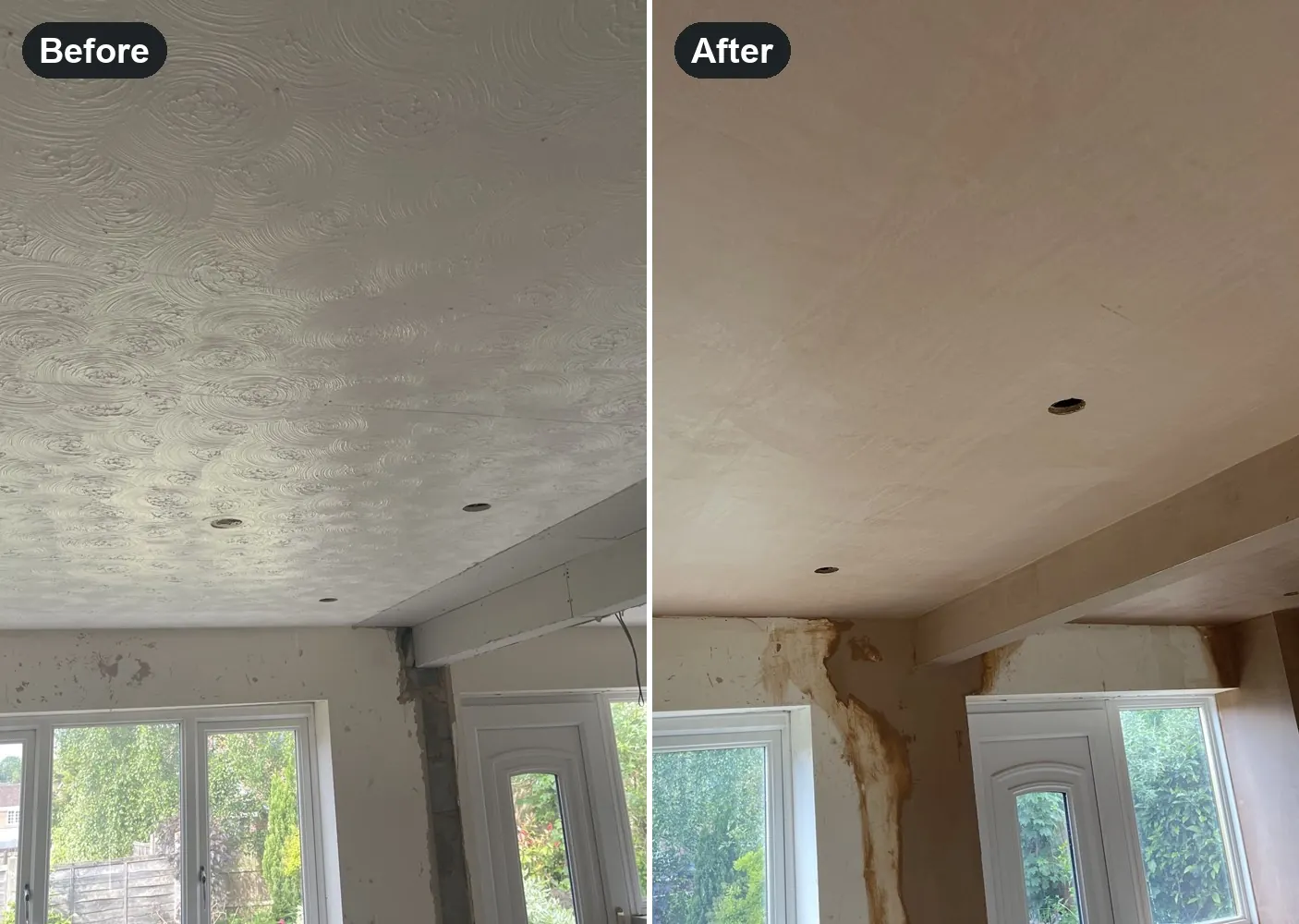
- ceilings that are cracked, sagging or heavily textured, including over Artex
- walls that are badly out of line or have widespread blown plaster
- new partitions, stud walls and boxing in pipes
- renovations where a room needs to be back in use quickly, as boarding brings far less water into the house than wet plaster
Where the plaster is basically sound, a skim is usually the simpler answer. I will tell you which suits your walls.
Dot and dab, battens, metal frame or PU adhesive: what is the difference?
They are four ways of fixing boards, and each suits different walls. The right choice depends on how flat, dry and solid the wall behind is.
| Dot and dab | Timber battens | Metal frame | PU adhesive | |
|---|---|---|---|---|
| How | Boards stuck to the wall on dabs of adhesive | Boards screwed to timber strips fixed to the wall | Boards screwed to a steel stud or ceiling system | Insulated boards, such as PIR, bonded with polyurethane (PU) adhesive, plus mechanical fixings |
| Space used | About 20–25mm | About 35–50mm | Varies; can span very uneven walls | Board thickness plus a few millimetres |
| Suits | Dry, reasonably flat masonry walls | Uneven walls, space for services | Partitions, ceilings, badly out-of-line walls | Insulating flat, sound outside walls where space matters |
| Watch out for | Hollow gaps behind, airflow, hard to fix heavy items | Timber near damp walls | Higher cost, more space | Wall must be flat and sound; edges sealed so no air gets behind |
Dot and dab is quick and common, but it is not right for every wall. On a damp or very uneven wall it can trap moisture or leave large voids, and gaps around the edges let cold air circulate behind the boards. PU adhesive is the usual choice for PIR insulated boards: it bonds the board closely to the wall and, with the edges sealed, stops cold air moving behind it. Ceilings are always screwed to the joists or a metal ceiling system, never stuck.
How are plasterboard joints finished?
Joints are taped with scrim and the whole surface is skimmed, so the boards disappear under a single, even finish. Most domestic walls and ceilings are finished this way because it gives a harder, more durable surface than taping and filling the joints alone.
The details decide whether it lasts: boards staggered so joints do not line up, screws at the right spacing, beads on corners, and board edges supported so they do not move and crack later. Cracks along ceiling joints, one of the most common complaints I see, nearly always trace back to one of these being skipped.
What about insulated plasterboard?
Insulated plasterboard, usually a layer of PIR foam bonded to the board, can make a cold outside wall warmer. But on a solid wall it needs care, because it changes how moisture moves through the wall.
Warm, moist air reaching the cold wall behind the insulation can condense where you cannot see it, and gaps at the edges, sockets and window reveals leave cold spots where mould can start. Fixing it with dot and dab can make this worse by letting air move behind the boards, which is why I bond PIR boards with PU adhesive and seal the edges. That is why I do not treat it as a simple swap for standard board.
If you want to insulate an outside wall, I assess it first and use moisture modelling to choose a safe system and thickness. That might be insulated board, or a breathable system such as wood fibre. My internal wall insulation page explains the options.
Will extra plasterboard stop noise from next door?
Not much on its own. A sheet of board fixed straight to the wall adds a little mass, but sound still passes through the fixings. Proper wall soundproofing separates the new layer from the old wall, adds dense boards and mineral wool and seals every gap.
How long does plasterboarding take, and what affects the cost?
Boarding and skimming the walls or ceiling of an average room usually takes two to three days, plus drying time before decorating. New partitions, metal frames and rooms with lots of pipes, sockets or awkward corners take longer.
The cost depends on the fixing method, the type of board, the area, whether old plaster or a ceiling has to come down first, and what needs moving and refitting. I price after a free home visit, and the written quote sets out the boards, fixings and finish so you can compare it with others like for like.
What should you expect from me?
A survey of the wall before I recommend a fixing method, a written quote that sets out the boards, fixings and finish, and a clean, protected room while the work is done. If sockets or pipes need moving, I can organise the electrician or plumber. You get the room back skimmed and ready to decorate, and I call about four weeks later to check everything has settled. Plasterboarding is part of my wider plastering service across Sutton Coldfield, Walsall and nearby.
Homeowners who called me.
Real reviews from homeowners across the West Midlands, all 5 stars on Google, where you can read every one.
“We had insulation done in our main bedroom, outside wall including bay. From his initial visit, to quotation process and actually doing the work, he was very efficient. It was a pleasure to have Wojtek working in our house.”
“We had our house insulated recently and the difference is honestly amazing. Before, it used to take forever to warm the house up, we’d got to the point where we were even talking about selling because it was just that cold.”
“We’d had black mould forming on our bay window for years and had almost given up trying to clean it off. Nothing we tried ever worked. Then we came across Wojtek at aPlastering.”
“We recently had two rooms insulated by aPlastering, and honestly, they were brilliant from start to finish. They explained everything clearly, the communication was great, and the price was straightforward with no surprises.”
“Our experience with aPlastering was exceptional from start to finish. Wojciech did a thorough survey prior to providing a quote and was crystal clear on what was required. The price was fair for the work required.”
“A very professional and reliable service throughout. From initial enquiry to completion, communication was prompt, with a clear quotation and timeline provided.”
“Excellent professional service, great time keeping, and perfect job. I had insulated plasterboard fitted, soundproof plasterboard and all skimming to a large ground floor, excellent finish throughout and more importantly 3 years in and no cracks.”
“We were let down last minute and he came out to provide a quote the very same day and had our bedroom beautifully plastered the following day, all to an incredibly high standard.”

Free download · 16 pages
Why is my room so cold?
Most cold rooms in 1930s and Victorian homes are cold because their outside walls lose heat fast and stay cold on the surface. This free guide from Retrofit Assessor Wojtek Pankowski helps you find out what's happening in your home and what to do about it, before you spend a penny.
Get the free guideYour questions, answered.
Anything else, ring me on 07763 789272. Happy to talk it through.
Get a free quoteIs dot and dab a good way to fix plasterboard?
It is quick and works well on dry, reasonably flat walls. It is a poor choice on damp walls, very uneven walls or where you need to hang heavy items, and gaps around the edges can let cold air move behind the boards. I look at the wall first and use battens or a metal frame where they suit it better.
Can you board over an old lath and plaster ceiling?
Often, yes. If the old ceiling is still firmly attached to the laths, new boards can be screwed through into the joists and skimmed, which avoids the mess of pulling it down. If it is sagging or has lost its grip, it may need taking down first. I check it carefully at the visit before recommending either.
How thick is plasterboard?
Standard boards are usually 12.5mm for walls and ceilings, with 15mm used where more strength, fire resistance or sound insulation is needed. Thinner 9.5mm boards are sometimes used for overboarding ceilings. Dense acoustic boards and insulated boards are thicker. I choose the board to suit the job and explain why in the quote.
Do new plasterboard walls need skimming?
Usually, yes. A skim gives a harder, more even surface than taped and filled joints, and it hides the board edges and screw heads completely. After skimming the wall needs to dry, typically several days to a week or more, then the first coat of paint should be a mist coat of watered-down emulsion.
Can insulated plasterboard cause damp?
It can, if it is used on the wrong wall or fitted badly. On solid walls, moist air can condense behind the insulation, and gaps at edges and reveals create cold spots where mould grows. It is not always wrong, but it should be chosen after assessing the wall and its moisture, not as a quick fix.
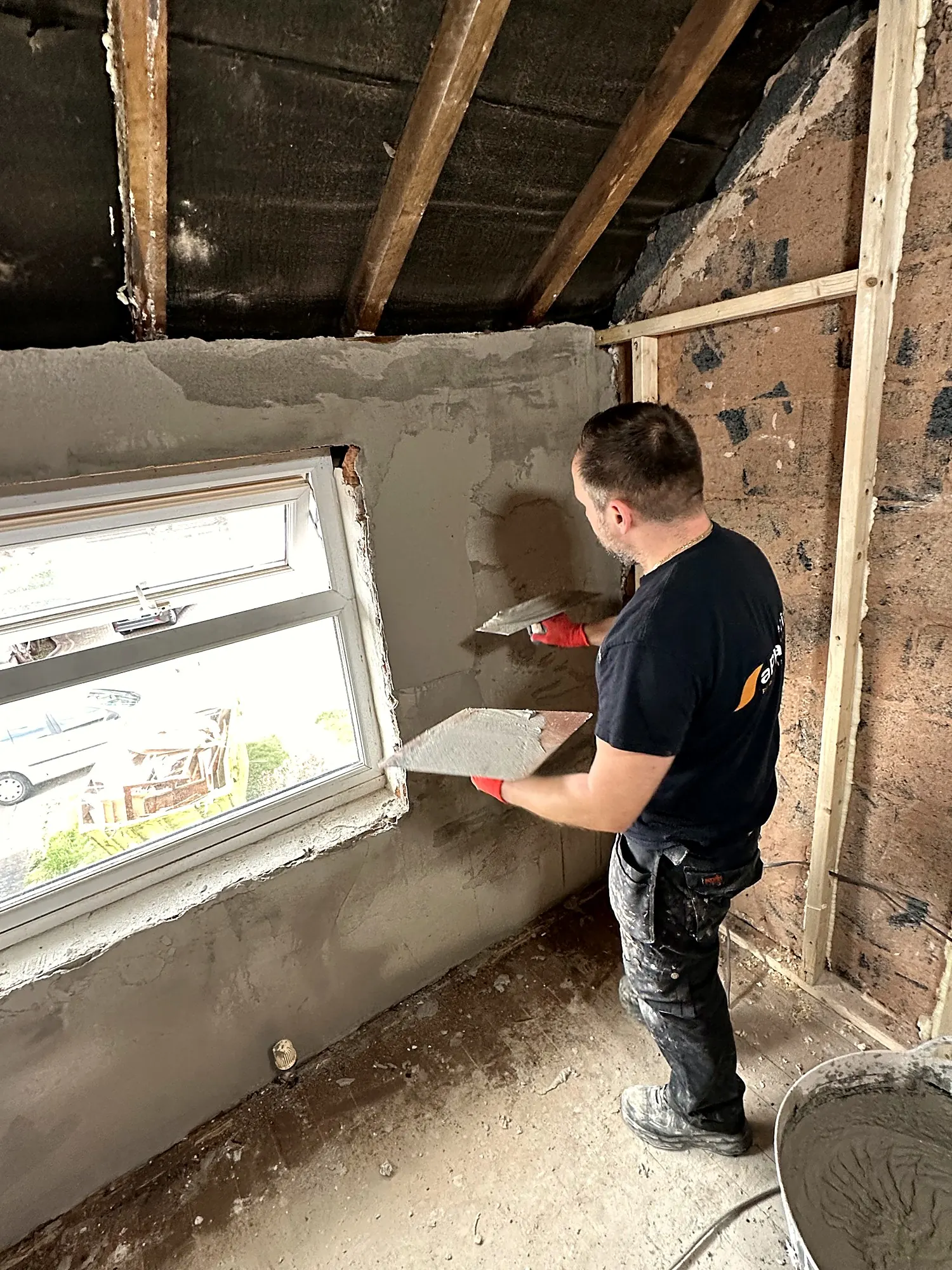
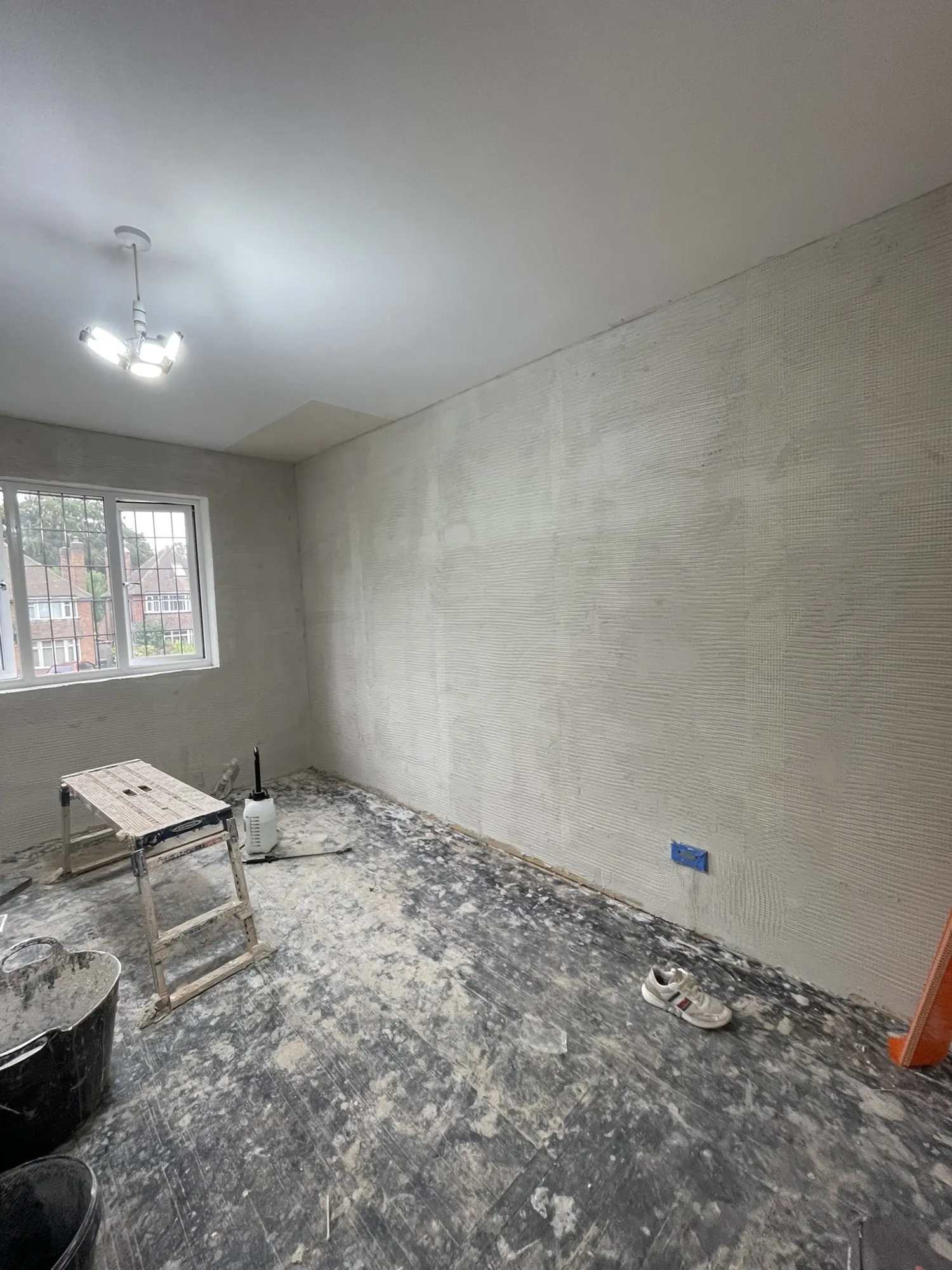
You might also need.
Let's get your walls straight.
Free, no-obligation quote. I'll come and look at the room, tell you honestly what's going on and give you a written quotation.
- TodayI read your message and call or WhatsApp you back.
- This weekA free home visit at a time that suits you.
- Within daysA clear written quote. No pressure, no chasing.
Wojtek, Retrofit AssessorUsually replies the same day
Tell me what's going on. It takes about a minute.
Get a free quote 07763 789272 Or send photos on WhatsApp