Soundproofing
Why can I hear my neighbours through the wall?
You can hear your neighbours because sound is finding a weak point: gaps in the party wall, back-to-back sockets, thinner sections around chimney breasts, or routes around the wall through floors, joists and the loft. The wall itself is often not as thin as people think; it is the gaps and side routes that let most of the noise through.

Wojtek Pankowski, Retrofit AssessorUpdated 1 October 2026 · 6 min read

On this page 9 sections
- Why can I hear everything through my wall?
- Is it airborne or impact noise?
- Where are the weak points in a party wall?
- Which homes are most likely to have noise problems?
- What is flanking sound?
- Why does bass come through more than voices?
- Why does the noise seem worse at night or after new windows?
- What can I do about noisy neighbours right now?
- When is soundproofing worth it?
Why can I hear my neighbours through the wall?
Most noise comes through weak points rather than the solid wall: unfilled mortar joints, back-to-back sockets, thin chimney recesses, gaps in the loft and floor joists that run into the party wall. Sound also travels around the wall through floors and ceilings. Finding which route it takes is the key to reducing it.
Why can I hear everything through my wall?
Because sound is getting through the weakest parts of the wall, or around it. A solid brick party wall is heavy, and heavy walls block sound reasonably well. But one gap, one socket box or one joist carrying vibration can let through far more noise than the rest of the wall combined.
People often tell me the wall must be paper thin. Sometimes it is, particularly in conversions and some newer homes. More often it is a decent wall with holes in its defence. That matters, because it changes what will actually help.
Is it airborne or impact noise?
Work this out first, because the two are fixed differently.
- Airborne noise starts in the air: voices, television, music, a dog barking. You hear it as sound in the room, often clearest near sockets, corners and the ceiling line.
- Impact noise starts in the structure: footsteps, doors slamming, chairs scraping, children jumping. It often feels like thuds and can seem to come from everywhere at once.
A wall lining mainly helps with airborne noise. Impact noise through shared floors and joists usually needs attention at its source, or on the floor and ceiling rather than the wall.
Where are the weak points in a party wall?
They are usually hidden behind the plaster, which is why the wall looks solid while behaving as if it were thin. The common ones are:
- Unfilled mortar joints. In older brickwork the vertical joints between bricks were not always fully filled, leaving tiny air paths straight through.
- Back-to-back sockets and switches. Each one removes much of the wall's thickness at that point.
- Chimney breasts and alcoves. The brickwork beside or behind a flue can be thinner than the main wall.
- Joists built into the wall. Floor joists from both houses often sit in the same wall and carry vibration across.
- The loft. In some older houses the party wall has gaps above the ceiling, or was never fully built up to the roof.
- Gaps at skirting and around pipes where sound leaks into the floor void.
Which homes are most likely to have noise problems?
Every house type has its own typical weak points. This is a general guide, not a rule for every property.
| Home | Party wall | Common weak points |
|---|---|---|
| Victorian terrace | Usually solid brick, often one brick thick | Joists into the wall, chimney recesses, loft gaps, old mortar |
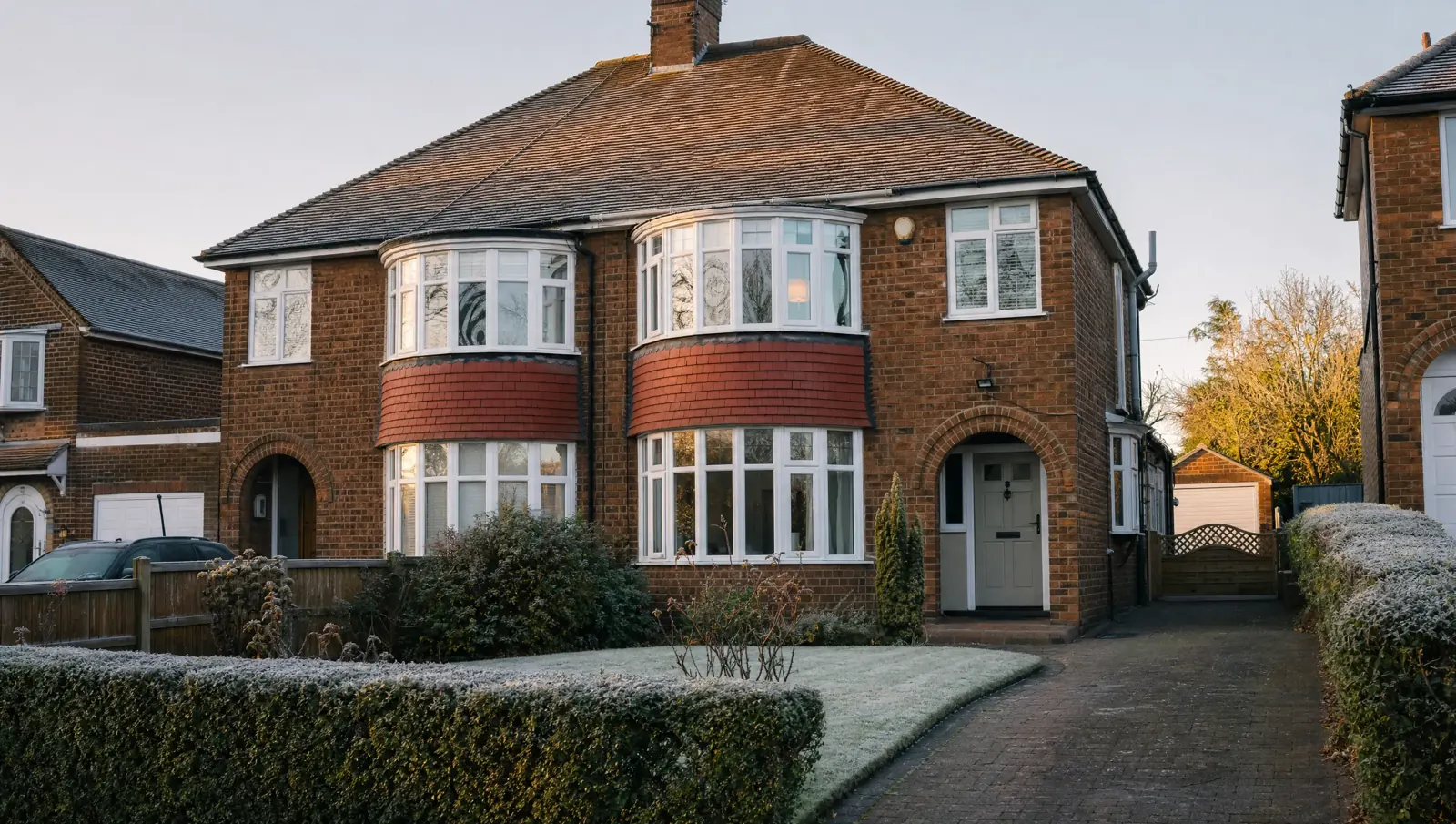
| 1930s semi | Usually solid brick | Back-to-back sockets, chimney breasts, stairs against the party wall |
| Flat in a converted house | Often timber stud or thin partitions | Floors and ceilings, shared voids, lightweight walls |
| Modern new build | Masonry or lightweight systems built to a sound standard | Poor detailing, gaps, flanking through floors |
For context, Building Regulations in England require separating walls in new homes to achieve at least 45 dB of airborne sound insulation on a site test, and 43 dB in conversions. Many older homes were built long before any such standard existed.
What is flanking sound?
Flanking is sound that goes around a wall instead of through it. It travels along floorboards, joists, ceilings, side walls and shared voids, then comes out into your room beside the wall you were blaming.
This is why some people spend money soundproofing a party wall and still hear their neighbours. The new lining works, but the noise simply takes the next easiest route. A good survey looks for flanking paths before anything is designed, because they decide whether treating one wall will be enough.
Why does bass come through more than voices?
Because heavy walls are good at stopping high and middle sounds, and much worse at stopping low ones. Speech sits mostly in the middle range, so a solid brick wall takes the words out of a conversation and leaves a murmur. The thump of bass from a speaker or a subwoofer has long, powerful sound waves that shake the whole wall and the floors around it.
Doubling the weight of a wall only improves it by about 5 to 6 decibels, which is noticeable but not dramatic. That is why simply adding more of the same material has limits, and why good soundproofing relies on separation as well as mass: two layers that are not rigidly connected perform far better than one layer twice as heavy.
It also explains a common experience. You cannot make out what your neighbours are saying, but you can feel their music at night. The wall is doing its job on speech; the bass is going through the structure.
Why does the noise seem worse at night or after new windows?
Because there is less other sound to hide it. During the day, traffic and household noise mask much of what comes through the wall. At night, or after you fit new double glazing that cuts out street noise, the background drops and your neighbour's television suddenly seems much louder, even though it is not.
Worth knowingOnce noise has been bothering you for a while, it can feel louder than it measures, because you start listening for it. That is not imagination; it is how people respond to sounds they cannot control. It also means realistic expectations matter: soundproofing makes noise quieter and less intrusive, but it rarely makes a busy neighbour silent.
What can I do about noisy neighbours right now?
Start with the cheap steps and the conversation, then decide whether building work is justified.
- Talk to your neighbour calmly. Many people have no idea how much you can hear, and a speaker or television moved off the shared wall can make a real difference.
- Listen at different spots to find where the noise is loudest: sockets, corners, floor edges, the ceiling line.
- Seal gaps at skirting boards and around pipes, and check for back-to-back sockets.
- Look in the loft for gaps in the party wall.
- Put heavy furniture, such as a full bookcase, against the shared wall.
- If the noise is excessive and persistent, your local council's environmental health team can investigate whether it amounts to a statutory nuisance.
When is soundproofing worth it?
When the noise is affecting your sleep or your enjoyment of a home you want to stay in, and the cheap steps have not done enough. Many people reach a point where they feel the only choices are soundproofing or moving. Soundproofing is a significant investment, but it is usually far less disruptive than selling up.
The best results come from a design based on how the sound is actually travelling. My guide on how to soundproof a wall explains the systems, space and cost, and my wall soundproofing page covers how I survey and plan the work. If you would like to talk it through, you can get in touch for a free home visit.
Common questions
Is it normal to hear neighbours through a party wall?
Hearing raised voices, music or a loud television occasionally is common in older semis and terraces. Hearing normal conversation clearly is not what a sound party wall should allow, and usually points to gaps, back-to-back sockets or a weak section such as a chimney recess. Those weak points can often be found and improved.
Can my neighbours hear me as well?
Almost certainly, and just as much. Sound passes through a wall equally in both directions, so if you can hear their conversations, they can probably hear yours. That can be a helpful, friendly way to start a conversation with them about moving speakers, televisions or appliances away from the shared wall.
Why can I hear footsteps next door?
Footsteps are impact noise. They travel through floor joists, staircases and the structure rather than through the air, and in many older houses joists from both homes sit in the same party wall. A wall lining helps less with this kind of noise. Rugs and underlay next door, or treatment of floors, often matter more.
Will soundproofing stop all the noise?
No system makes a home completely silent, and anyone promising that is overselling. A well designed build-up can make noise much quieter and less intrusive, so voices become a murmur and a television fades into the background. How much improvement you get depends on the type of noise, the existing wall and the side routes.
Should I soundproof the wall or the whole room?
It depends on where the noise is getting in. If it comes mainly through the party wall, treating that wall and sealing the edges may be enough. If it also travels through the floor, ceiling or a side wall, those routes need attention too. A survey that traces the sound paths answers this before you commit to any work.