Mould & damp
Condensation on bedroom walls: why it's always the outside wall
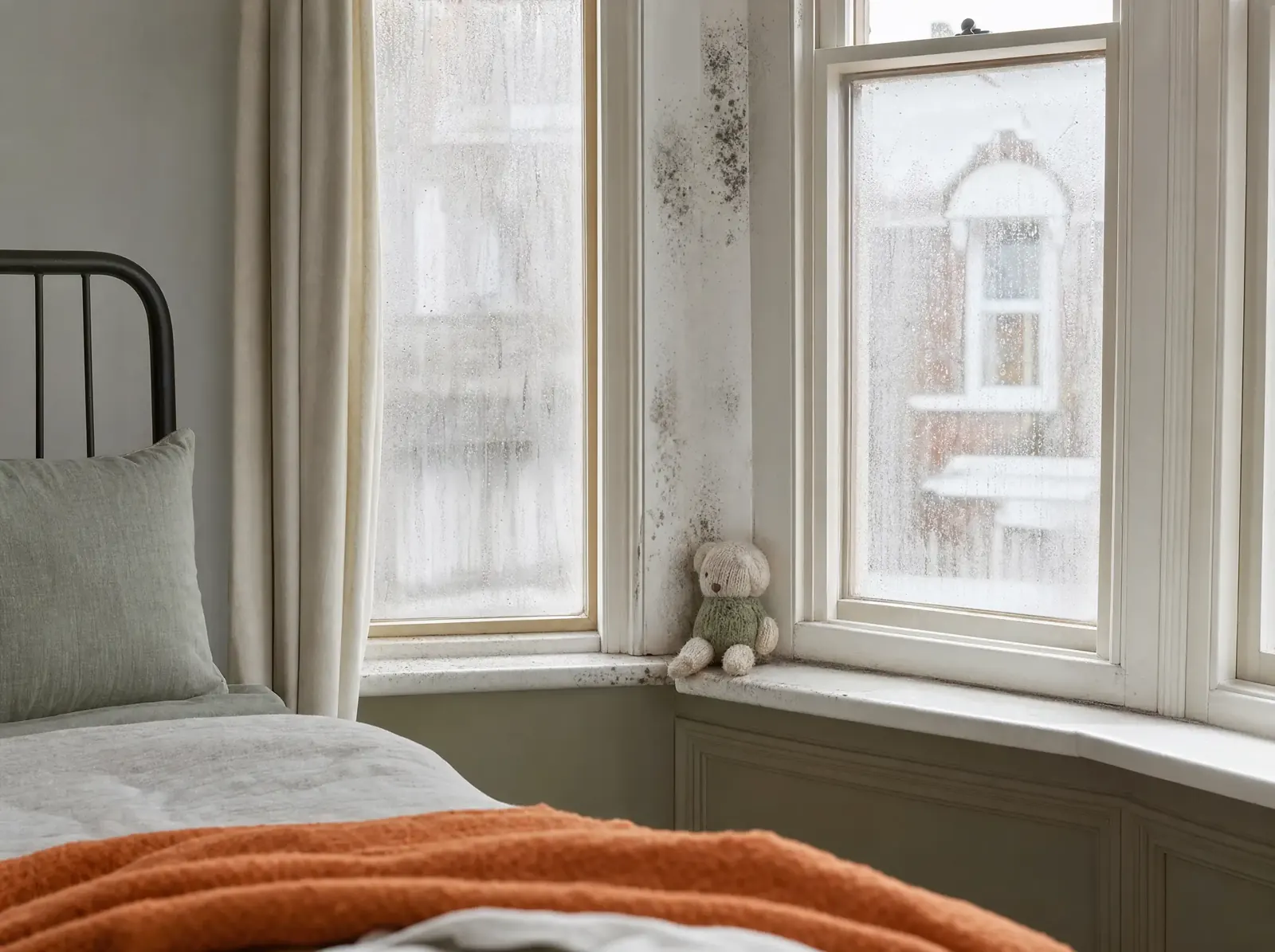
Condensation forms on the outside wall of a bedroom because that wall is the coldest surface in the room, and warm, moist air turns back into water when it touches anything below its dew point. Behind a wardrobe it is worse: the furniture blocks the heat and stops the air moving, so the wall stays cold and damp all night.

Wojtek Pankowski, Retrofit AssessorUpdated 9 October 2026 · 8 min read
On this page 8 sections
- Why does condensation form on the outside wall and not the others?
- How cold does a wall have to be for condensation?
- Why does mould grow behind the wardrobe?
- Is it condensation, or damp coming in?
- Is black mould in a child's bedroom dangerous?
- What can I do tonight to reduce condensation?
- How is condensation on an outside wall fixed for good?
- When should I call a specialist?
Why is there condensation on my bedroom wall?
In a bedroom at 20°C and 60% relative humidity, water condenses on any surface colder than about 12°C, and mould can grow on surfaces below roughly 15°C even without visible droplets. An uninsulated solid brick outside wall can sit at around 14.5°C on a freezing night, and its corners and the wall behind a wardrobe are colder still.
Why does condensation form on the outside wall and not the others?
Because the outside wall is the only one with winter on the other side of it. Internal walls have heated rooms on both sides, so they stay close to room temperature. The external wall loses heat to the outside all night, and its inside surface ends up several degrees colder than the air in the room.
Many 1930s semis around Walsall, Great Barr and Sutton Coldfield have solid 225mm brick walls with no cavity to fill. A corner bedroom has two of them, and a front bedroom often has a bay window as well. Those rooms are where I find most condensation mould.
Bedrooms also make a lot of moisture. Two people asleep with the door shut breathe a surprising amount of water vapour into the air overnight, and a child's room with a drying rack in it adds more. By morning the air is at its dampest and the wall is at its coldest, which is why the patches look worst when you open the curtains.
How cold does a wall have to be for condensation?
It depends on how warm and how humid the room is. The dew point is the temperature at which water vapour in the air turns back into liquid on a surface. Any part of the wall colder than the dew point gets wet.
| Room air | Relative humidity | Dew point (water forms below) |
|---|---|---|
| 20°C | 50% | about 9°C |
| 20°C | 60% | about 12°C |
| 20°C | 70% | about 14°C |
| 18°C | 60% | about 10°C |
| 18°C | 70% | about 12.5°C |
Figures calculated with the standard Magnus formula and rounded. Mould does not even need droplets. It can grow where the air touching a surface stays at around 80% humidity for long periods, which in a room at 20°C and 60% happens on any surface below roughly 15°C.
Now compare that with the wall. My calculation for a 1930s solid brick bedroom wall put its inside surface at about 14.5°C with 20°C in the room and 0°C outside. That is already inside the mould risk zone, before you count the colder corners, the window reveals and the patch behind the wardrobe.
Why does mould grow behind the wardrobe?
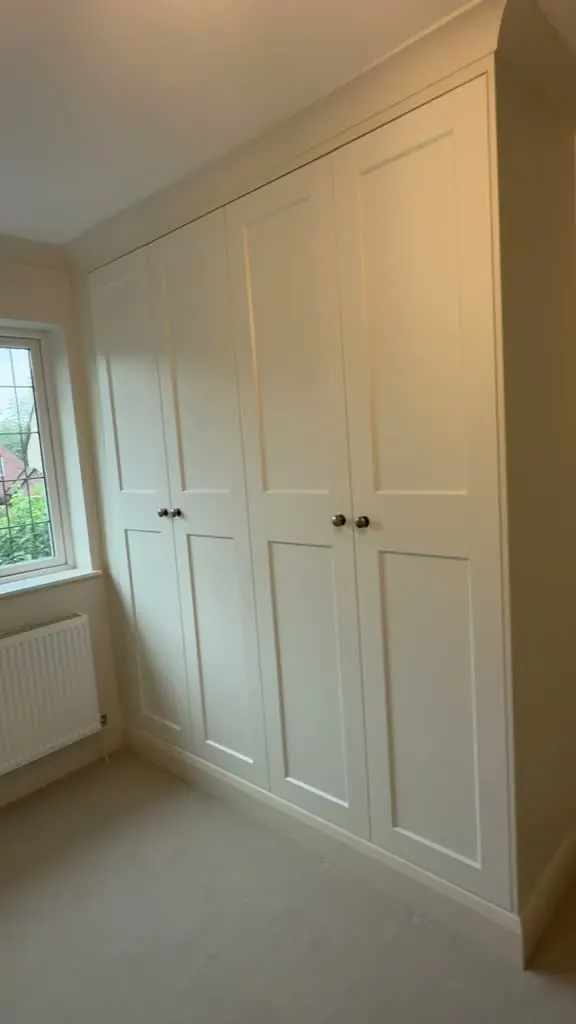
A wardrobe pushed against an outside wall acts like a blanket on the wrong side. It stops the warmth of the room reaching that part of the wall, so the surface behind it becomes one of the coldest in the house. The air in the gap barely moves, so moisture settles and stays.
That is why people often find mould only when they move furniture: black spots in a neat rectangle, a musty smell on clothes, or mould on the back panel of the wardrobe itself. The same thing happens behind a headboard, a cot or a chest of drawers on an outside wall.
- Leave a gap of 5 to 10cm between furniture and outside walls so air can move behind it.
- Where you can, put wardrobes on an internal wall instead.
- Built-in wardrobes on an outside wall need a ventilated back or a gap, and the doors opening regularly.
- Keep the radiator clear so its heat reaches the room, not the back of a wardrobe.
Is it condensation, or damp coming in?
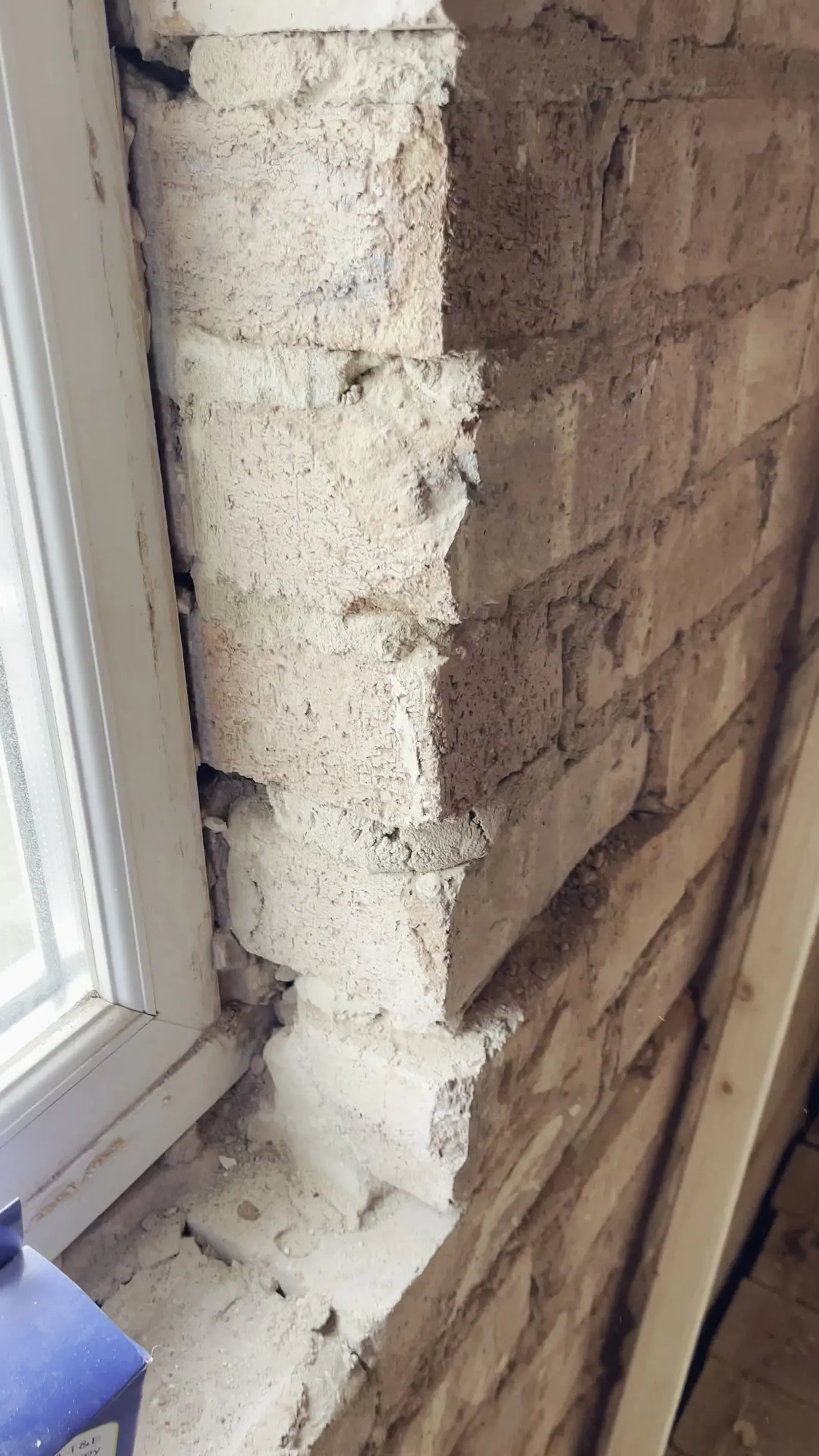
Check this before spending money, because the fixes are completely different. Condensation needs warmer walls and better ventilation. Water coming in from outside needs a repair.
| What you see | Likely cause |
|---|---|
| Black spots in corners, around windows and behind furniture, worse in winter and first thing in the morning | Condensation on cold surfaces |
| A patch with a tide mark that grows after rain | Water getting in: gutters, pointing, render or a bay roof |
| A wet patch in one spot in any weather | A leaking pipe, radiator valve or bath seal |
| Staining low on the wall with white salts | Often bridged or raised ground outside |
My guide on how to stop mould coming back goes through each of these in more detail, including the daily habits that cut moisture.
Is black mould in a child's bedroom dangerous?
It deserves attention, calmly. The NHS says damp and mould can cause breathing problems, infections, allergies and asthma, and can affect the immune system. Babies and children, older people, anyone with asthma or another lung condition and people with weakened immune systems are the most vulnerable. See the NHS page on damp and mould, and speak to your GP if someone in the house has symptoms. The government's guidance on the health risks of damp and mould is also worth reading if you rent.
Clean small patches safely while the cause is sorted:
- wear a proper mask, gloves and eye protection, and open the window;
- use a fungicidal wash as the label directs, rather than bleach;
- never brush or scrape dry mould, as that spreads spores into the air;
- let the child sleep in another room while you clean, if you can.
If the patch is large, keeps returning, or anyone at home has asthma or a weak immune system, leave it to a professional.
What can I do tonight to reduce condensation?
A few habits make a real difference straight away. They do not warm a cold wall, but they reduce the moisture that lands on it.
- Buy a simple digital hygrometer and aim for 40% to 60% relative humidity in the bedroom. Readings above 65% every morning mean moisture is building up.
- Do not dry washing in bedrooms or on bedroom radiators.
- Keep trickle vents open and open the window fully for a few minutes each morning.
- Heat the room steadily rather than in short, hot bursts, so the walls never cool right down.
- Open the curtains fully in the morning, and wipe condensation off windows and sills.
- Pull the wardrobe and bed a few centimetres off the outside wall.
A dehumidifier helps too, especially in a child's room, but it has to run and be emptied every day, and the mould usually returns once it stops.
How is condensation on an outside wall fixed for good?
By warming the wall surface and getting moisture out of the house. I work from the simplest fix upwards and only suggest building work when the habits and ventilation are already right.
| Level | What it involves | Suits |
|---|---|---|
| 1. Ventilation and furniture | Trickle vents, extractor fans that work, door undercuts, gaps behind furniture | Every home, as a first step |
| 2. Internal cork coating | A thin, breathable cork plaster, millimetres thick | Walls that are only slightly too cold, corners and reveals |
| 3. Internal wall insulation | A full insulated layer, about 20 to 80mm, plastered and ready to decorate | Cold solid walls where mould returns every winter |
In my 1930s bedroom case study, insulating the solid brick wall raised its calculated inside surface temperature from about 14.5°C to about 18.4°C on a 0°C day, well clear of the dew point. As a guide, internal wall insulation starts from about £2,000 per wall, and a cold bay from about £1,700 per bay, always with a written quotation after a free survey.
When should I call a specialist?
Call when the mould comes back to the same wall every winter even though you clean it, air the room and keep the furniture off the wall. That pattern means the wall is simply too cold, and no spray will change it.
The houses I see this in most are 1930s semis in Walsall, Sutton Coldfield, Great Barr and Birmingham: solid brick, a bay window at the front, and a back bedroom on the corner with a wardrobe on the outside wall. If the front bedroom is the problem, read why bay windows are so cold as well, because the panel under the window is often the coldest surface in the house.
On a home visit I measure the wall, check for leaks and damp coming in, look at the ventilation and explain in plain English what is causing it. You can find out more about my condensation and black mould service, or get in touch to book a free survey.
Common questions
Why do I only get condensation on one bedroom wall?
Because that wall is colder than the others. It is usually the outside wall, often solid brick with no cavity, and it loses heat to the outside all night. Internal walls have heated rooms on both sides. The coldest surface in the room is always where moisture settles first, so the outside wall gets wet while the rest stay dry.
Will a dehumidifier fix condensation on my bedroom wall?
It helps by taking moisture out of the air, and it is a sensible short-term step, especially in a child's room. It does not warm the wall, though, and it needs to run and be emptied every day. Most people find the mould comes back once they stop using it, so it works best alongside a proper fix.
Will mould spray or anti-mould paint stop it coming back?
Not for long. Sprays and anti-mould paint treat the mould you can see, not the cold, damp surface it grows on. Once the wall gets wet again on the next cold night, new growth appears. Cleaning is still worth doing safely, but warming the wall and improving ventilation is what stops the cycle.
Should I open the bedroom window in winter?
Yes, briefly. Opening the window fully for a few minutes each morning swaps damp air for drier air without cooling the walls much. Keep trickle vents open all the time. Leaving a window open a crack all night in winter can make the walls colder, which can make condensation worse rather than better.
How do I know if it is condensation or rising damp?
Condensation mould usually appears high in cold corners, around windows and behind furniture, and is worst in winter mornings. Damp from outside tends to show as a tide mark, patches that grow after rain, or damage low on the wall with white salts. If you are unsure, get it checked before paying for any treatment.
Who can fix the cause rather than the symptom?
Look for someone who measures the wall and checks for leaks and ventilation before recommending a product. As a Retrofit Assessor I start with a free home visit, find out why that wall is cold and damp, and then suggest the simplest fix that will last, from ventilation changes to cork coating or internal wall insulation.