Period homes
Lime plaster or gypsum? Will replastering cure damp?
Use lime plaster on old solid walls that need to dry out, and gypsum on plasterboard, partitions and modern cavity walls. Replastering on its own will not cure damp: the cause, such as a leaking gutter, failed pointing, high ground or condensation, has to be fixed first, and new gypsum on a damp solid wall often fails again within a few years.

Wojtek Pankowski, Retrofit AssessorUpdated 9 October 2026 · 7 min read
On this page 8 sections
- What is the difference between lime and gypsum plaster?
- Will replastering cure damp?
- Does a 1930s house need lime plaster?
- Can you put gypsum over lime, or lime over gypsum?
- Can lime plaster insulate a wall?
- How much does lime plastering cost?
- How long does lime take to dry, and what paint can I use?
- When should I call a specialist?
Will replastering cure damp?
No. New plaster hides damp for a while but does not remove its cause. On a solid brick or stone wall, replacing failed gypsum or cement with lime can help the wall dry, because lime is vapour-open, but only after leaks, pointing, ground levels and ventilation have been put right. Plaster is the last step, not the cure.
What is the difference between lime and gypsum plaster?
Lime plaster is the traditional, porous plaster used in British houses for centuries. It hardens slowly by absorbing carbon dioxide from the air and lets water vapour pass through. Gypsum plaster is the modern standard: quick, smooth and cheap, ideal for plasterboard and cavity walls, but it softens and breaks down if it stays damp.
| Lime plaster | Gypsum plaster | |
|---|---|---|
| Moisture | Vapour-open, lets walls dry | Less open, weakens if it stays damp |
| Movement | Slightly flexible, copes with old walls | Harder, more prone to cracking on moving walls |
| Setting | Hardens slowly over weeks | Sets in hours |
| Time before decorating | Several weeks, depending on conditions | Usually days to a couple of weeks |
| Paint | Breathable paints only: limewash, clay or mineral paint | Most emulsions |
| Cost | Higher: more coats, time and skill | Lower |
Neither is better everywhere. In the same house I might use lime on the solid outside walls and ordinary gypsum plastering on the partitions and ceilings.
Will replastering cure damp?
No, and this is the most expensive misunderstanding I come across. Damp is water getting into, or condensing on, the wall. Plaster does not stop either. The usual causes are:
- leaking or blocked gutters and downpipes;
- failed or cement-hard pointing and cracked render;
- soil, paths or patios built up against the wall above the damp-proof course;
- plumbing leaks;
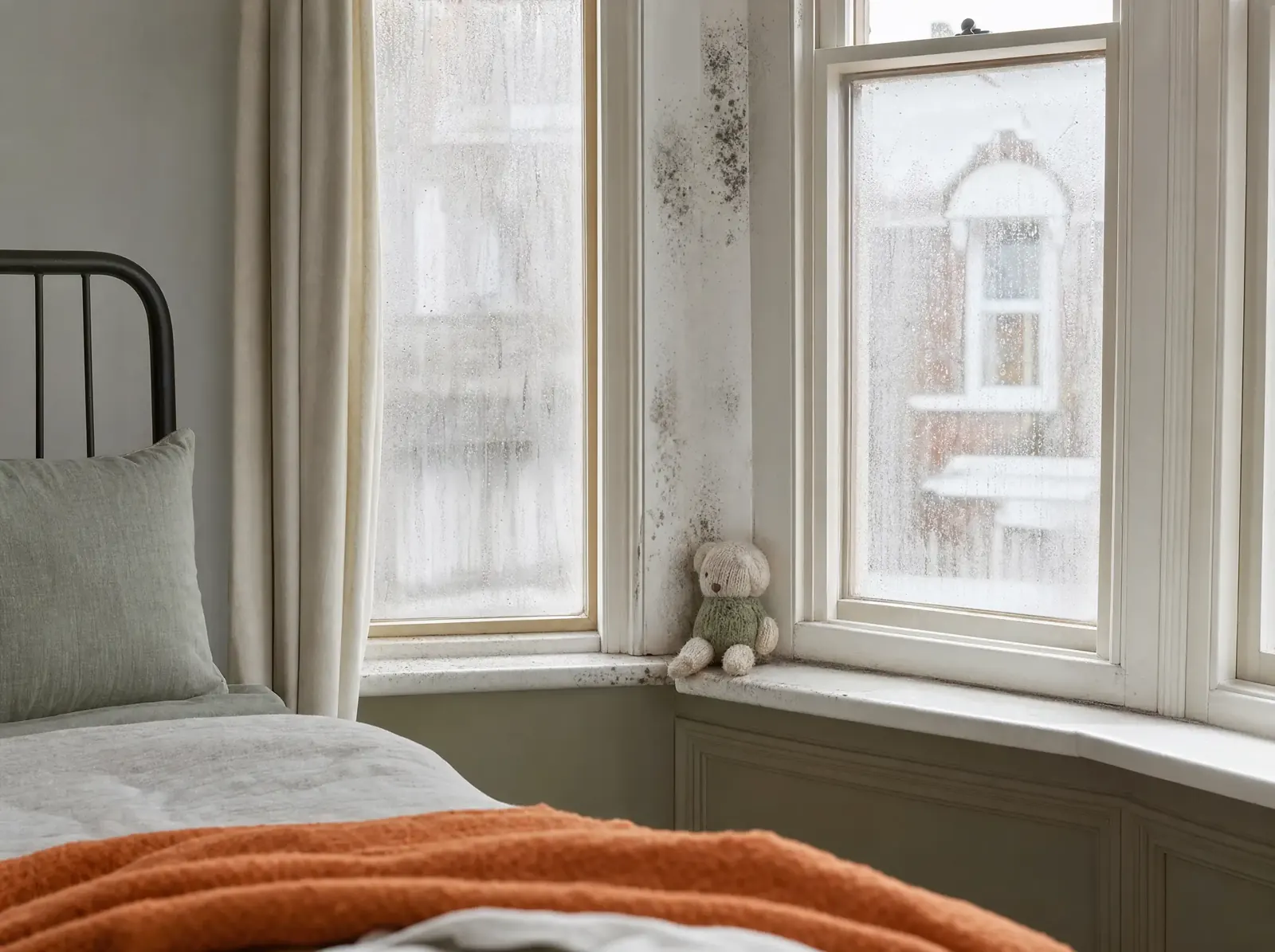
- condensation on a cold wall, especially in bedrooms and bays.
When gypsum goes onto a solid wall that is still damp, the moisture cannot escape through it. It moves to the edges, brings salts to the surface and the new plaster blows or bubbles. A familiar story is a damp patch replastered in gypsum, painted in vinyl emulsion, and back with mould or flaking paint within a couple of winters.
Fix the cause first, then choose a plaster that lets the wall dry. On an old solid wall that usually means lime. If mould is the main problem, my guide on condensation on bedroom walls explains the cold-wall side.
Does a 1930s house need lime plaster?
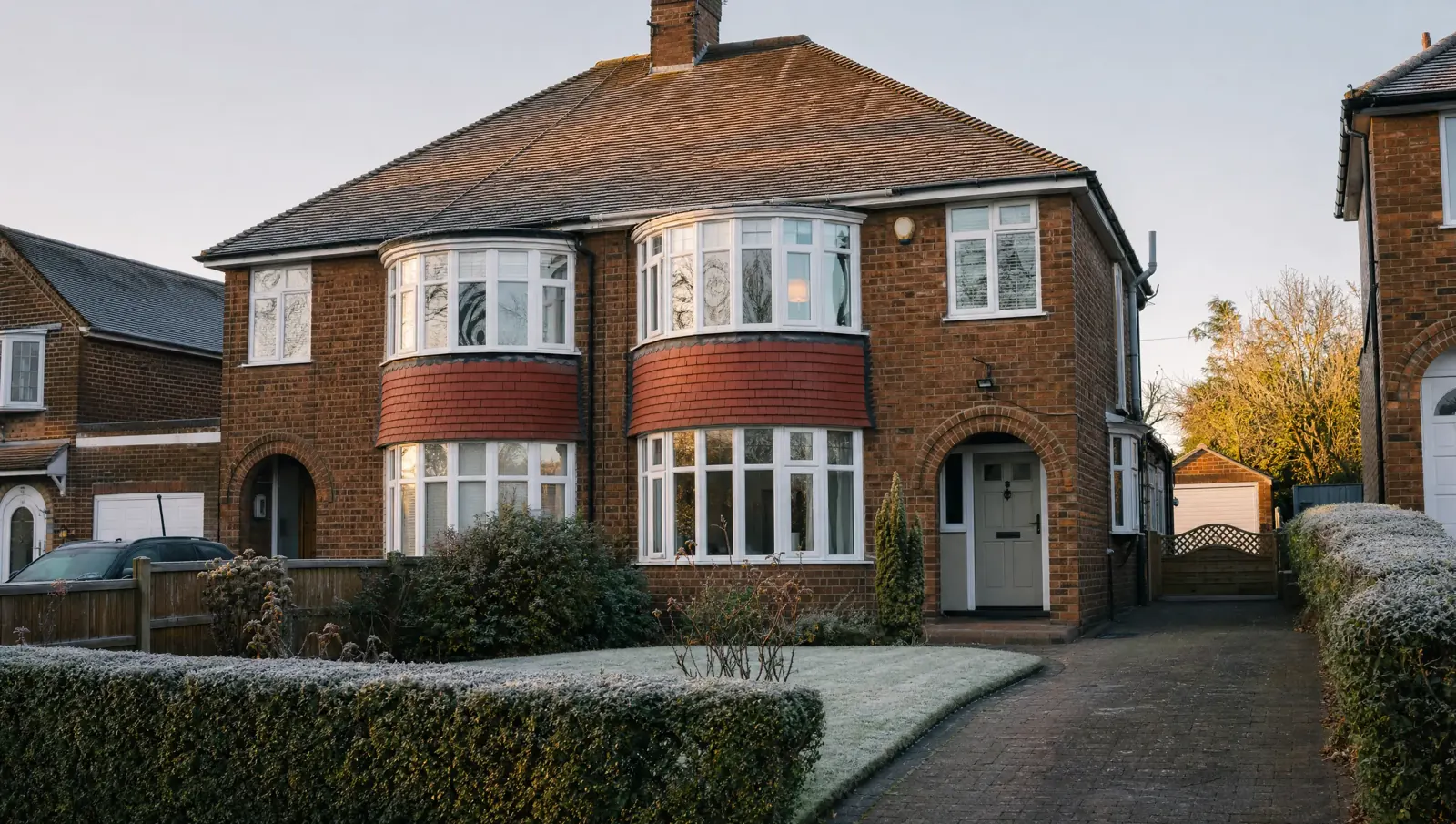
Not always, so check before deciding. Houses built before about 1919 with solid walls were plastered in lime, and lime is very likely the right choice for them. 1930s houses sit in between: many semis around Walsall, Great Barr and Sutton Coldfield have solid 225mm brick walls, and the original plaster can be lime, a mix with cement or an early gypsum, with decades of patch repairs on top.
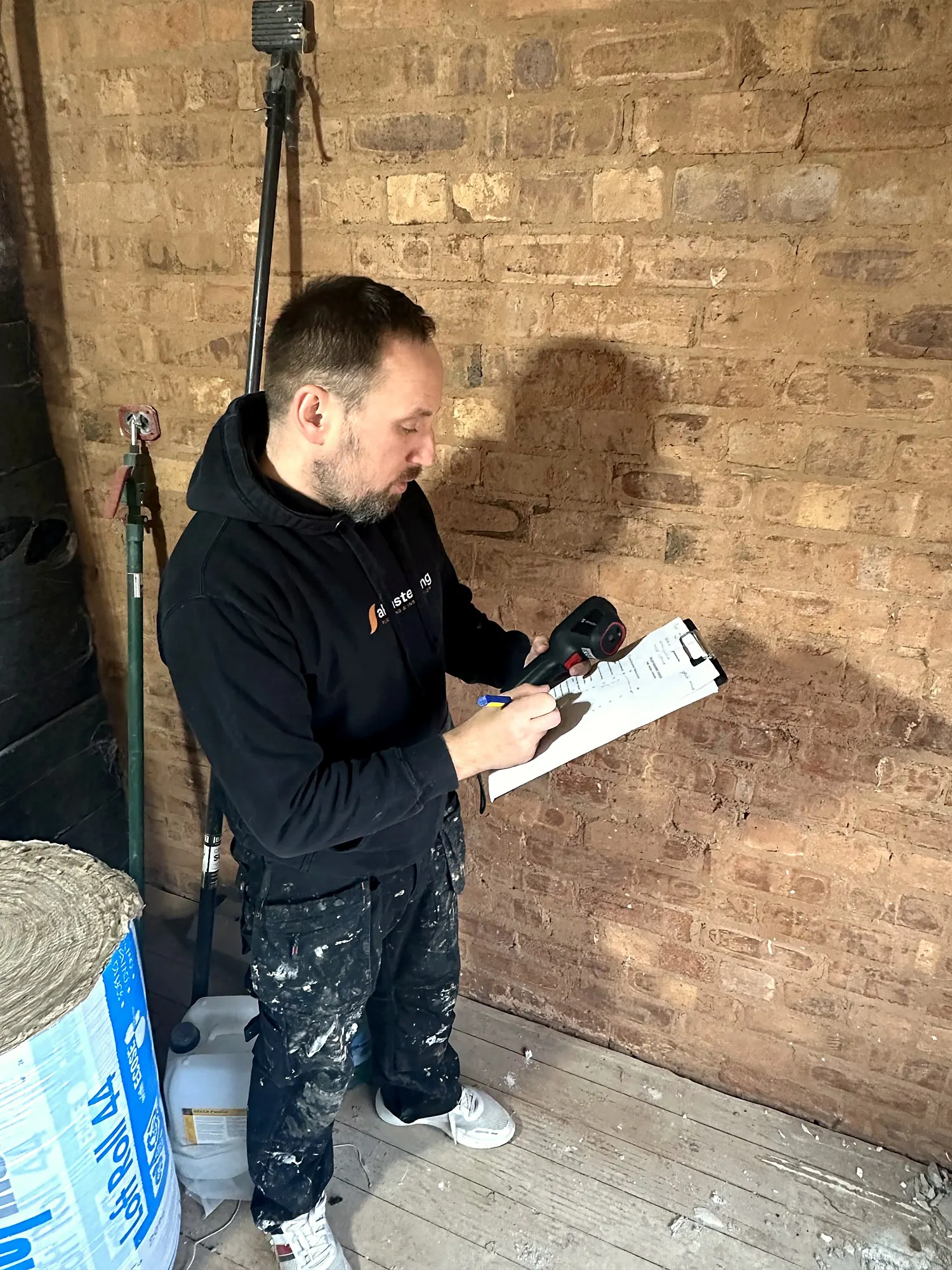
What matters is how the wall behaves. If an outside wall is dry, sound and well ventilated, a good gypsum repair can be perfectly fine. If it shows damp patches, salts, bubbling paint or blown plaster after earlier gypsum or cement work, lime is worth serious thought. At a survey I tap the walls, check how well the plaster is holding, take moisture readings and tell you what can be kept.
Can you put gypsum over lime, or lime over gypsum?
Gypsum over old lime is common, and on a dry internal wall it can work. On a solid outside wall it partly defeats the point of the lime underneath, because the gypsum layer limits drying.
Lime over existing gypsum is not usually a good idea either. Where the aim is a breathable wall, the gypsum normally comes off first, so the lime sits directly on the masonry or on a breathable insulation board. On a wall with no moisture problems, a sound gypsum surface may simply be best left alone. Where plaster does have to be replaced, I take off only what is failing and blend new lime into the old so the wall reads as one surface.
Can lime plaster insulate a wall?
Ordinary lime plaster does not insulate much on its own. It makes a wall healthier, not much warmer. There are two ways to get warmth with lime:
- Thin thermal coatings: cork-based plasters, millimetres thick, lift the surface temperature a little. My internal cork coating suits walls that are only slightly too cold.
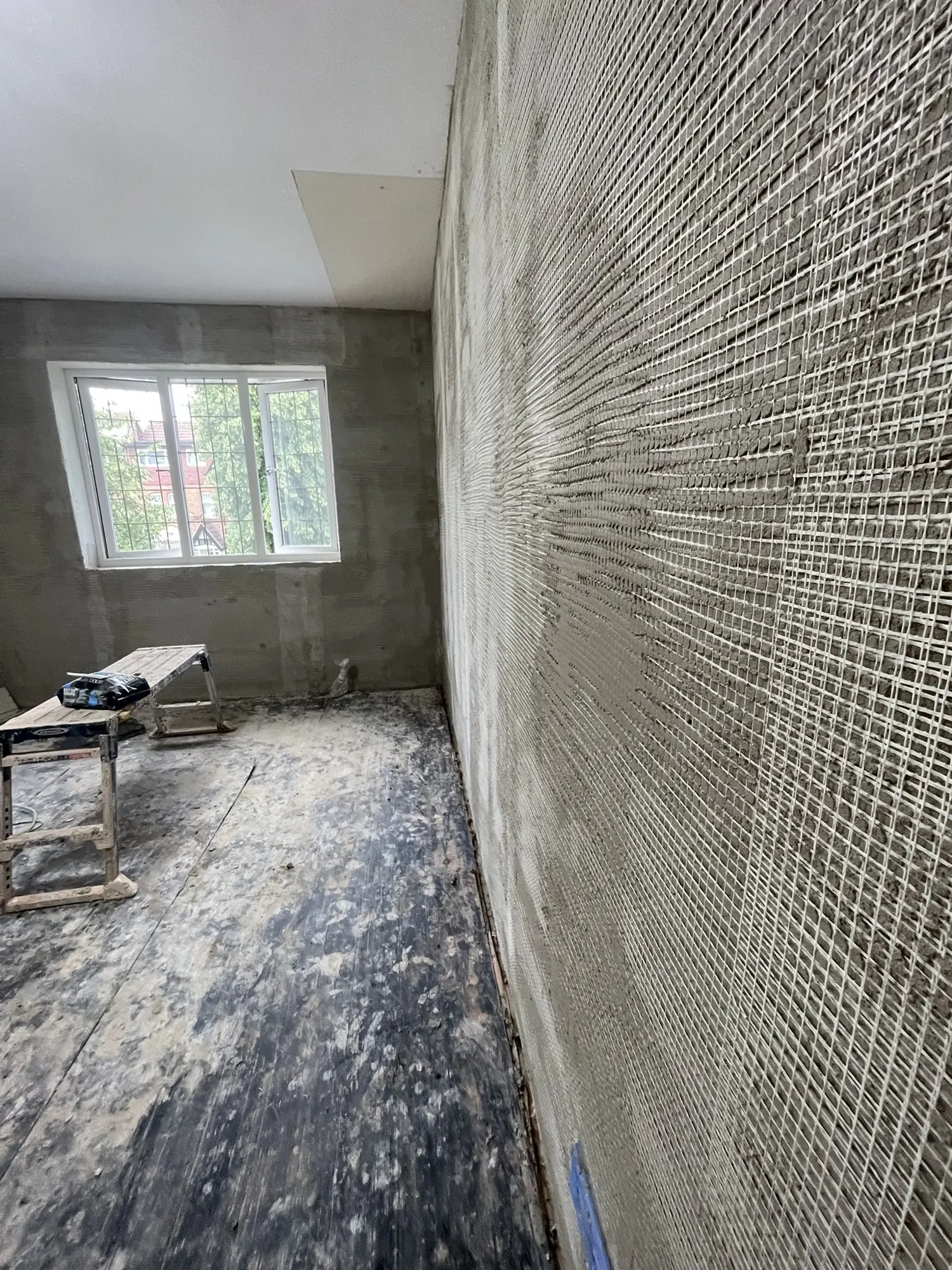
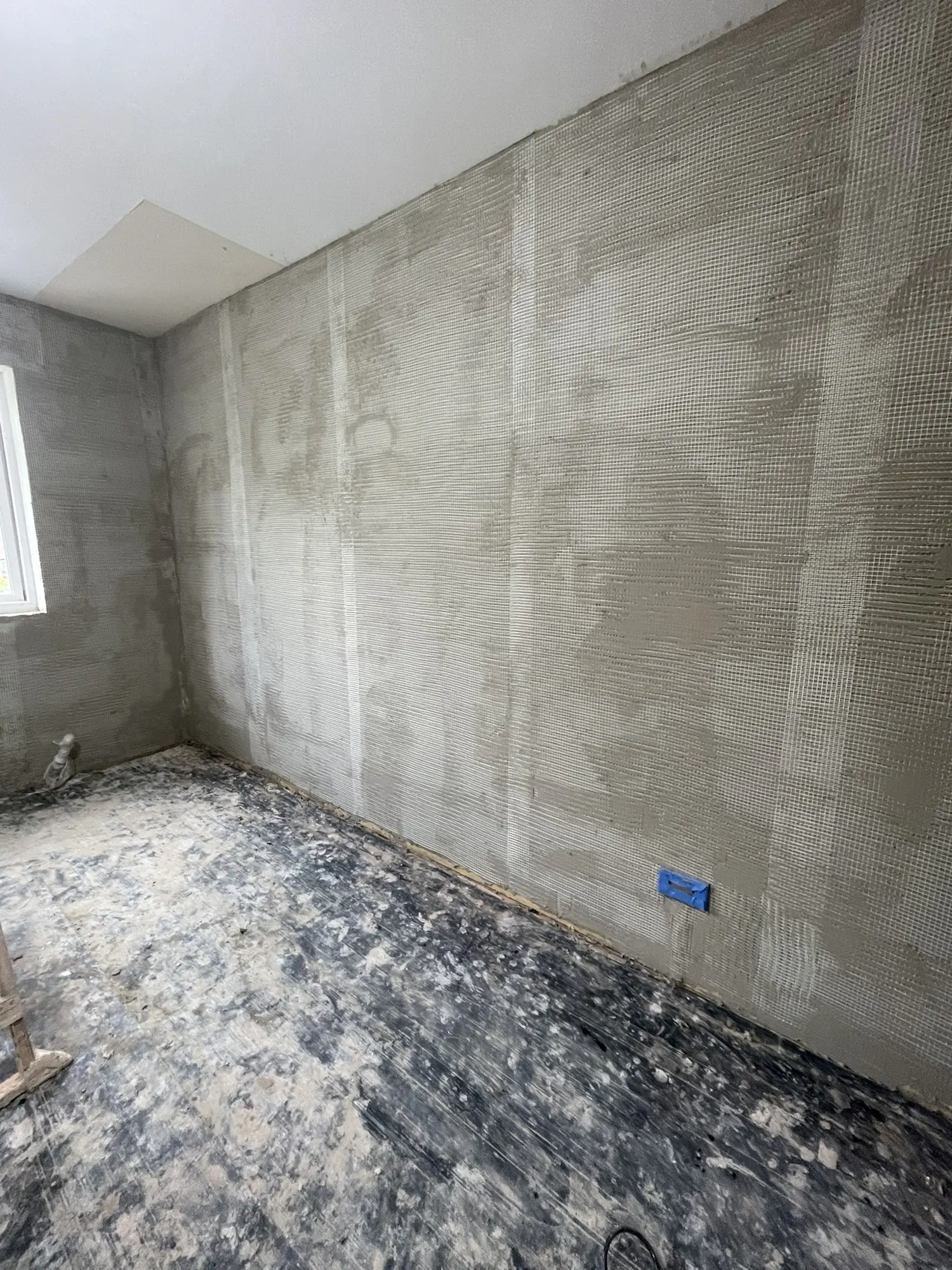
- Breathable insulation finished in lime: wood fibre boards with lime base coats and finish. In my 1930s bedroom case study, 40mm and 25mm of wood fibre on two walls cut their estimated heat loss by about 71% and 60%.
For older and listed buildings, Historic England's guidance on retrofit and energy efficiency explains why moisture-open materials matter. I use moisture modelling to choose a safe build-up and thickness before recommending anything.
How much does lime plastering cost?
More than gypsum, usually. Lime takes longer to apply, needs more coats and must be protected while it cures, and it needs more skill. I price lime work after a free home visit, because how much plaster can be saved changes the job completely.
Where lime is part of breathable internal wall insulation, my typical range is around £3,000 per wall over about 5 days, as a guide only. On a solid-wall period home, the extra cost is usually smaller than the cost of replastering again after the wrong plaster fails. My guide to internal wall insulation cost sets out the ranges in more detail.
How long does lime take to dry, and what paint can I use?
Several weeks before decorating, depending on thickness, weather and ventilation. Each coat needs time before the next goes on, and new lime is kept lightly damp and protected from fast drying, direct heat and frost. That can mean keeping radiators low in the room for a while, and planning winter jobs around the temperature.
Finish it with a breathable paint: limewash, clay paint or a mineral silicate paint. Standard vinyl emulsion forms a skin that slows drying and undoes much of the benefit of the lime.
When should I call a specialist?
Call before replastering any outside wall that has had damp, salts or blown plaster, and before you let anyone hack off sound old lime. If the house is listed, check with your local conservation officer first, because like-for-like materials are generally expected and some works need consent.
I trained in lime plastering and thermal upgrading at Ty-Mawr, and I work from Bloxwich across Walsall, Sutton Coldfield, Lichfield, Birmingham and Solihull, mostly on Victorian terraces and 1930s semis with bay windows. You can read more about my lime plastering work and insulating a Victorian home, or get in touch for a free home visit and written quotation.
Common questions
Is lime plaster more expensive than gypsum?
Yes, usually. Lime takes longer to apply, needs more coats and has to be looked after while it cures, and it needs more skill. On a solid-wall period home, though, it avoids the cost of damp problems that the wrong plaster can cause. Each job is priced after a free home visit.
Will replastering get rid of mould?
Not by itself. Mould grows where a surface stays cold and damp, and new plaster does not change that for long. Fix leaks and ventilation, and warm the wall if it is too cold. Then replaster with a material that suits the wall, which on an old solid wall is usually lime.
Can I use gypsum anywhere in an old house?
Yes. Gypsum is fine on plasterboard, stud partitions, most ceilings and dry internal walls. The places to be careful are solid outside walls and anywhere with a history of damp, salts or blown plaster, where a vapour-open lime plaster lets the wall dry out instead of trapping moisture.
How long before I can paint lime plaster?
Usually several weeks, depending on how thick it is, the weather and ventilation. Lime hardens slowly by absorbing carbon dioxide. When it is ready, use a breathable finish such as limewash, clay paint or mineral silicate paint, not a standard vinyl emulsion, which slows drying.
Is cement render or plaster bad for old walls?
On traditional solid walls it often is. Cement is hard and vapour-tight, so moisture gets stuck behind it and comes out wherever it can, often as damp patches, salts or blown plaster. Replacing failed cement with lime, after fixing the source of water, usually helps the wall dry out.
Do I need lime if my house is listed?
For listed buildings, like-for-like traditional materials are generally expected and some works need listed building consent, so check with your local conservation officer before starting. Conservation areas mostly control external changes, but lime is still the compatible choice inside a traditional house.