Plastering
Artex and asbestos: plaster over it, or take it off?
In most homes you can plaster over an Artex ceiling instead of removing it, and covering it is usually the safer and cheaper choice. If the Artex went on before 2000, have a sample tested for asbestos by an accredited laboratory first, and do not sand, scrape or steam it while you wait for the result.

Wojtek Pankowski, Retrofit AssessorUpdated 9 October 2026 · 9 min read
On this page 8 sections
- What is Artex, and why might it contain asbestos?
- How do I find out if my Artex contains asbestos?
- Should Artex be plastered over or removed?
- When do you need a licensed asbestos contractor?
- How is an Artex ceiling plastered over safely?
- How much does it cost to plaster over an Artex ceiling?
- Is it safe to live with Artex that contains asbestos?
- When should I call a specialist?
Can you plaster over Artex that might contain asbestos?
Yes, in most cases. Skimming or overboarding a sound Artex ceiling seals the coating in without creating dust, which is why it is the usual approach even when asbestos is present. The Health and Safety Executive (HSE) advises that asbestos in good condition, left undisturbed, is usually best left in place. The danger comes from sanding, scraping, drilling or steaming it.
What is Artex, and why might it contain asbestos?
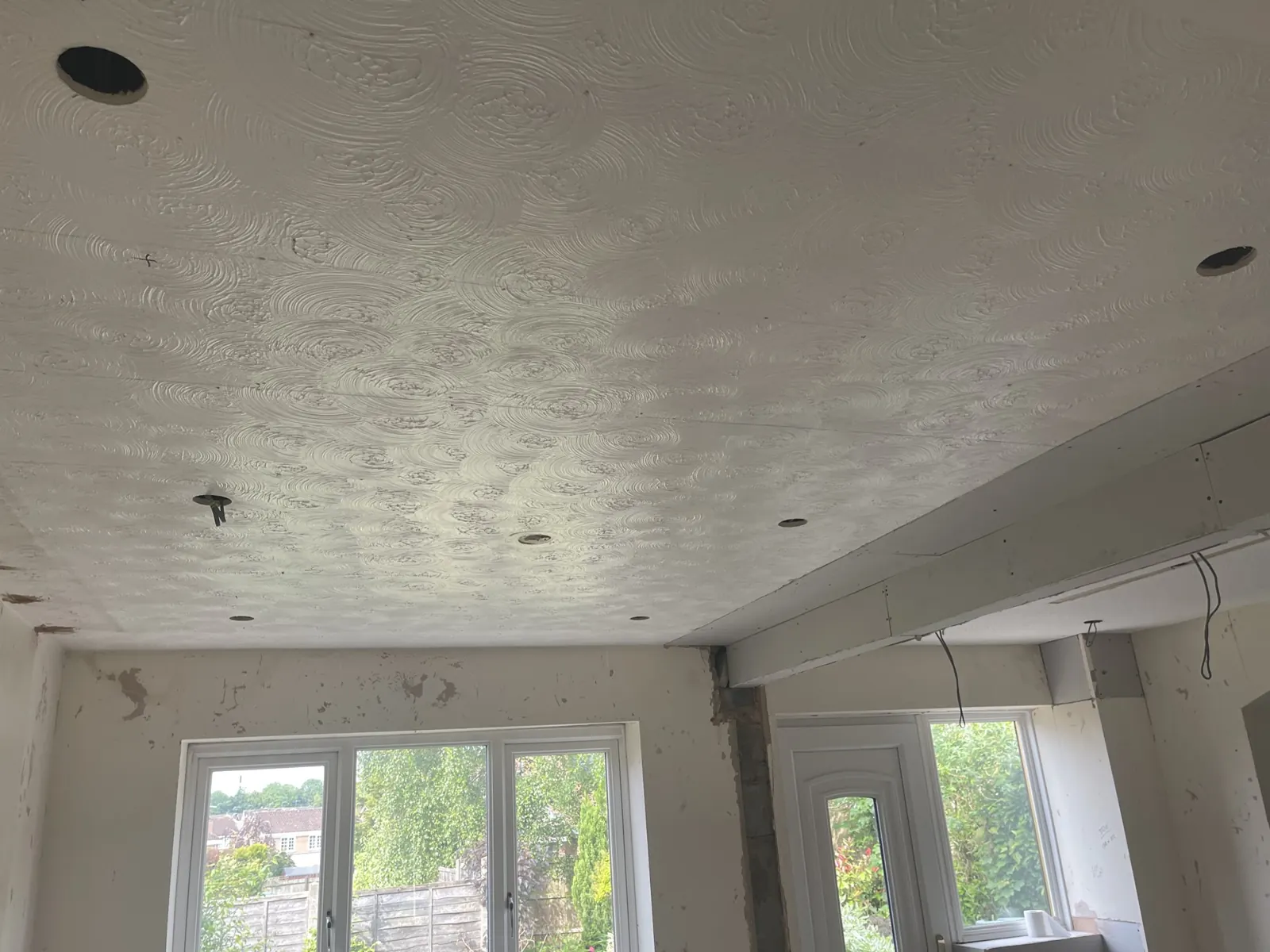
Artex is a brand name that became the everyday word for any textured coating on a ceiling or wall: the swirls, stipples, fans and peaks that were fashionable from the 1960s to the 1980s. Some of these coatings had a small amount of white asbestos (chrysotile) mixed in to strengthen them.
The use of asbestos in textured coatings was banned in the UK in 1999. So the working rule is simple: treat any textured coating applied before 2000 as possibly containing asbestos until a test says otherwise. Coatings from the 1970s and 1980s are the most likely to contain it, but you cannot tell by looking, by the pattern or by how hard it is.
Around Walsall, Great Barr and Sutton Coldfield I see it most often in 1930s semis that were modernised in the 1970s or 1980s. The living room ceiling, the hallway and the landing are the usual places, sometimes with matching textured walls in the stairwell.
How do I find out if my Artex contains asbestos?
The only way to know is to have a sample analysed by an accredited laboratory. A small piece of the coating is taken carefully, sealed and sent off, and the result usually comes back within a few days. On my jobs I arrange the test as part of the work, and the result decides how the surface is prepared.
If you are planning bigger building work that will disturb several parts of the house, such as rewiring or knocking through, ask for a refurbishment asbestos survey from a qualified surveyor instead. It covers more than one ceiling and tells every trade what is where.
While you wait for a result, leave the ceiling alone. The things to avoid are the same ones HSE warns about:
- No sanding or rubbing down, by hand or with a power sander.
- No scraping or wire brushing, even to knock off a few sharp peaks.
- No steamers or chemical strippers, which break the coating down and can release fibres.
- No drilling for new lights, smoke alarms or curtain tracks without the right precautions.
HSE publishes asbestos essentials task sheets for trades, including separate sheets just for drilling through, or putting screws into, a textured coating. That shows how seriously even small jobs are taken. For general background, see the HSE asbestos pages.
Should Artex be plastered over or removed?
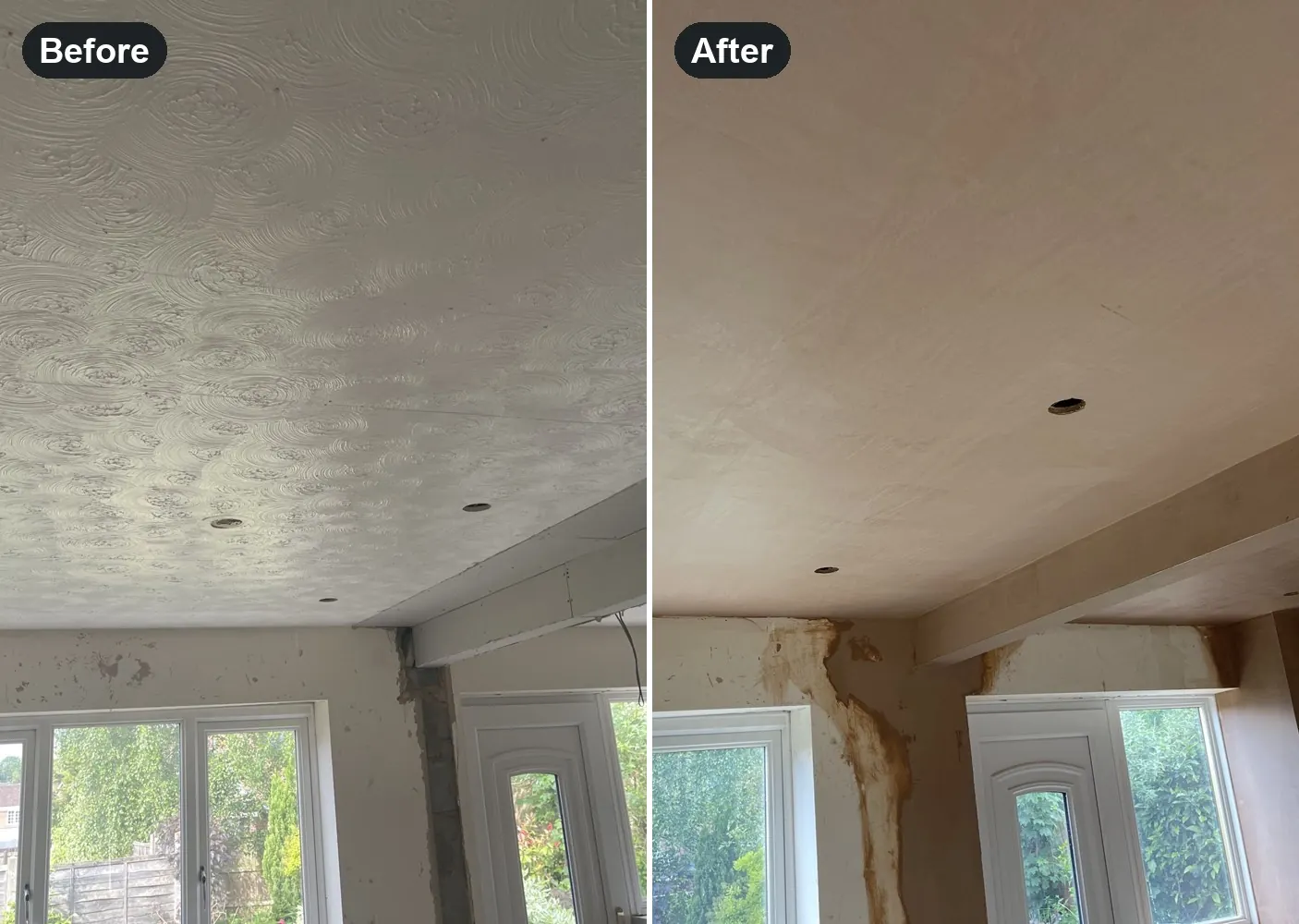
Plaster over it in almost every case. Covering a sound Artex ceiling seals the coating in, gives a smooth modern finish and avoids the slow, messy and potentially hazardous job of taking it off. Removal only makes sense when the ceiling itself is failing or coming down for other work.
| Skim over | Overboard and skim | Remove the coating | |
|---|---|---|---|
| Disturbs the coating | No, if peaks are not scraped | Only at the screw fixings | Yes, all of it |
| Best for | Light to medium patterns on a sound ceiling | Deep patterns, cracks, sagging or uneven ceilings | Failing ceilings, or where work above means it must come down |
| Height lost | A few millimetres | About 12 to 15mm | None |
| Typical time | 1 to 2 days for an average room | 1 to 2 days for an average room | Longer, with containment and clean-up |
| If asbestos is present | Possible, without touching the peaks | Often the cleaner option, with careful fixing | Specialist work following HSE guidance |
Skimming is usually quicker and cheaper. Overboarding costs a little more but gives a truly flat ceiling, and it is often the better choice where there are cracks, bulges or a deep swirled pattern that would need several coats to lose. Both are part of my plastering over Artex service.
When do you need a licensed asbestos contractor?
HSE classes most small jobs on textured coatings as non-licensed work, but that does not mean anyone can do them. The work still has to be done by people trained in asbestos, with the right controls, protective equipment and waste disposal. Larger removal by steaming or gelling becomes notifiable non-licensed work, which brings extra paperwork and health records for the workers.
An HSE-licensed contractor is needed for higher-risk materials. HSE's own task sheets say that if a textured coating sits on asbestos insulating board, the work is for a licensed contractor. The same applies to materials such as sprayed coatings and pipe lagging. You can read how licensing works on the HSE licensable work page.
So call a specialist asbestos contractor rather than a plasterer if:
- the test or survey finds anything other than a textured coating, or the board behind it is suspected to be asbestos insulating board;
- the ceiling is damaged, crumbling, water-soaked or has partly come down;
- you need the coating removed rather than covered.
I am a plasterer and Retrofit Assessor, not an asbestos contractor. I do not remove asbestos, and if removal is the right answer I will say so plainly and point you to the right kind of firm.
How is an Artex ceiling plastered over safely?
Once the test result is in and the method is agreed, the job follows a set order. The aim throughout is to cover the coating, not to break it up.
- Protect the room fully: floors, furniture and fittings covered, light fittings taken down safely.
- Check the ceiling for loose areas, cracks and sagging.
- If the test is clear, knock back the sharpest peaks. If it is not, leave the surface untouched.
- Apply a bonding primer so the plaster grips the painted texture, or fix new plasterboard through to the joists.
- Tape joints and cracks with scrim.
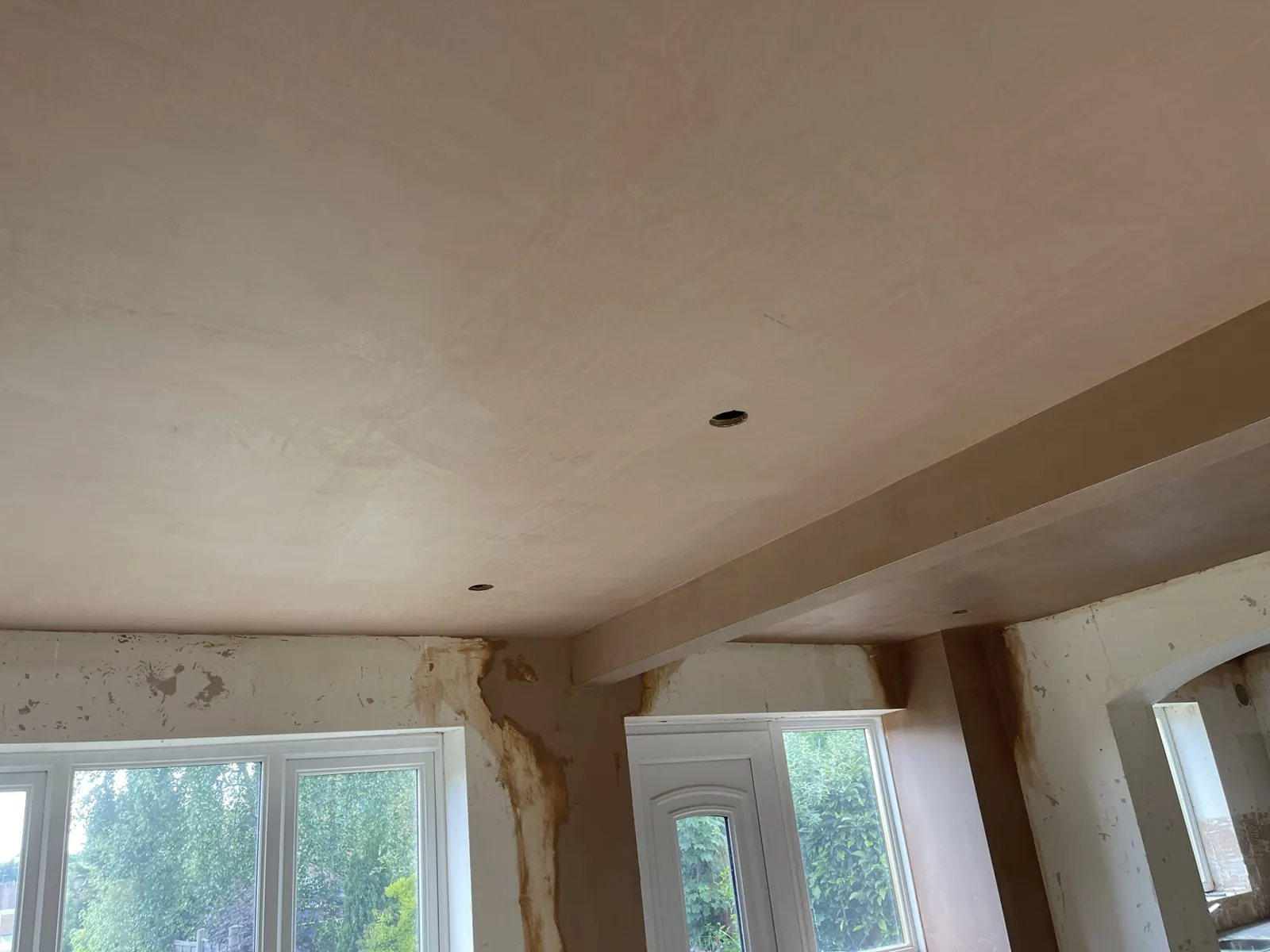
- Skim in two coats, or more on deep patterns, to a smooth, flat finish.
The finish is the same as any new skim, so the first coat of paint should be a mist coat once the plaster has dried. Where the ceiling is badly cracked, overboarding first usually gives a better, longer-lasting result than trying to fill everything.
How much does it cost to plaster over an Artex ceiling?
Covering Artex is almost always cheaper than removing it, because removal is slow and, where asbestos is present, needs a specialist with containment and licensed waste disposal. I price each ceiling after a free home visit rather than publishing one figure, because the same room can be a simple skim or a full overboard depending on what is up there.
The main things that change the price are:
- whether the coating needs testing, and what the result is;
- skim or overboard, and the size of the ceiling;
- how deep the pattern is, and so how many coats it needs;
- cracks, sagging or loose areas that need dealing with first;
- coving, light fittings and anything that has to come down and go back.
Your written quotation sets out the method and why I have chosen it, so you can compare it fairly with other quotes.
Is it safe to live with Artex that contains asbestos?
Generally yes, if it is in good condition and left alone. HSE's position is that asbestos in good condition that is not going to be disturbed is usually safer left where it is. Plastering over it seals it in further.
What matters afterwards is that nobody drills into it blind. If your ceiling was covered and the test showed asbestos, keep the result with your house papers and tell anyone who works on that ceiling in future, such as an electrician fitting downlights or a smoke alarm. Pass the information on if you sell the house, too.
When should I call a specialist?
Call someone before you touch the ceiling if you are planning any of these: new lighting, a smooth ceiling before redecorating, knocking through, or fixing cracks in an old textured ceiling. Get help straight away if a textured ceiling has been damaged by a leak or has partly fallen, and keep people and pets out of the room until it has been assessed.
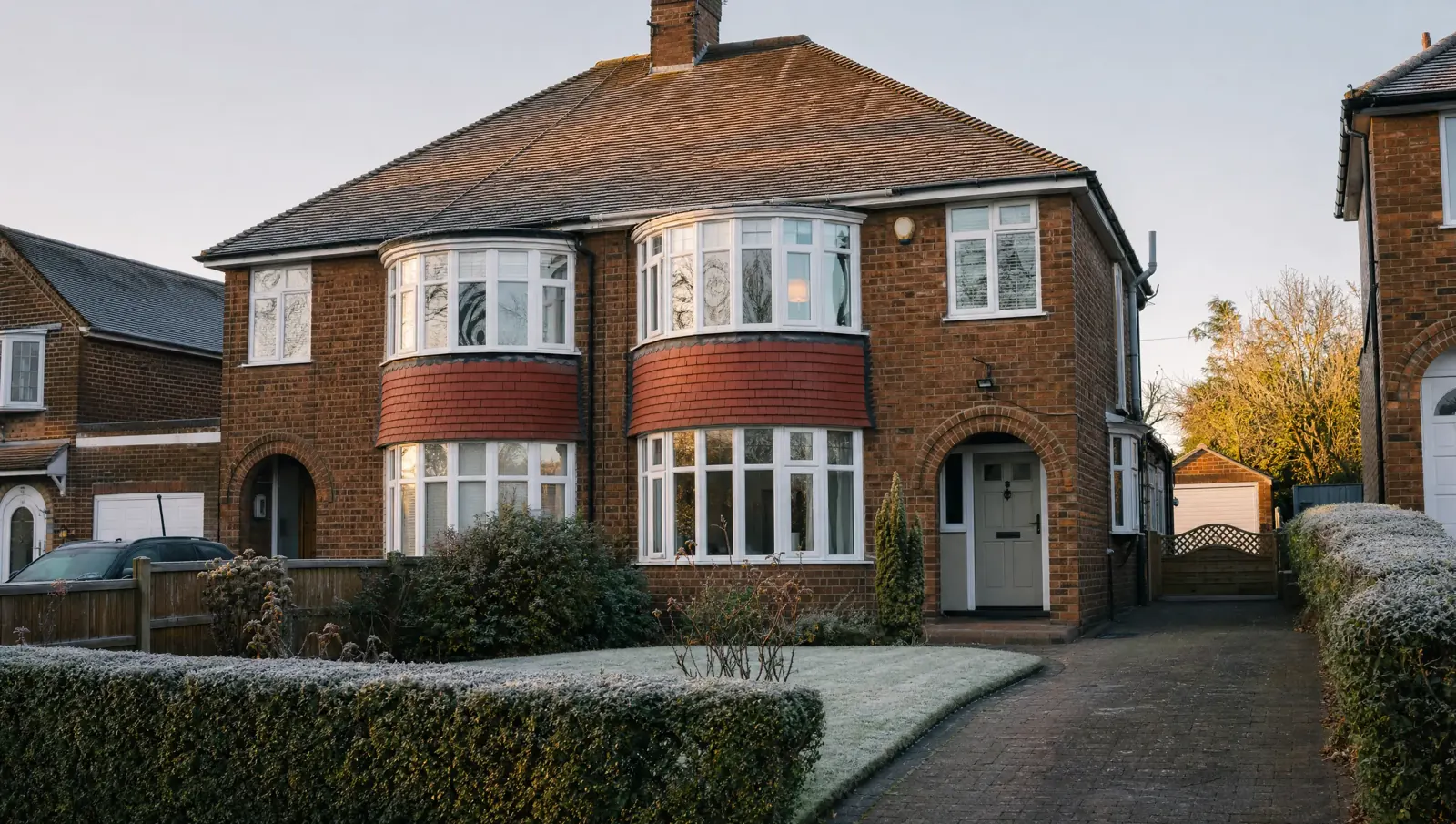
I am based in Bloxwich, Walsall and work across Sutton Coldfield, Great Barr, Aldridge, Birmingham and Solihull. Many of the Artex ceilings I see are in 1930s semis with a bay window at the front, often alongside cold walls or a draughty bay. If that sounds like your house, it can make sense to plan the ceiling with any bay window insulation or plaster repairs in the same room, so the decorating only happens once. For asbestos cement roofs on garages and outbuildings, which are a different material and a different job, see asbestos encapsulation.
If you would like me to look at your ceiling, get in touch for a free home visit and a written quotation.
Common questions
Does all Artex contain asbestos?
No. Only some textured coatings contained asbestos, and its use in them was banned in the UK in 1999. Any coating applied before 2000 should be treated as possibly containing it until a sample has been tested by an accredited laboratory. You cannot tell by looking at the pattern or the colour.
Can I skim over Artex myself?
Skimming over a sound textured ceiling is skilled plastering work, and the risk for a DIYer is knocking off peaks or sanding, which creates dust. If you do attempt it, have the coating tested first, never sand or scrape it, and do not drill into it. Most people find a professional skim quicker and flatter.
Is it cheaper to remove Artex or plaster over it?
Plastering over it is almost always cheaper, quicker and less disruptive. Removing a textured coating is slow and messy, and if it contains asbestos it needs a trained asbestos contractor with containment and proper waste disposal. Skimming or overboarding a sound ceiling gives the same smooth result without disturbing the coating.
Will the Artex pattern show through after plastering?
Not when it is done properly. Light patterns disappear under two coats of skim. Deep, swirled or stippled patterns may need a third coat, or overboarding with new plasterboard, to get a truly flat ceiling. The right method is chosen at the home visit after looking at the pattern and the condition of the ceiling.
How long does it take to plaster over an Artex ceiling?
An average room usually takes one to two days, depending on the pattern and whether it is skimmed or overboarded. Allow a few extra days beforehand for the asbestos test result, and drying time afterwards before decorating, typically several days to a week or more depending on heating and ventilation.
Can you plaster over Artex walls as well as ceilings?
Yes. Textured walls are treated the same way as ceilings: test the coating if it is older, then skim or board over it. Walls are often easier because the work is at a comfortable height, although heavy patterns may still need more than one coat to lose completely.