Plastering
How much does it cost to plaster or skim a room?
In 2026, UK price guides typically put skimming the walls of an average bedroom at around £400 to £800, a ceiling at roughly £200 to £500 on top, and hacking off and fully replastering a room at around £1,000 to £2,000 or more. What you actually pay depends on the state of the walls and what has to happen before the plaster goes on, so treat any online figure as a guide and get a written quotation from someone who has seen the room.

Wojtek Pankowski, Retrofit AssessorUpdated 9 October 2026 · 8 min read
On this page 9 sections
- What are typical UK prices for plastering a room?
- What is the difference between skimming and replastering?
- What makes a plastering quote go up or down?
- Why do plastering quotes for the same room differ so much?
- Is it cheaper to pay a day rate or a fixed price?
- Does a damp or cold outside wall change the cost?
- How long does plastering take, and when can I paint?
- What should a written plastering quotation include?
- When should I call a specialist?
How much does it cost to skim a room in the UK?
Typical UK ranges in 2026 are about £400 to £800 to skim the walls of an average bedroom, £200 to £500 extra for the ceiling, and £1,000 to £2,000 or more to hack off and replaster a room. Skimming usually works out at roughly £12 to £25 per square metre and full plastering at £25 to £40. Wall condition, Artex, access and damp change the price most.
What are typical UK prices for plastering a room?
The table below shows typical market ranges drawn from published UK price guides in 2026. They are not my prices and they are not a quote: they are there so you know whether a figure you have been given is in the normal range.
| Job | Typical UK range (2026) | Usual time |
|---|---|---|
| Skim the walls of a small room (box room, bathroom) | £300 to £500 | About 1 day |
| Skim the walls of an average bedroom | £400 to £800 | 1 to 2 days |
| Skim a ceiling | £200 to £500 | Half a day to 1 day |
| Skim walls and ceiling of a large living room | £800 to £1,300 | 2 to 3 days |
| Hack off and replaster the walls of a room | £1,000 to £2,000+ | 3 to 5 days plus drying |
| Skimming per square metre | £12 to £25 | |
| Full plastering per square metre | £25 to £40 | |
| Plasterer day rate (labour only) | £180 to £300 |
London and the South East usually sit above these ranges. In the West Midlands, prices tend to fall within them, but the spread between two quotes for the same room can still be wide, for reasons covered below.
What is the difference between skimming and replastering?
Skimming is a thin finishing coat, usually about 2 to 3mm, trowelled over a surface that is already sound: old plaster that is still firmly attached, new plasterboard, or a wall that has been patched. It gives a smooth, flat surface ready to decorate. It is the cheaper option because there is less material and less preparation.
Replastering means taking the old plaster off back to the brick or block, then applying a base coat and a finish coat. It is needed when the old plaster is blown, crumbling, badly cracked or contaminated with salts from past damp. It costs more because of the labour of hacking off, the waste, the extra material and the longer drying time.
A good plasterer will tap the walls before quoting. Hollow-sounding areas tell you whether a skim will hold or whether those patches have to come off first, which is the single biggest reason a skim quote turns into a bigger job. My skimming and plaster repairs pages explain how I decide.
What makes a plastering quote go up or down?
Room size matters less than most people expect. Preparation and access usually decide the price. The things that move a quote most are:
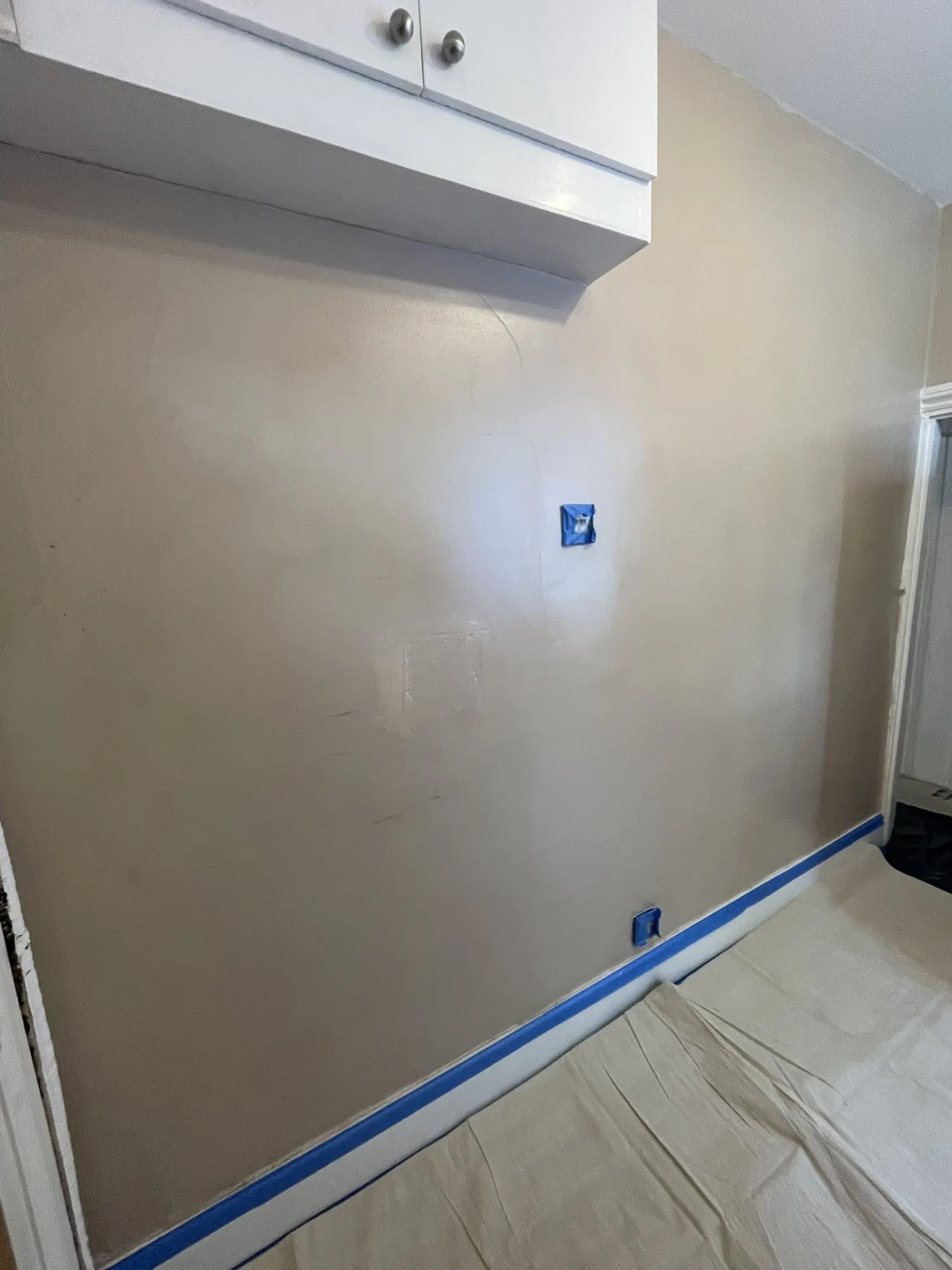
- Condition of the old plaster: blown areas, cracks and holes that need cutting out and filling before any skim.
- Textured finishes: Artex or other textured ceilings need extra preparation, and any testing for asbestos comes first.
- Wallpaper and paint: stripping several layers of paper, or sealing glossy or chalky paint, adds time.
- Ceilings and height: ceilings are slower than walls, and stairwells need platforms or towers.
- Beads and edges: new angle beads on corners and window reveals, and scrim on cracks.
- Protection: a furnished room that has to be emptied, sheeted and masked takes longer than an empty one.
- Waste: hacked-off plaster is heavy, and skip or waste removal is a real cost.
- The plaster itself: lime on an old solid wall costs more than gypsum because it needs more coats, time and skill.
Why do plastering quotes for the same room differ so much?
Usually because the quotes are not for the same job. A low figure can leave out bonding agent or priming, new beads, repairs to blown areas, clearing up or waste removal, and then those come back as extras. A higher figure may include them, or it may include hacking off a wall that one person thought could be skimmed.
Ask each plasterer the same three questions: what preparation is included, which areas (if any) will be hacked off, and is the ceiling in the price. If the answers differ, the prices will too. I set out the preparation line by line in my plastering quotations so you can compare like with like.
Is it cheaper to pay a day rate or a fixed price?
A day rate looks cheaper on paper, but it puts the risk of the job running over on you. If the walls turn out worse than expected, a day rate simply grows. A fixed price for a clearly described job means the plasterer carries that risk, and you know the total before work starts.
Day rates work well for small, open-ended jobs, such as a few patches across a house. For a whole room, most homeowners are better off with a fixed written price that lists what is and is not included.
Does a damp or cold outside wall change the cost?
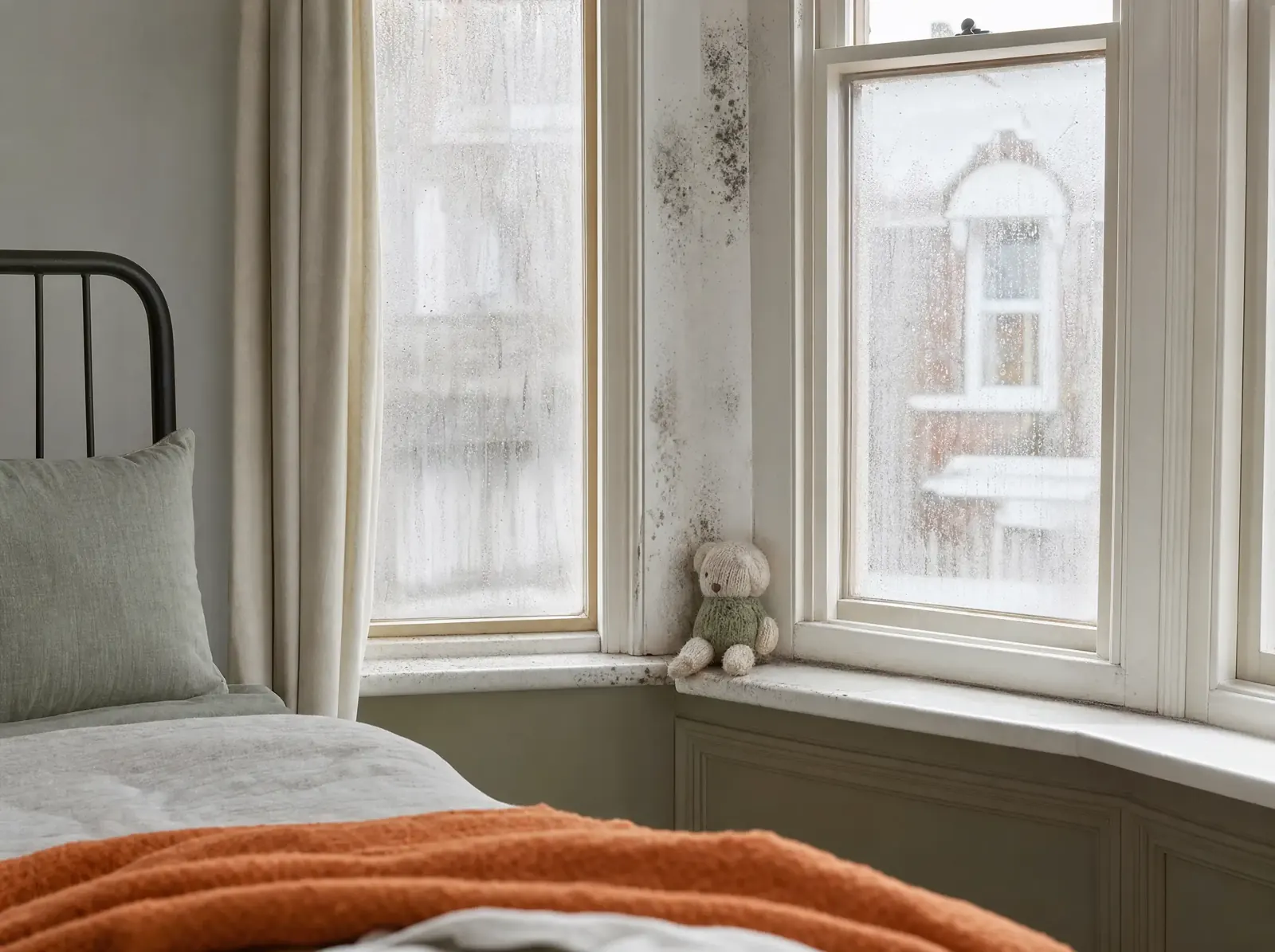
Yes, and this is where cheap replastering often becomes expensive. If an outside wall has damp patches, salts or blown plaster, the cause has to be found first: gutters, pointing, high ground or condensation on a cold wall. New gypsum on a wall that is still wet tends to fail again. My guide on lime plaster or gypsum explains why lime is often the better choice on old solid walls.
There is also a building regulations point. Under Approved Document L, stripping an external wall back to the brick over more than half of its area counts as renovating it, and the wall may then need to be insulated to a better standard where that is technically and economically feasible. If you are hacking off a cold outside wall anyway, it is the cheapest moment to insulate it. My guide to internal wall insulation cost sets out what that adds.
How long does plastering take, and when can I paint?
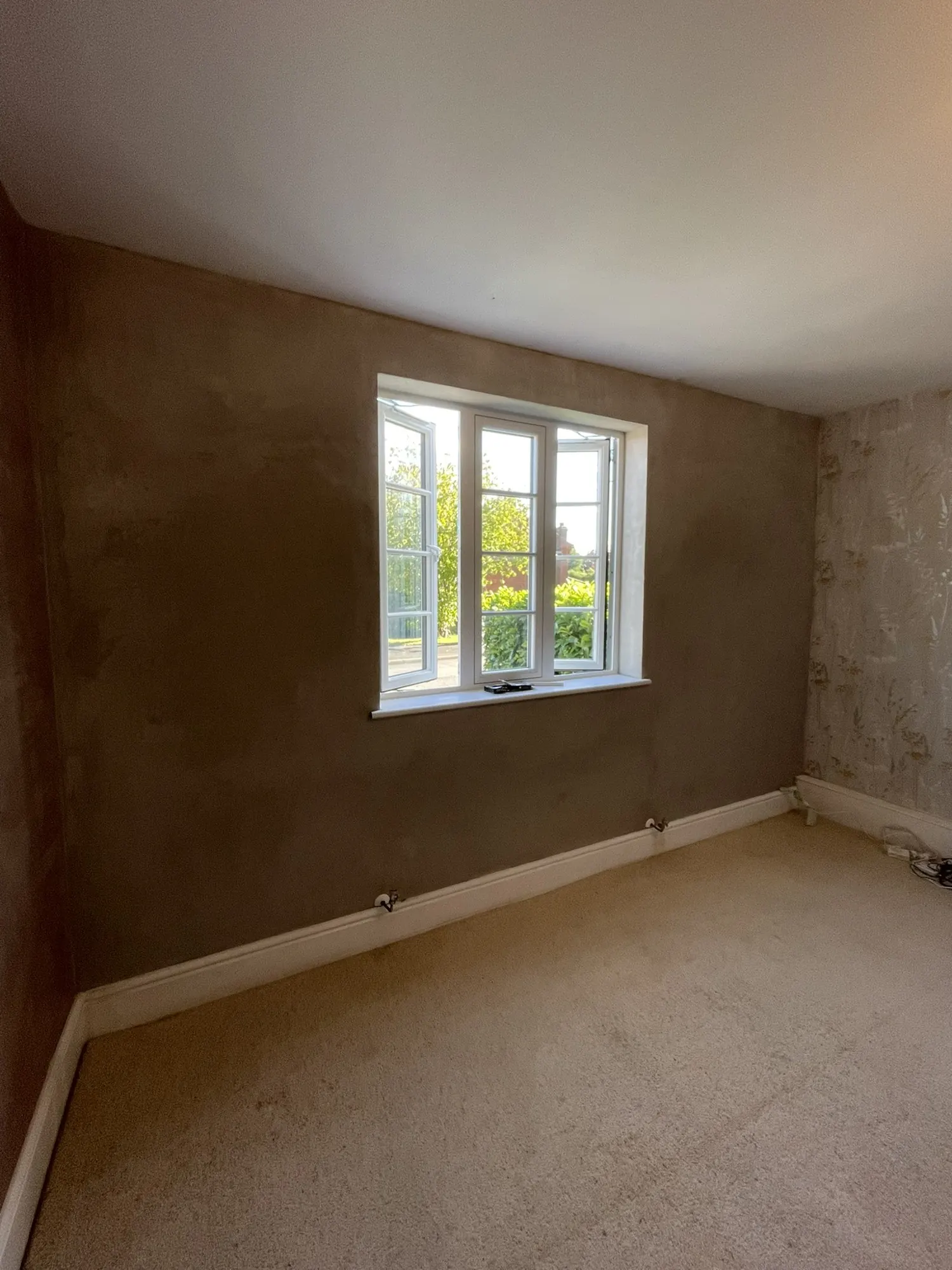
Skimming an average room usually takes 1 to 2 days, and the skim needs from several days to a week or more to dry, depending on the weather and ventilation. Full replastering takes longer to apply and can need 2 to 4 weeks before it is fully dry. New plaster turns from dark brown to an even pale pink when it is ready.
Paint it first with a mist coat: watered-down, breathable emulsion that soaks in and gives the next coats something to grip. Vinyl or wipeable paint straight onto new plaster tends to peel. Lime needs breathable paints such as limewash or mineral paint.
What should a written plastering quotation include?
A proper quotation should let you see exactly what you are paying for. Look for:
- which walls and ceilings are included, by room;
- whether each area is a skim or a hack off and replaster;
- preparation: repairs, beads, scrim, priming or bonding;
- the plaster type, gypsum or lime;
- protection of floors and furniture, and daily clearing up;
- waste removal;
- who removes and refits sockets, radiators and skirting if needed;
- how long the job should take, and how long before you can decorate.
If a quote is one line with a total, ask for the detail before you agree to anything.
When should I call a specialist?
Any good plasterer can skim a sound wall. Call someone with building knowledge when the wall itself is the problem: damp or salts on an outside wall, plaster that keeps blowing in the same place, a textured ceiling that may contain asbestos (see the HSE advice and my guide on plastering over Artex), or an old house where lime may be needed.
I am a plasterer and a Retrofit Assessor based in Bloxwich, working across Walsall, Sutton Coldfield, Great Barr, Aldridge, Wolverhampton and Birmingham, mostly in 1930s semis and Victorian terraces. I look at the walls first, tell you whether a skim will last, and give you a fixed written quotation. Get in touch to book a free home visit.
Common questions
How much does a plasterer charge per day in the UK?
Most published UK guides in 2026 put a plasterer's day rate at around £180 to £300 for labour, with materials on top, and higher in London and the South East. For a whole room, a fixed written price is usually better value than a day rate, because the total is agreed before work starts.
How much does it cost to skim a ceiling?
Typically around £200 to £500 for an average room in the UK, depending on its size, height and condition. Textured or Artex ceilings cost more because of the extra preparation, and any asbestos testing comes first. Cracked or sagging ceilings may need overboarding rather than a skim.
How much does it cost to plaster a room per square metre?
As a rough UK guide, skimming costs about £12 to £25 per square metre and full plastering about £25 to £40 per square metre. Small rooms cost more per square metre than large ones, because setting up, protection and clearing up take a similar time whatever the size.
Is it worth skimming over old plaster?
Yes, if the old plaster is still firmly attached. Skimming over sound plaster gives a smooth finish for much less than replastering. If areas sound hollow when tapped, or the wall has damp or salts, those parts need to come off first, or the new skim will crack or blow.
Can you skim straight over Artex?
Often yes, once it is clear what is in it. Artex applied before 2000 can contain asbestos, so it should be tested before anyone sands or scrapes it. Skimming over sound Artex without disturbing it is usually the safest and cheapest route, with the right preparation first.
Why don't you publish a price list?
Because two rooms the same size can need very different amounts of preparation, and a price list would either be wrong or padded. I give a fixed written quotation after a free home visit, listing each wall, the preparation and the finish, so there are no surprises.