Insulation
Spray cork insulation: pros, cons and is it right for your walls?
Spray cork is a breathable coating of natural cork granules in a water-based binder, applied to walls, render and roofs a few millimetres thick. Its strengths are flexibility, breathability, weather resistance and a seamless finish that warms cold surfaces slightly. It is a coating rather than a thick insulation layer, so it suits tired render, mildly cold walls and roofs, while a very cold solid wall usually needs internal wall insulation too.

Wojtek Pankowski, Retrofit AssessorUpdated 9 October 2026 · 8 min read
On this page 9 sections
- What is spray cork insulation?
- How does spray cork work on a cold wall?
- What are the advantages of spray cork?
- What can't spray cork do on its own?
- How does spray cork compare with paint, render and internal insulation?
- Is spray cork waterproof?
- Is spray cork right for your walls?
- How much does spray cork cost?
- When should I call a specialist?
Is spray cork any good?
Yes, for the right job. Spray cork gives walls and roofs a flexible, breathable, weather-resistant finish that copes with small movement and warms cold surfaces slightly. It works best on a sound, dry surface. On a very cold solid wall it is not a substitute for 20 to 80mm of internal wall insulation, so the wall should be assessed first.
What is spray cork insulation?
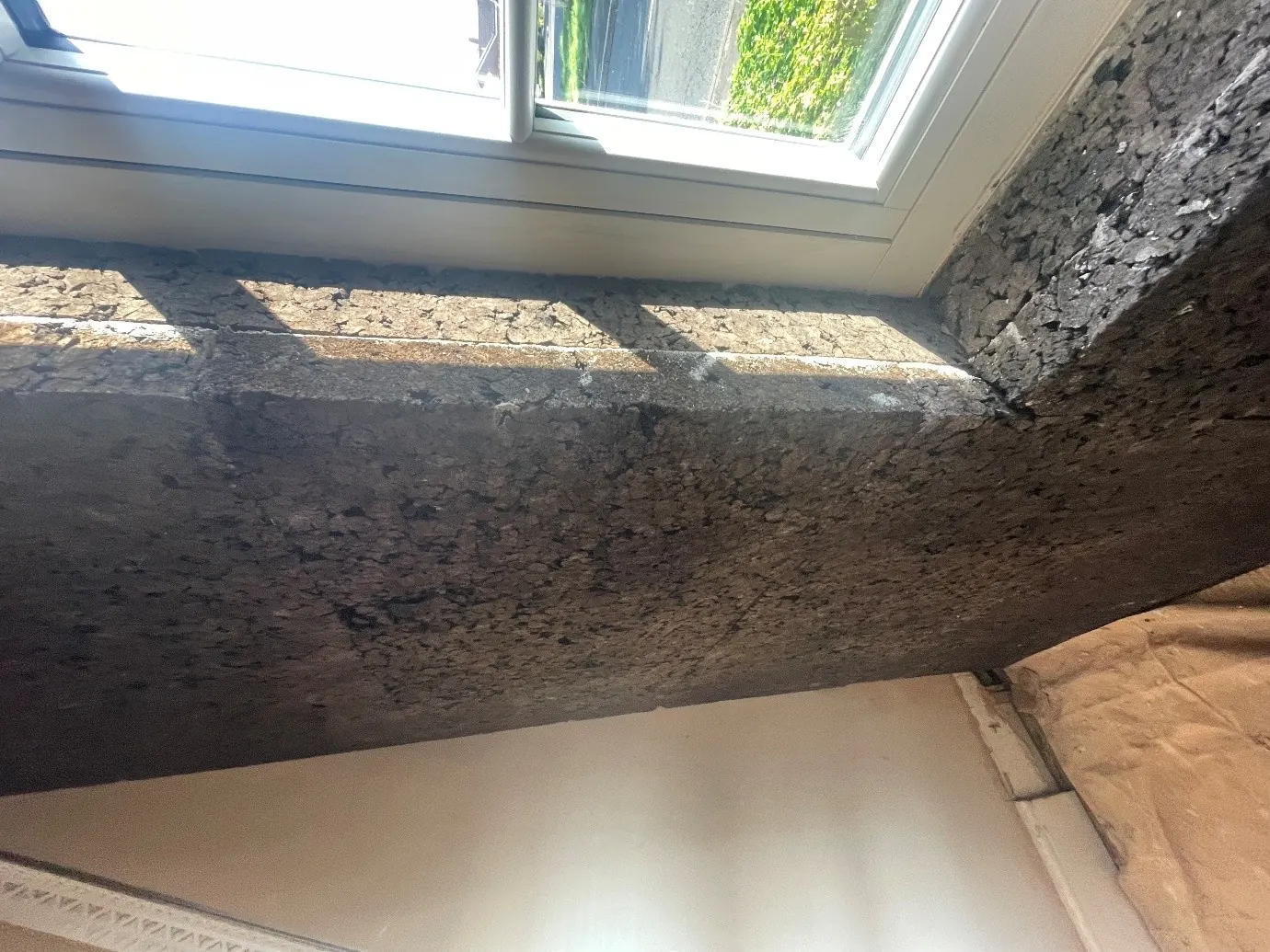
Spray cork is a coating made mostly of cork granules mixed with water-based binders. It is sprayed or trowelled onto a prepared surface in thin coats, building up a continuous skin a few millimetres thick that can be left textured or finished smooth.
The cork comes from the bark of the cork oak, which is stripped by hand roughly every nine years without felling the tree. Each granule is full of tiny closed air cells, which is why cork is light, springy, slow to conduct heat and comfortable to touch.
In the UK, the systems I apply come through SprayCork UK, including the ReveCork range, and I am an approved applicator. Spray cork is different from cork insulation boards, which are thick slabs of expanded cork used inside internal wall insulation systems. Both use cork; they do different jobs.
How does spray cork work on a cold wall?
It warms the surface rather than transforming the wall. Condensation and mould start where a wall surface falls below the dew point of the air in the room. At 20°C and 60% relative humidity, that is about 12°C. A cold outside wall in a bedroom can sit at or below that on a winter night.
A layer of cork slows heat moving from the room into the wall and feels much less cold to the touch than bare plaster. On a mildly cold wall, that can be enough to lift the surface temperature, take the chill off the room and reduce the surface condensation that feeds mould. On a very cold wall, such as an uninsulated 225mm solid brick wall facing north, a few millimetres cannot do the job of a full insulation layer, and I will say so at the survey.
For the background on why bedroom walls get wet, read my guide on condensation on bedroom walls.
What are the advantages of spray cork?
- Breathable: it lets water vapour pass through, which suits older solid walls that need to dry out.
- Flexible: it copes with the small seasonal movement that makes ordinary render and paint crack.
- Weather resistant: the external system is designed to shed rain and stand up to sunlight and frost, so it is used on render and roofs.
- Warmer surfaces: cork makes a wall feel less cold and can help with mild surface condensation.
- Thin: a few millimetres, so you lose no room space and window reveals stay the same depth.
- Seamless finish: one continuous coat over patched or tired surfaces, in a range of textures and colours.
- Natural base material: cork is renewable and harvested without cutting down trees.
- Some sound softening: cork absorbs some echo, although it is not a soundproofing system.
What can't spray cork do on its own?
Every material has a job it is designed for, and spray cork is no exception. These are the situations where it needs help from something else:
- Very cold solid walls: where a room is cold because the whole wall loses heat fast, real insulation of 20 to 80mm is what changes the U-value. Spray cork can be part of that system as a finish, not a replacement for it.
- Damp from outside: leaking gutters, failed pointing or high ground levels have to be fixed first. No coating cures a wall that is getting wet.
- Loose or hollow surfaces: blown render and crumbling plaster must be repaired, or the coating will fail with them.
- Bad weather: external spraying needs dry days and sensible temperatures, so outside jobs are planned around the forecast.
- DIY: results depend heavily on preparation and spraying technique, which is why the supplier trains and approves applicators.
How does spray cork compare with paint, render and internal insulation?
| Spray cork | Masonry paint | Render | Internal wall insulation | |
|---|---|---|---|---|
| Thickness | A few mm | Under 1mm | About 15 to 25mm | 20 to 80mm |
| Breathable | Yes | Depends on the paint | Lime yes, cement much less | Breathable or vapour-closed systems |
| Copes with small movement | Yes, flexible | Cracks with the surface | Rigid, can crack | Not its job |
| Effect on warmth | Warms the surface slightly | None | Small | Large |
| Best for | Tired render, mildly cold walls, roofs | Redecorating sound walls | New or badly damaged walls | Cold solid walls and bays |
Many homes need more than one of these. A common plan is internal wall insulation on the coldest walls, with cork used where its strengths count most.
Is spray cork waterproof?
It is water resistant, not a waterproof membrane. The external system sheds rain and protects the wall from weather, while still letting water vapour escape from inside. That combination is the point: a fully waterproof coating would also trap moisture in the wall.
That is also why spray cork is not a damp treatment. If water is getting into a wall through a defect, the defect is fixed first and then the wall is coated.
Is spray cork right for your walls?
A quick way to think about it, by situation:
- Render that looks tired or has fine cracks but is still firm: usually a good fit for external cork coating.
- An inside wall that is mildly cold, with some condensation in corners: often a good fit for internal cork coating, after the ventilation has been checked.
- A bedroom wall or bay that is freezing and grows mould every winter: usually needs internal wall insulation first.
- A worn but serviceable roof: a candidate for cork roof coating.
- Sound asbestos cement sheets: can sometimes be encapsulated, once a survey has confirmed they can safely stay in place.
How much does spray cork cost?
Spray cork is priced per job after a survey, because preparation and access usually cost more than the coating itself. The main factors are the area, how many windows, corners and reveals it has, how much repair and cleaning is needed first, whether scaffolding is required, the texture and colour, and whether the cork is a finish on its own or part of a wider insulation system.
When comparing quotes, check that each one includes the same preparation, the same number of coats and the supplier's guarantee in writing. My spray cork page explains how I price and what the written quotation covers.
When should I call a specialist?
Before you choose a product, have the wall looked at. The questions that decide whether cork is the right answer are about the wall: is it sound, is it dry, how cold does it get and where is the moisture coming from. The Energy Saving Trust explains the wider options for solid walls, and the government best practice guide to retrofit internal wall insulation shows why moisture has to be assessed before any wall is upgraded.
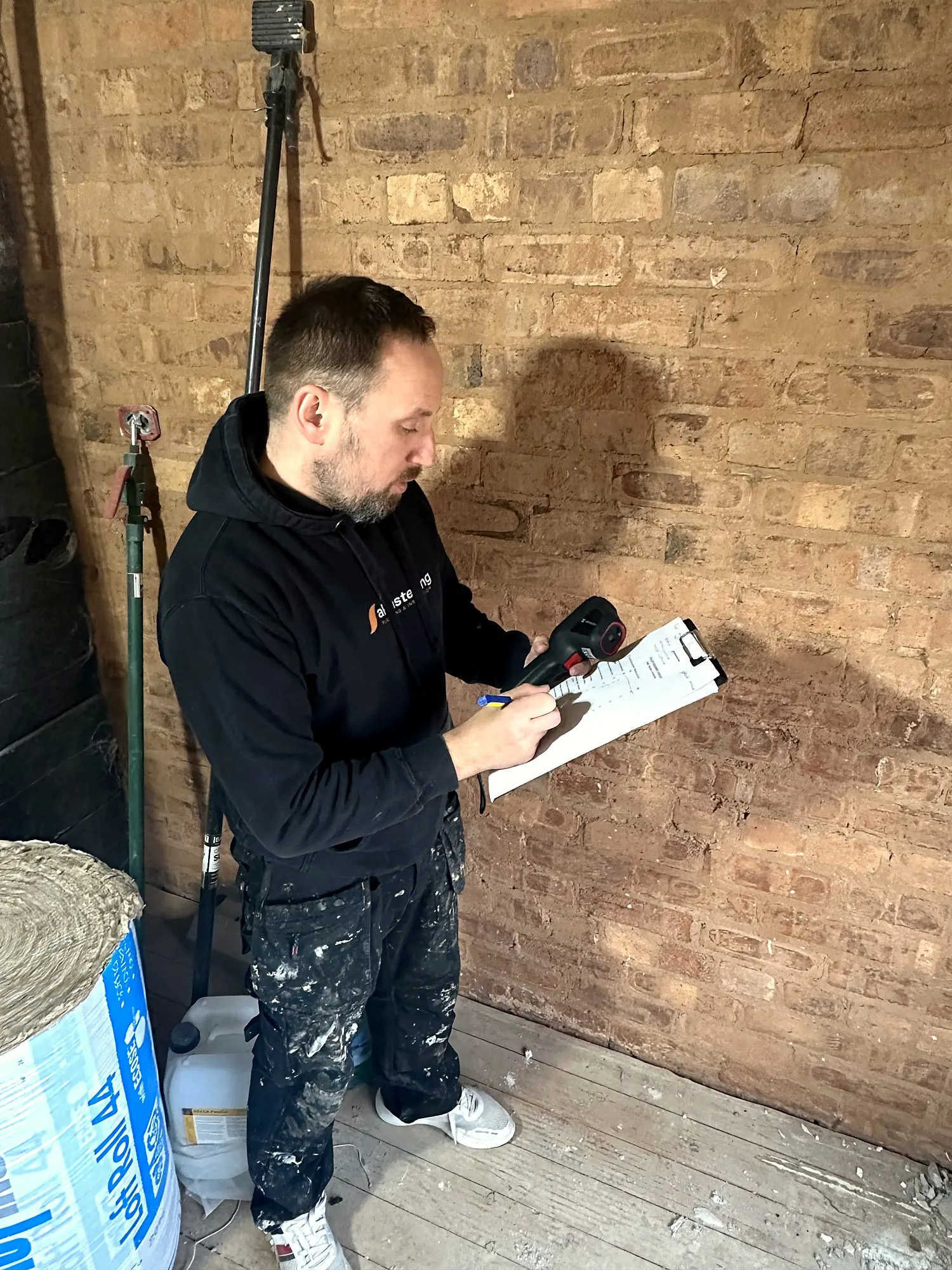
I am based in Bloxwich and work across Walsall, Wolverhampton, Sutton Coldfield, Great Barr and Birmingham, and as a Retrofit Assessor I can tell you whether cork, insulation or both suit your house. Get in touch for a free home visit and written quotation.
Common questions
Does spray cork insulation actually work?
It works as a breathable, flexible, weather-resistant coating that warms cold surfaces slightly and helps with mild surface condensation. It does not turn a cold solid wall into an insulated one on its own, because it is only a few millimetres thick. For very cold walls it is used alongside proper internal wall insulation.
Is cork insulation breathable?
Yes. Spray cork lets water vapour pass through, and so do cork insulation boards. That makes cork a good match for older solid walls that need to dry out, as long as the plasters and paints used with it are breathable too.
Can spray cork go over existing render or paint?
Often, if the surface is sound and firmly attached. Loose render, flaking paint, algae and dirt are removed and repaired first, and the surface is primed to the supplier's specification. Hollow or blown render has to be cut out, or the new coating will fail with it.
Can spray cork be used inside a bedroom?
Yes. Internal cork coating is trowelled onto walls and can be finished smooth, so once decorated the room looks normal. It suits mildly cold walls and corners. Where a bedroom wall is very cold and mould returns every winter, internal wall insulation is usually needed as well.
How long does spray cork last?
It depends on the preparation, the surface and the exposure of the wall. Ask any installer for the supplier's guarantee in writing, what it covers and what maintenance it requires. Good preparation matters more to lifespan than the coating itself.
Do you install spray cork in the West Midlands?
Yes. I am a SprayCork UK approved applicator based in Bloxwich, Walsall, and I work across Walsall, Wolverhampton, Sutton Coldfield, Great Barr, Aldridge and Birmingham. Every job starts with a free home visit and a written quotation.