
Bay window insulation · Birmingham
Bay window insulation in Birmingham.
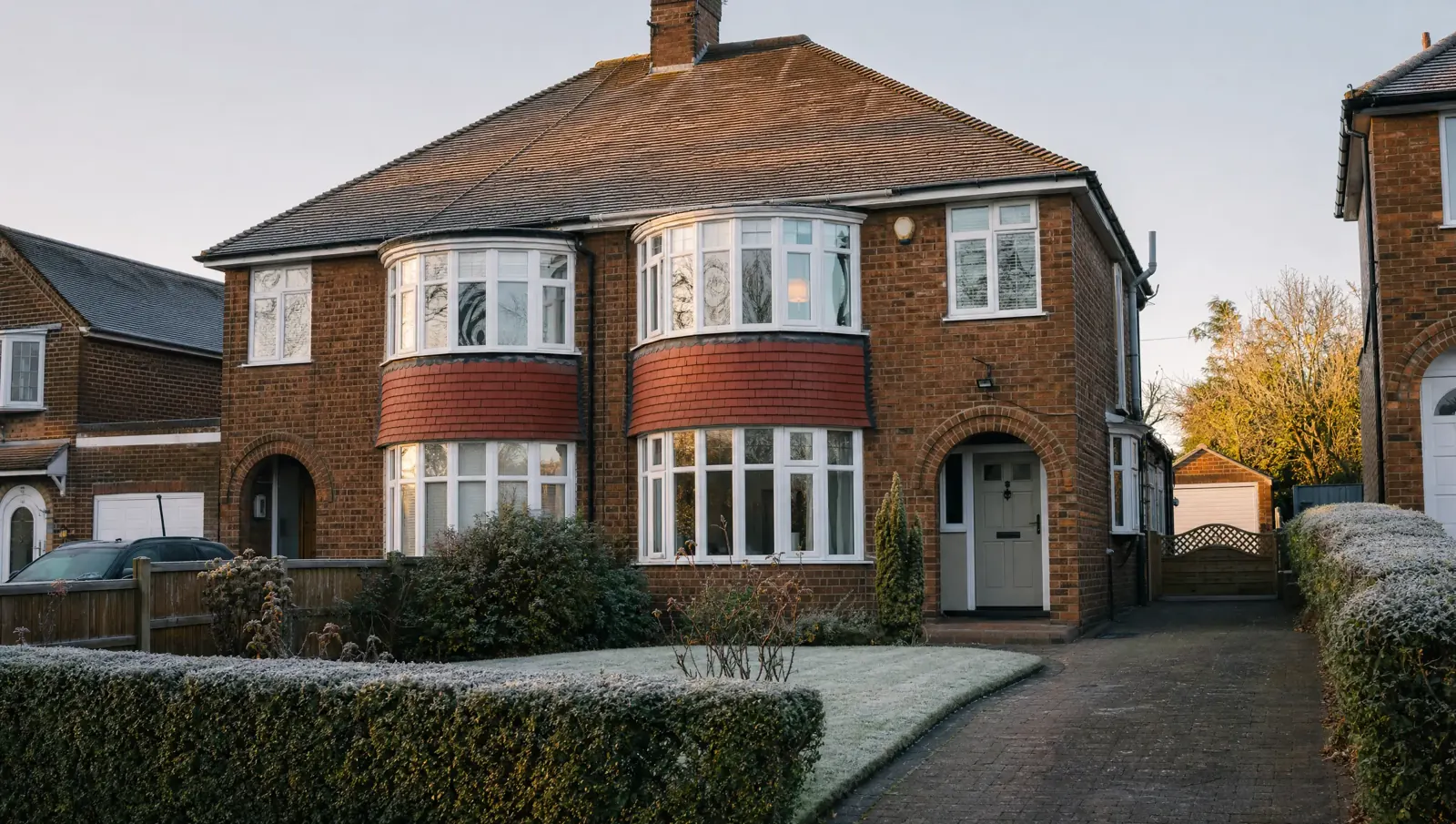
Birmingham has two very different kinds of bay window: the brick bays on Victorian and Edwardian terraces, and the lighter bays on interwar semis with a thin panel under the glass. Both can make a front room cold. I find out how yours is built, then insulate the whole bay from the inside.
Free home visit. Written quotation. No pressure.
5.0 from 37 reviews on Google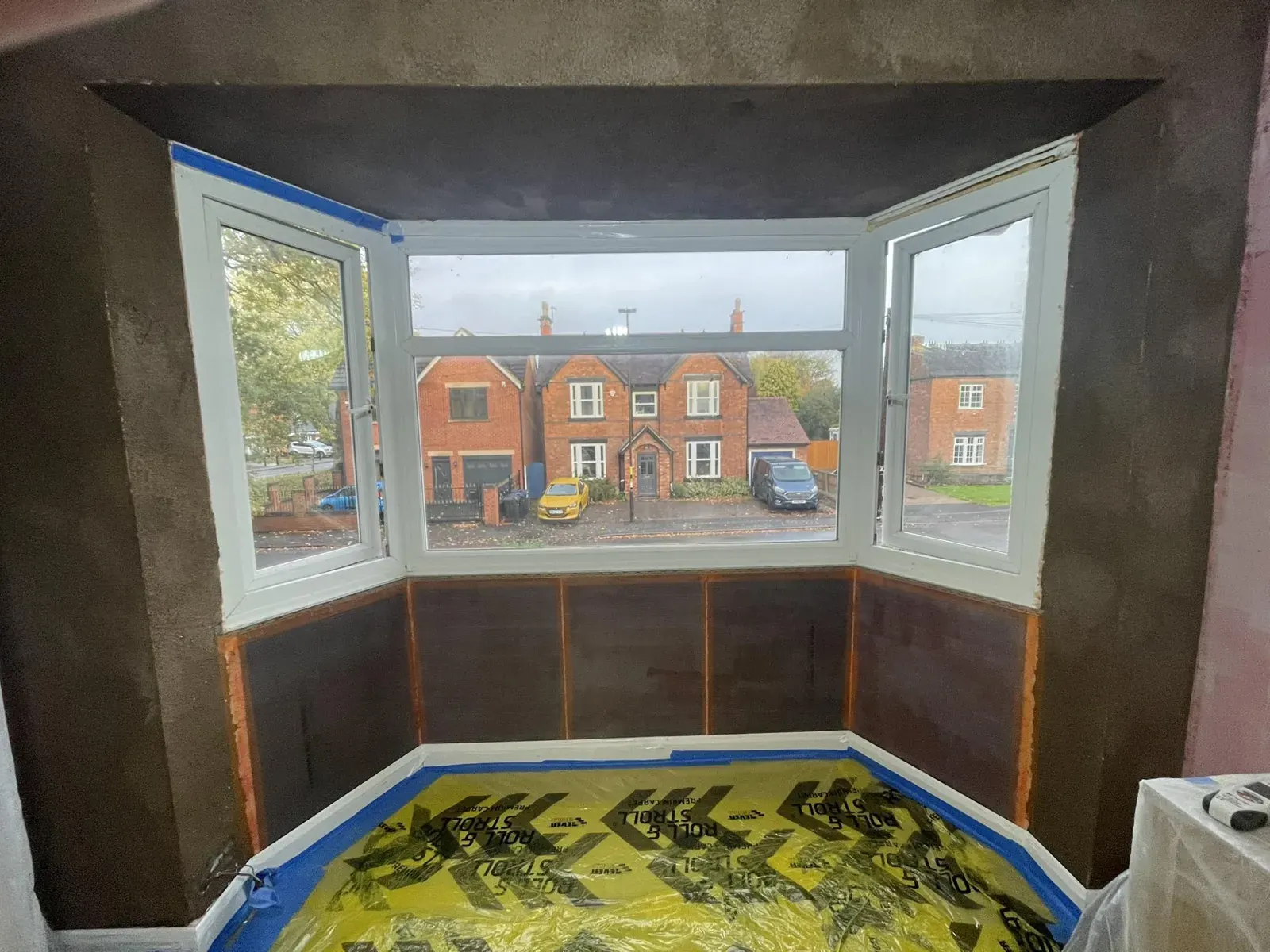
 Wojtek, Retrofit AssessorAssesses, designs and fits every job himself
On this page 8 sections
- Which kinds of bay window do Birmingham homes have?
- How can I tell what my bay is made of?
- How do you insulate a Victorian brick bay?
- How do you insulate a 1930s bay with a panel under the window?
- Does the ceiling or roof of the bay need insulating?
- What difference does insulating the walls of a cold room make?
- How much does bay window insulation cost in Birmingham?
- Which parts of Birmingham do you cover?
Can you insulate a bay window in a Birmingham house from the inside?
Yes. A Victorian brick bay is insulated like a solid wall, with extra care at the angled corners and reveals. A 1930s bay with a timber panel under the window is opened up, sealed, filled and lined with an insulated board. In both cases the side walls, reveals and, where it is accessible, the bay ceiling are treated as one piece.
Which kinds of bay window do Birmingham homes have?
Mostly two, and they are built in quite different ways. That is why I never price a bay over the phone.
| Bay type | Where you often find it | Typical construction | Usually the coldest part |
|---|---|---|---|
| Victorian and Edwardian brick bay | Terraces and villas in areas such as Moseley, Kings Heath, Handsworth and Stirchley | Solid brick to the sill and between the windows, often on both floors, sometimes with stone or brick detailing | The angled side walls and the reveals |
| Interwar bay with a lightweight panel | 1930s semis in areas such as Kingstanding, Erdington, Hall Green and Perry Barr | Brick piers, with a timber frame under the window, tiles or render outside and a thin lining inside | The panel under the window, then the bay ceiling |
| Post-war and later bay | Estates across the city | Often cavity brick, sometimes with infill panels | Varies, so it needs checking first |
Many streets have a mix, because bays were rebuilt, rendered or reglazed over the decades. The house type is a starting point, not the answer.
How can I tell what my bay is made of?
A few simple checks give a good clue before anyone opens anything up.
- Look outside under the window. Brick all the way to the sill usually means a brick bay. Hanging tiles, timber boarding or a rendered panel under the glass usually means a lightweight panel behind it.
- Knock gently inside. A hollow sound below the window board points to a timber panel with a thin lining. A dull, solid sound points to brick.
- Feel it on a cold, windy evening. If you can feel moving air near the skirting or round the window board, there are gaps in the construction, not just a cold surface.
- Look up. A ground floor bay often has its own small roof, flat or tiled. A bay that runs up two storeys may share the main roof.
At the home visit I check this properly, along with the wall thickness at the reveals and a moisture reading. My guide on why bay windows get so cold explains what sits under a typical window board.
How do you insulate a Victorian brick bay?
Much like a solid wall, but with more corners. A brick bay on a Birmingham terrace is usually a single thickness of solid brick, so it loses heat in the same way as the rest of the front wall, only through three faces instead of one.
On old solid brick I usually prefer a breathable build-up, such as wood fibre boards with a lime plaster finish, because it lets the wall keep drying as it always has. Before choosing, I check the brickwork for damp and model how moisture will move through the new layers. The angled joints between the faces are where most of the care goes, because a gap there leaves a cold stripe that shows up as mould.
Period details matter too. Deep window boards, shutter boxes, picture rails and the plaster cornice inside the bay can usually be kept or reinstated. The Victorian home insulation guide explains why these houses need a gentler approach than a modern one.
How do you insulate a 1930s bay with a panel under the window?
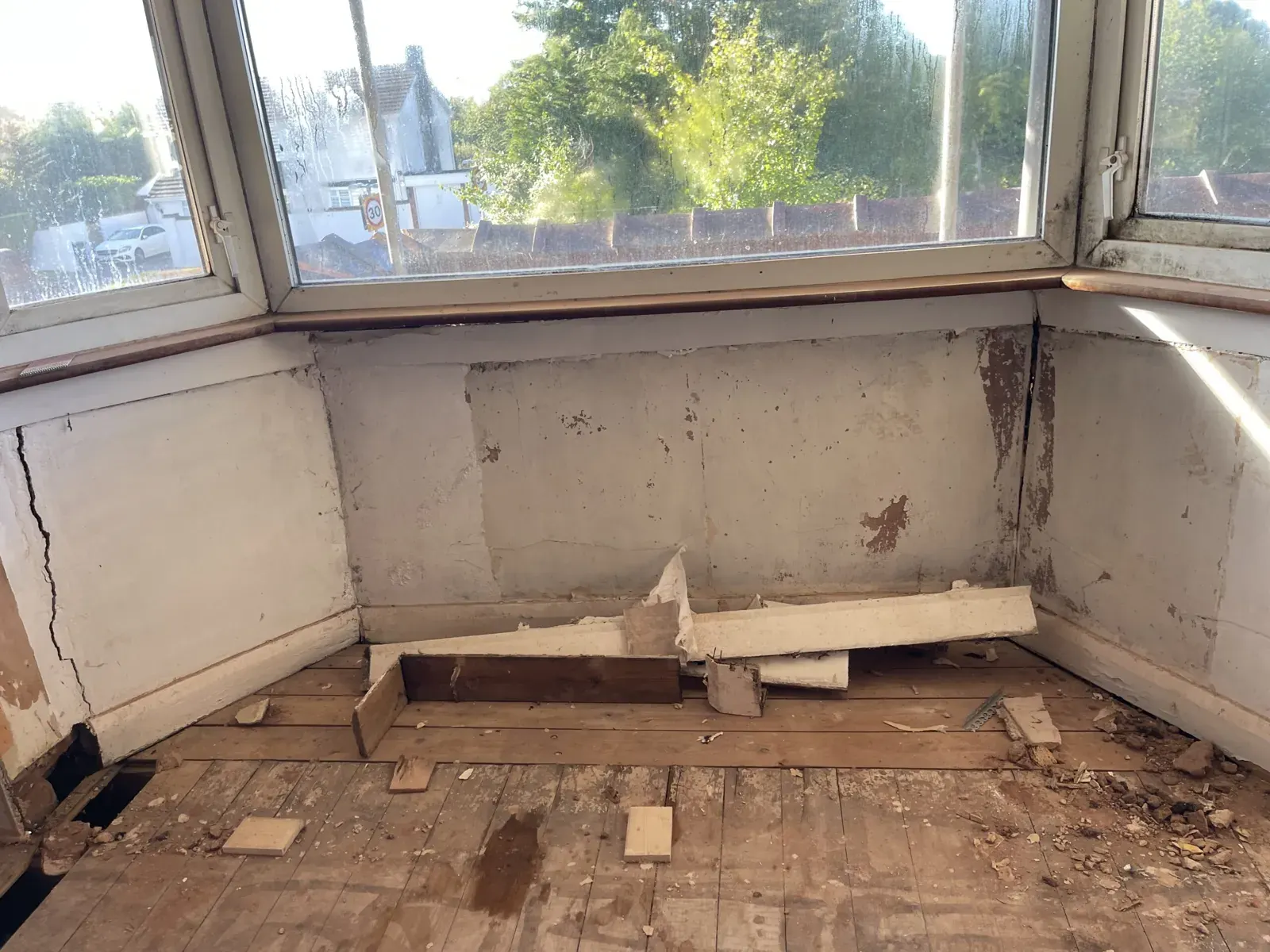
By opening it up. The panel is usually the weakest part of the whole house: a timber frame, tiles or render outside, and only a thin lining inside, often with nothing in between.
- The window board and lining come off so I can see the frame and check the timber is dry and sound.
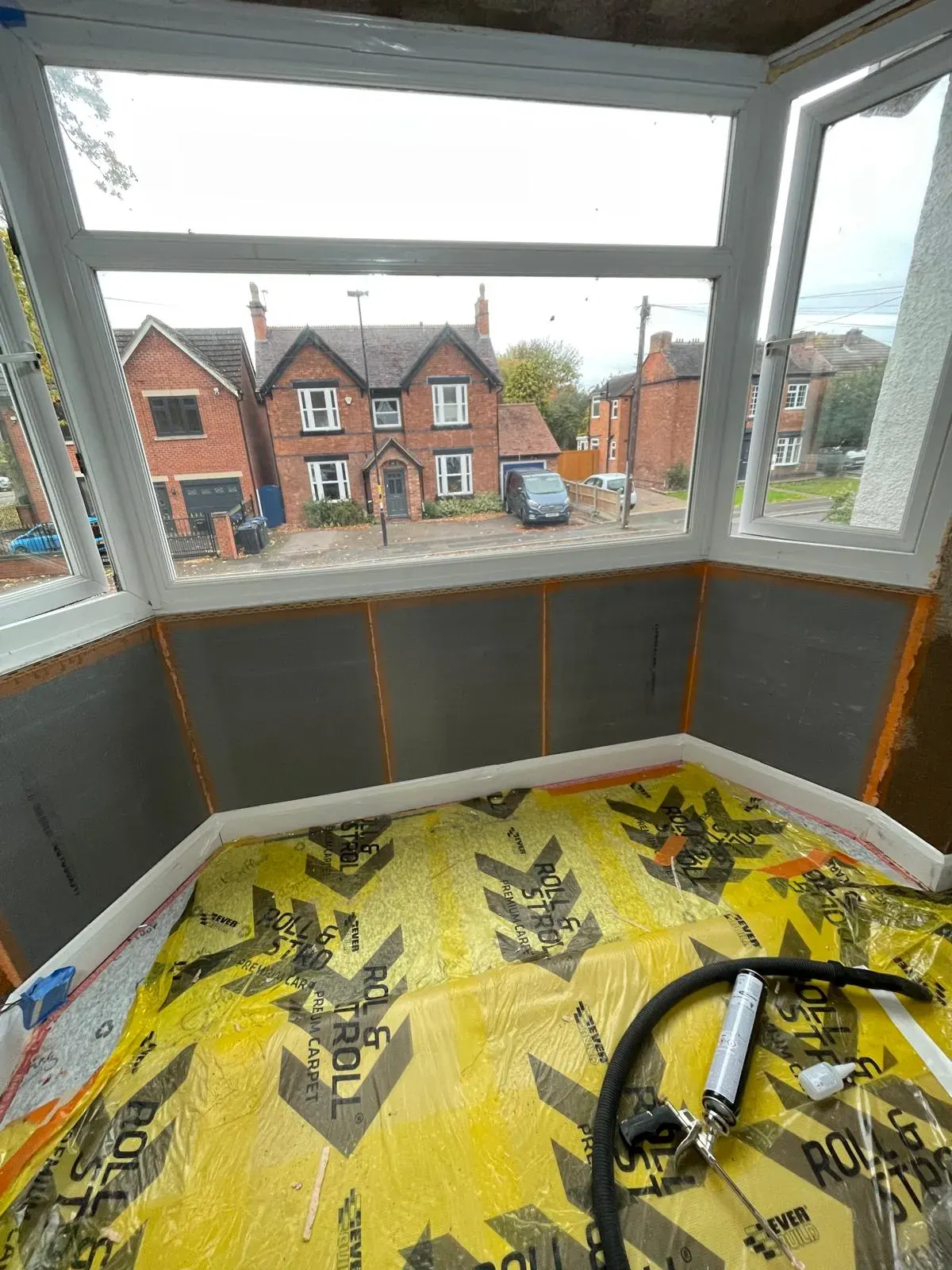
- Gaps to the outside are sealed, and the frame is filled with insulation.
- A new insulated board goes on the inside, fixed and sealed so air cannot get round it.
- The brick piers and side walls are insulated to match, so there is no cold edge where the panel ends.
- The reveals get a thinner board, the window board is extended, and everything is plastered.
Space is usually tight around a 1930s window, so a slim PIR board with PU adhesive is often the right choice here, with careful vapour and air sealing. Where there is room and the frame suits it, a breathable system can work too. My comparison of thermal plasterboard, wood fibre and PIR sets out the trade-offs.
Does the ceiling or roof of the bay need insulating?
Often, yes, and it is the part most people never think about. A ground floor bay usually has its own small roof, and the space between that roof and the bay ceiling is commonly empty. On a cold morning you can sometimes feel the chill coming down from the ceiling as much as from the window.
If I can reach that space without damaging the ceiling or the roof covering, I insulate it with the rest of the bay. If the bay roof is leaking or the covering is near the end of its life, that has to be repaired first, and I will tell you so rather than insulate under a wet roof. On a two-storey bay, the upper bay ceiling often joins the main loft, so it can be done from above with the loft insulation.
What difference does insulating the walls of a cold room make?
In my case study of a cold 1930s bedroom, I insulated solid brick walls with wood fibre and lime. On a 0°C day with the room at 20°C, the calculated surface temperature of the main wall rose from about 14.5°C to about 18.4°C, and the estimated heat loss through that wall fell by about 71%.
Those figures describe the wall, not your heating bill, which depends on the whole house. What matters day to day is that a warmer surface stops pulling heat out of the room and out of you, and it is far less likely to collect condensation. In a bay, where you have three cold faces around you, that change is easy to feel.
It also helps with the black mould that so often starts on bay reveals and behind curtains. Ventilation still matters, especially in bedrooms. My guide to condensation on bedroom walls covers that side of it.
How much does bay window insulation cost in Birmingham?
From about £2,300 per bay. A slim PIR system is usually £2,300 to £3,000 and takes three to four days. A breathable system with wood fibre and lime is around £3,000 and takes about five days. The insulated walls come in by roughly 20mm to 80mm including plaster, depending on the system. You get a written quote after the free home visit, listing exactly what is included.
Grant schemes are means-tested and often go through large installers working to a standard specification, and the detail a bay needs is easy to miss in that kind of work. If you do not qualify, or would rather choose who does the work, you can still insulate privately, one bay or one room at a time. My guide for people who did not qualify for an insulation grant explains the options.
If the bay sits in a solid front wall, it is usually worth pricing the walls either side at the same time. The internal wall insulation in Birmingham page covers whole rooms and whole houses.
Which parts of Birmingham do you cover?
The whole city. North Birmingham, including Kingstanding, Erdington, Perry Barr and Great Barr, is around 20 to 30 minutes from my base in Bloxwich, Walsall. South Birmingham, such as Hall Green, Kings Heath and Moseley, is more like 40 to 45 minutes. Visits are planned in advance, and the work is the same wherever you live.
If you are in Sutton Coldfield, my bay window insulation service page goes into the day-by-day detail of a bay job, from protecting the room to handover.
Homeowners who called me.
Real reviews from homeowners across the West Midlands, all 5 stars on Google, where you can read every one.
“We had insulation done in our main bedroom, outside wall including bay. From his initial visit, to quotation process and actually doing the work, he was very efficient. It was a pleasure to have Wojtek working in our house.”
“We had our house insulated recently and the difference is honestly amazing. Before, it used to take forever to warm the house up, we’d got to the point where we were even talking about selling because it was just that cold.”
“We’d had black mould forming on our bay window for years and had almost given up trying to clean it off. Nothing we tried ever worked. Then we came across Wojtek at aPlastering.”
“We recently had two rooms insulated by aPlastering, and honestly, they were brilliant from start to finish. They explained everything clearly, the communication was great, and the price was straightforward with no surprises.”
“Our experience with aPlastering was exceptional from start to finish. Wojciech did a thorough survey prior to providing a quote and was crystal clear on what was required. The price was fair for the work required.”
“A very professional and reliable service throughout. From initial enquiry to completion, communication was prompt, with a clear quotation and timeline provided.”
“Excellent professional service, great time keeping, and perfect job. I had insulated plasterboard fitted, soundproof plasterboard and all skimming to a large ground floor, excellent finish throughout and more importantly 3 years in and no cracks.”
“We were let down last minute and he came out to provide a quote the very same day and had our bedroom beautifully plastered the following day, all to an incredibly high standard.”
Free download · 16 pages
Damp, mould and the law: the landlord's 2026 guide.
A free guide for landlords in England: what the law on damp and mould requires today, what is coming and when, and a step-by-step protocol for responding to a tenant's report. Written by Wojtek Pankowski, a Retrofit Assessor and Domestic Energy Assessor in Walsall.
Get the free guideYour questions, answered.
Anything else, ring me on 07763 789272. Happy to talk it through.
Get a free quoteDo I need planning permission to insulate a bay window from the inside?
Usually not, because nothing changes on the outside, and that includes most houses in Birmingham's conservation areas. Listed buildings are the exception: internal alterations need listed building consent from the council first. I will tell you at the visit if anything else applies, such as Building Regulations on larger areas of wall.
My bay goes up two floors. Can you do both rooms?
Yes. Upstairs and downstairs bays are usually built the same way, so it often makes sense to do both, one room after the other. The upper bay ceiling may be reachable from the loft, which can make that part simpler. You can also start with whichever room is coldest.
Can you just insulate the bay and leave the rest of the wall?
Yes, and many people start there because the bay is usually the coldest part of the room. I detail the edge where the insulation stops so it does not become a new cold spot. If the rest of the front wall is solid brick, I will price it as an option so you can compare.
Will the mould on my bay reveals stop?
In most bays it removes the main cause, which is a cold surface where warm, moist air turns to water. Existing mould is removed safely, with a mask, before work starts. If the room has little ventilation, I recommend improvements and organise them through trusted trades, because insulation alone does not remove moisture.
Do I need new windows before the bay is insulated?
Not usually. Most of the heat loss in a cold bay is through the wall around and under the glass. If a window is failing or you are planning to replace it soon, do that first, so the new reveals are finished around the new frame and not disturbed later.
How long will the room be out of use?
Usually three to five working days for one bay, depending on the system, plus drying time before you decorate. A breathable system with lime takes about five days because each coat needs time. Only the bay room is affected, and floors and furniture are covered throughout.
You might also need.

Let's find out what is behind your bay.
Free, no-obligation quote. I'll come and look at the room, tell you honestly what's going on and give you a written quotation.
- TodayI read your message and call or WhatsApp you back.
- This weekA free home visit at a time that suits you.
- Within daysA clear written quote. No pressure, no chasing.
Wojtek, Retrofit AssessorUsually replies the same day
Tell me what's going on. It takes about a minute.
Get a free quote 07763 789272 Or send photos on WhatsApp