Mould & damp
Black mould in a child's bedroom: what to do this week
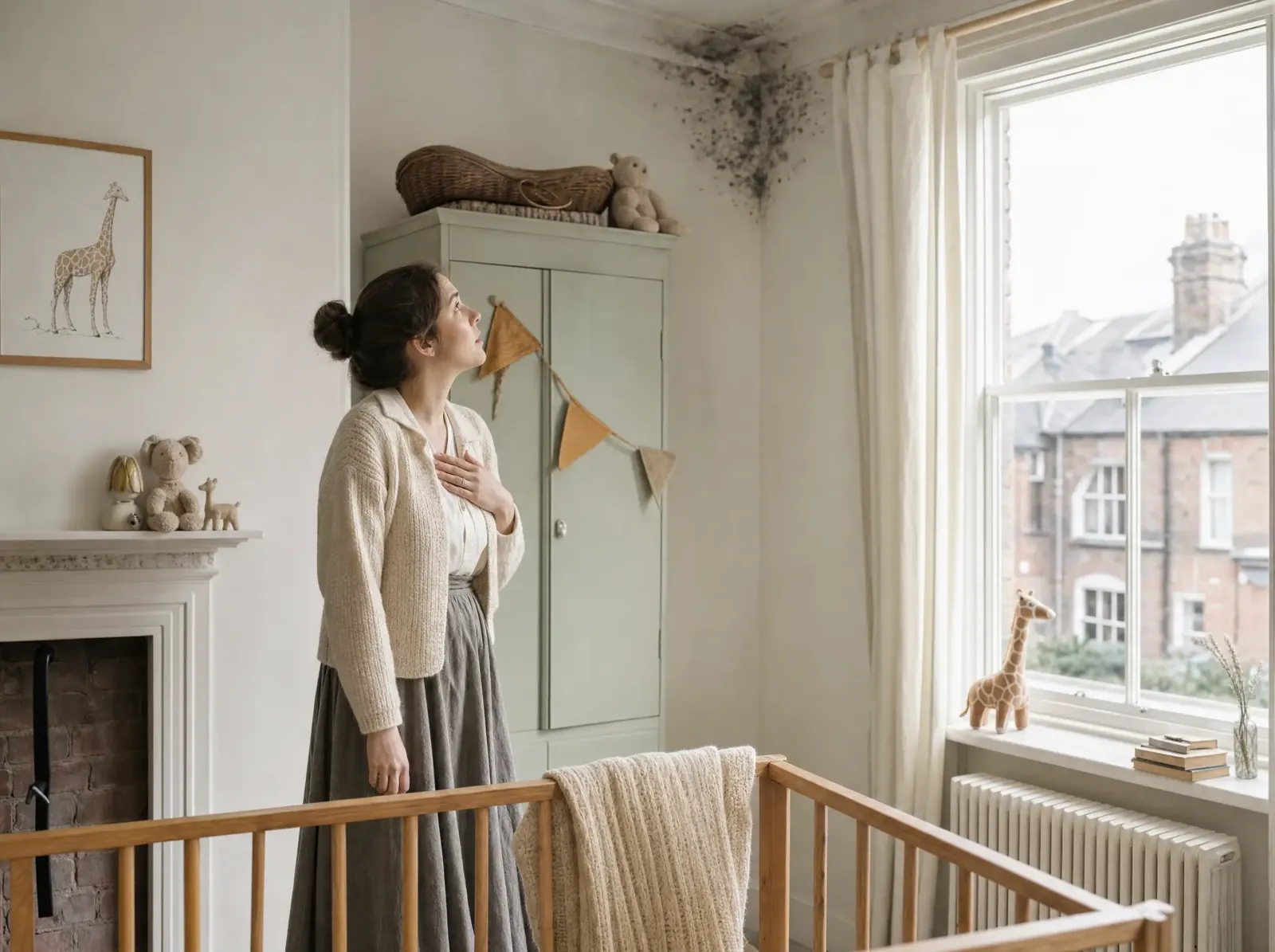
Black mould in a child's bedroom is almost always condensation on a cold outside wall, made worse by a small room, a closed door and furniture pushed against the coldest surface. You can make the room safer this week with a few calm steps. Stopping it for good means finding out why that wall stays cold.

Wojtek Pankowski, Retrofit AssessorUpdated 19 October 2026 · 8 min read
On this page 8 sections
- Why does mould show up in the child's room first?
- Is black mould in a child's bedroom dangerous?
- How do I clean mould in a child's room safely?
- What can I change in the room this week?
- How cold does the wall have to be for mould to grow?
- How do I stop the mould coming back for good?
- Where will my child sleep while the work is done?
- What happens if I ask you to look at the room?
Why is there black mould in my child's bedroom?
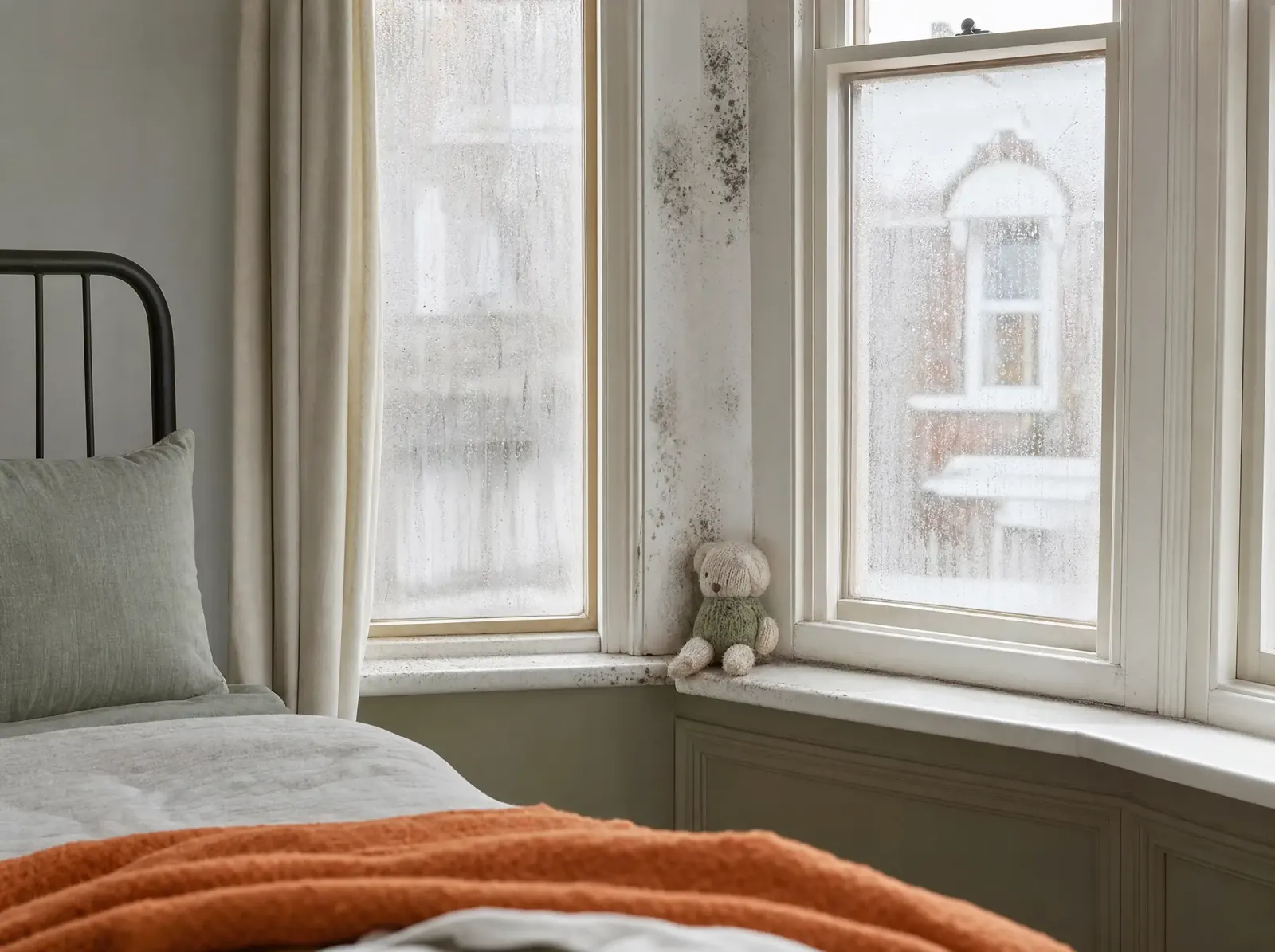
Usually because the outside wall is colder than the dew point of the air in the room. A child's bedroom at 18°C and 70% humidity puts water on any surface below about 12.5°C, and mould can grow on surfaces a few degrees warmer than that. An uninsulated solid brick wall can sit at around 14.5°C on a freezing night, and colder still behind a cot or wardrobe.
Why does mould show up in the child's room first?
Because children's rooms tend to combine every factor that mould likes. The room is often the smallest in the house, so the same amount of moisture from breathing and sweating overnight lifts the humidity faster. The door is usually shut so the child can sleep, and the heating is often turned down at night so the room does not get too warm. Small volume, closed door, cooler night: the wall cools down just as the air gets damper.
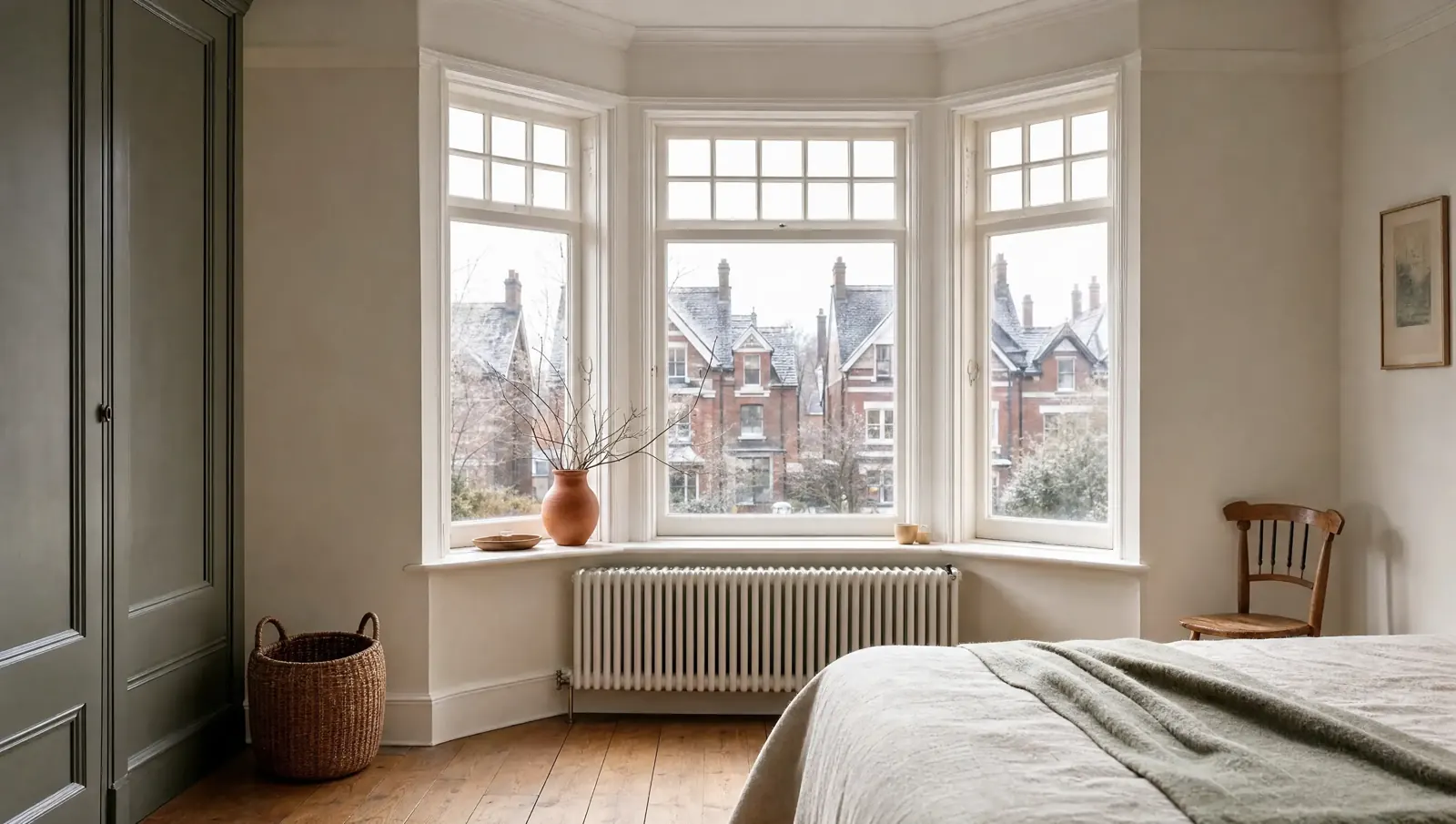
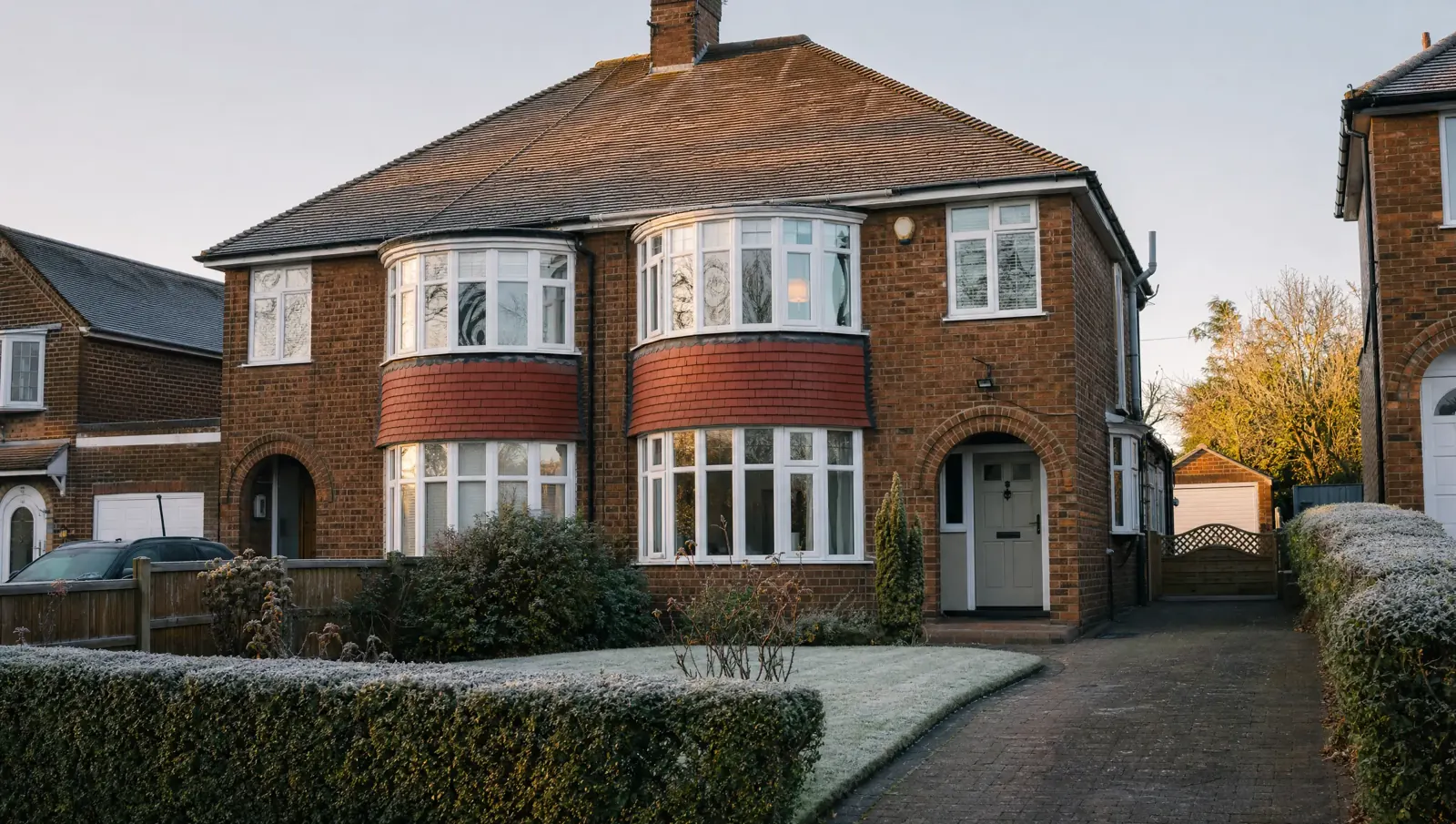
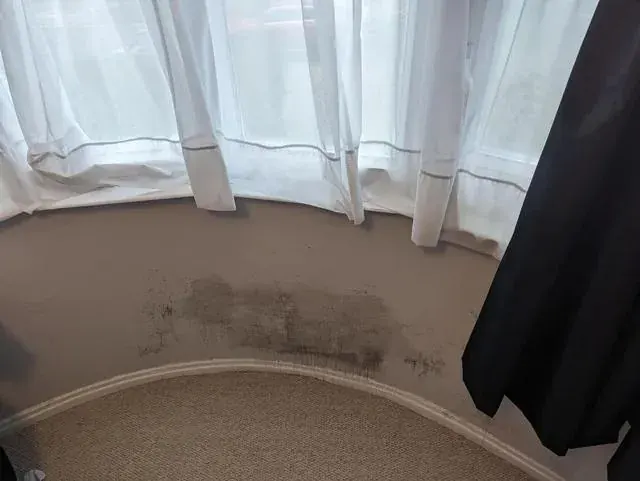
Then there is the position of the room. In many 1930s semis the small box room sits at the front of the house over the hallway, and the back bedroom is on the corner with two outside walls. Both have more cold wall per square metre of floor than any other room upstairs. If your child sleeps in the front bedroom with the bay, the panel under the window is often the coldest surface in the house, which I explain in why bay windows are so cold.
A few everyday things add to it: washing dried on the radiator, a cool mist humidifier, a fish tank, or a cot pushed tight against the outside wall so the child cannot roll into the gap.
Is black mould in a child's bedroom dangerous?
It is worth taking seriously, without panic. The NHS says damp and mould can cause breathing problems, respiratory infections, allergies and asthma, and that babies and children are among the people most at risk. Read the NHS page on damp and mould, and talk to your GP or health visitor if your child has a cough, wheeze or a rash that seems linked to the room.
I am not a doctor, so I will not tell you how risky your particular patch is. What I can tell you is that a small patch caught early is easy to deal with, and that the patch will keep coming back until the wall stops getting wet. Cleaning buys time. Fixing the cause ends it.
How do I clean mould in a child's room safely?
Clean it while your child is out of the room, and keep them out until it has aired. For a small patch, roughly the size of a tea tray or less:
- wear a proper mask (FFP2 or FFP3), rubber gloves and eye protection;
- open the window and close the bedroom door so spores do not travel through the house;
- wipe gently with a cloth and a fungicidal wash, used as the label directs;
- never brush, scrape or vacuum dry mould, as that throws spores into the air;
- bag the cloths and wash soft toys, bedding and curtains that sat near the wall on a hot wash.
Bleach is not the answer here. It can lighten the stain on a hard surface, but it does not deal with mould rooted in plaster or silicone, the fumes are unpleasant in a small room, and the mould is back within weeks if the wall is still cold. If the patch is large, has spread into the plaster, or anyone at home has asthma or a weakened immune system, leave it to a professional. Safe removal with a mask is part of my condensation and black mould service.
What can I change in the room this week?
These steps cost little and reduce the moisture that reaches the wall. They will not warm the wall, but they often slow the mould down a lot.
| Change | Why it helps |
|---|---|
| Move the cot or bed 5 to 10cm off the outside wall | Air can move behind it, and the wall gets some heat from the room |
| Put a digital hygrometer in the room | Aim for 40% to 60% humidity. Above 65% every morning means moisture is building up |
| Stop drying clothes in the room or on its radiator | A single load of washing releases a lot of water vapour |
| Keep trickle vents open, open the window fully for a few minutes each morning | Swaps damp air for drier air without chilling the walls |
| Keep a low, steady heat overnight rather than switching it off | A wall that never cools right down is less likely to reach the dew point |
| Leave the door slightly open, or check there is a gap under it | Lets damp air mix with the rest of the house |
If you use a humidifier for a cold or a blocked nose, use it briefly and keep an eye on the hygrometer. A dehumidifier is often the better choice in a child's room, as long as it is emptied every day and placed safely out of reach.
How cold does the wall have to be for mould to grow?
Colder than you might think is safe. The dew point is the surface temperature at which water forms, and mould can grow on surfaces that stay a few degrees above it because the air touching them is close to saturated.
| Room at night | Humidity | Water forms below | Mould risk below roughly |
|---|---|---|---|
| 18°C | 60% | about 10°C | about 13.5°C |
| 18°C | 70% | about 12.5°C | about 16°C |
| 20°C | 60% | about 12°C | about 15°C |
Figures calculated with the standard Magnus formula, rounded, with mould risk taken as 80% humidity at the surface. In my 1930s bedroom case study the solid brick wall had a calculated inside surface temperature of about 14.5°C with 20°C in the room and 0°C outside. That is inside the mould risk zone before you add a cot against it. After insulation the same wall worked out at about 18.4°C, well clear. For more on the physics, read why condensation forms on the outside wall.
How do I stop the mould coming back for good?
Warm the wall and get the moisture out. I always start with the free fixes and ventilation, and only suggest building work when the mould keeps coming back despite them.
- Check for water getting in. A leaking gutter, a blown bay roof or failed pointing can look like condensation from inside. That needs a repair first.
- Ventilation. Working trickle vents, a gap under the door, and extractor fans in the bathroom and kitchen that actually pull air. I organise this through trades I trust when it is needed.
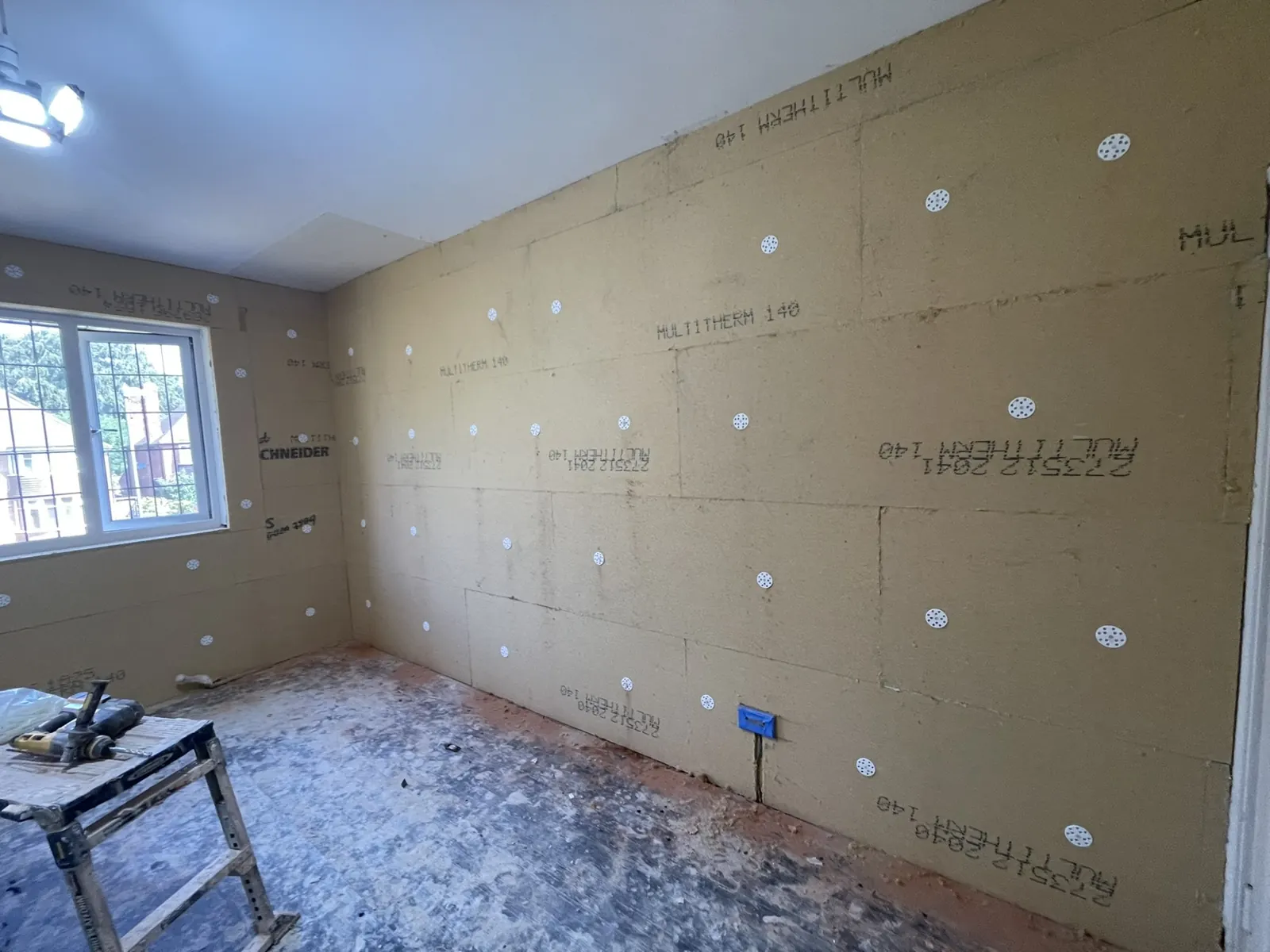
- Warm the cold surface. For a wall that is only slightly too cold, a thin internal cork coating can be enough. For a solid wall where mould returns every winter, internal wall insulation of about 20mm to 80mm, plastered and ready to decorate.
Internal wall insulation starts from about £2,300 per wall. A bay window with PIR starts from about £2,300 too. Either way you get a written quotation after a free home visit.
Where will my child sleep while the work is done?
In another room, for a few nights. One wall with PIR insulation usually takes 3 to 4 days, and a breathable wood fibre and lime system about five days, because each layer needs time. Stripping old plaster is dusty, so the room is sealed off and I would not want a child sleeping in it until the work is finished and cleaned.
Most families move the cot into their own room or swap rooms for the week. Breathable lime plaster then needs time to dry before it is painted with a breathable paint, and I will tell you how long for your finish. The practical side of having the work done while you live at home is covered in my guide to living at home during internal wall insulation.
What happens if I ask you to look at the room?
I come out for a free home visit. I look at where the mould is and where it is not, check the outside of the wall for leaks, measure the room and the wall, and look at the ventilation. As a Domestic Energy Assessor and Retrofit Assessor I then explain in plain English why that wall is getting wet, and what the simplest lasting fix is.
If it turns out the room just needs a fan fixed and the cot moved, I will say so. If it needs insulation, I run a moisture check on the wall build-up before choosing the system, and you get a written quotation. You can book a visit here or call me on 07763 789272.
Common questions
Should my baby sleep in a room with black mould?
If you can, move the cot to another room while you clean the patch and sort the cause, especially if your baby has a cough or wheeze. Speak to your GP or health visitor if you are worried about symptoms. A small patch cleaned safely is not a reason to panic, but it is a reason to act this week rather than next winter.
Why does the mould come back after I clean it?
Because cleaning removes the mould but not the cold, damp surface it grows on. The next cold night, the wall gets wet again and new growth appears. Ventilation helps, and moving furniture off the wall helps, but if the wall itself is too cold the only lasting fix is to warm its surface.
Is anti-mould paint safe for a child's bedroom?
Check the product label for use in bedrooms and follow its drying time before your child sleeps there. More importantly, anti-mould paint only treats the surface. On a cold outside wall the mould usually returns through or around it within a winter or two.
Will a dehumidifier stop mould in my child's room?
It will reduce it while it runs, which makes it a good short-term step. Empty it daily, keep it out of reach and away from the cot. It does not warm the wall, so the mould usually comes back once you stop using it.
Can you insulate just my child's bedroom?
Yes. I can insulate one room, and often that is where families start. I usually recommend planning the whole house at some point so the details join up, but a single cold bedroom with recurring mould is a sensible place to begin.
How much does it cost to fix a mouldy bedroom wall?
If the fix is ventilation and habits, very little. If the wall needs insulating, internal wall insulation starts from about £2,300 per wall, and a bay window from about £2,300. Mould removal and any plastering are priced in a written quotation after a free home visit.