Planning
Living at home during internal wall insulation: what to expect
Yes, you can live at home while internal wall insulation is fitted. The work happens one room at a time, the room is sealed off from the rest of the house, and only that room is out of use for the days it takes. Here is what each day looks like, how to prepare, and what to plan for with children, pets and working from home.

Wojtek Pankowski, Retrofit AssessorUpdated 19 October 2026 · 8 min read
On this page 8 sections
- What happens each day?
- How much dust and mess will there be?
- How should I prepare the room?
- Will I have heating and water while the work is done?
- What about children, pets and working from home?
- When can I decorate and move back in?
- How much smaller will the room be?
- What happens after the work is finished?
Can I stay at home while internal wall insulation is fitted?
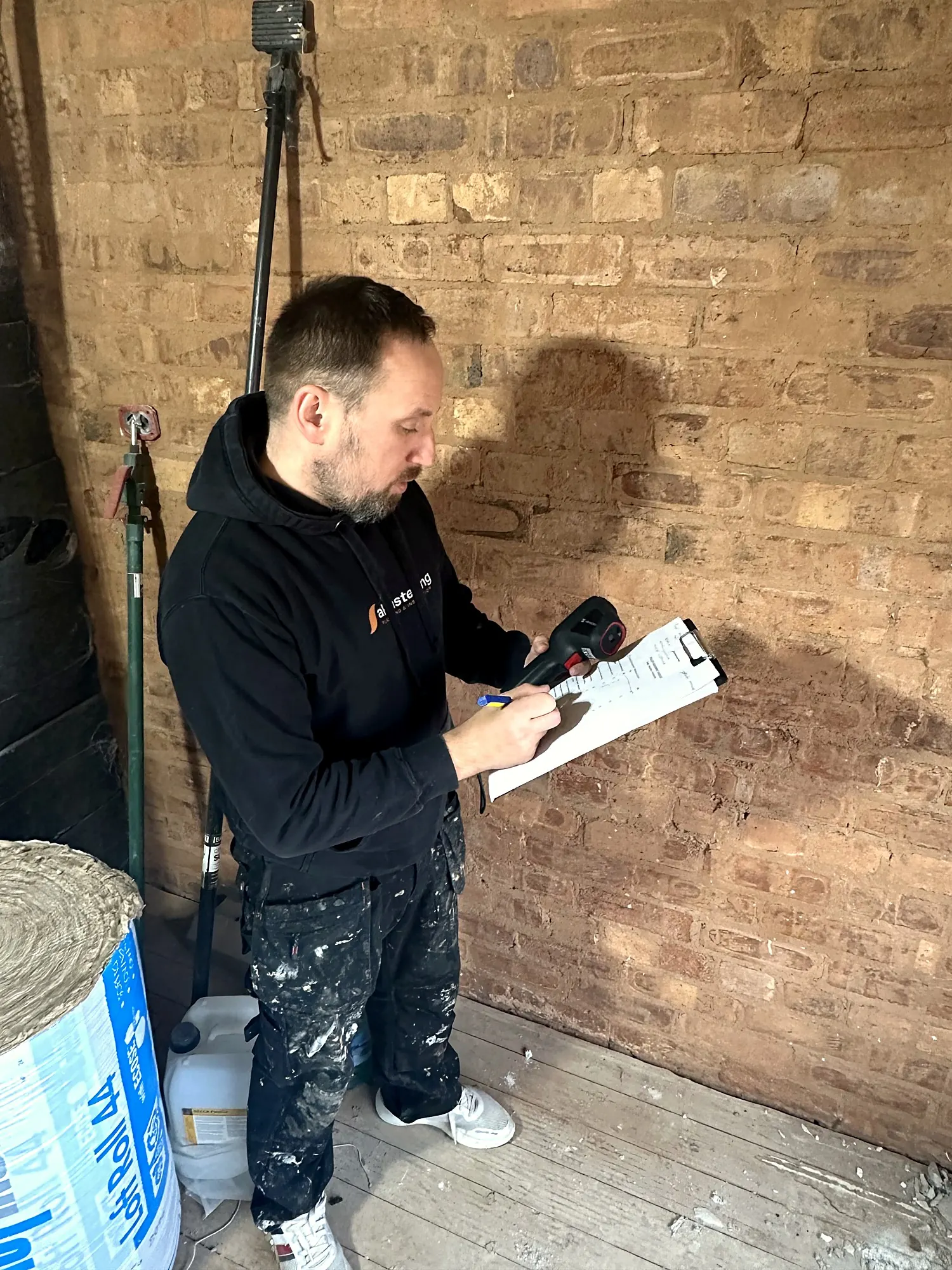
Yes. Only the room being insulated is out of use. One wall with PIR insulation usually takes 3 to 4 days and a breathable wood fibre and lime system about five days. The room is sealed with dust sheets and protection, the route through the house is covered, and I clean up every day. Expect noise and some dust on stripping days, and the radiator in that room to be off.
What happens each day?
Every job is planned for the room, but a single wall in a bedroom usually follows this pattern:
| Stage | What happens | What you notice |
|---|---|---|
| Start | Floors and the route in are protected, the room is sealed off, the radiator is taken off, skirting and fittings removed carefully | Some coming and going, the room is out of use |
| Stripping | Old plaster is removed from the outside wall where the system needs it, the brick is checked and prepared | The noisiest, dustiest part, usually a day |
| Insulation | Boards are fixed with adhesive and mechanical fixings, window reveals and junctions are detailed | Quieter: cutting, drilling, fixing |
| Plaster | The wall is plastered: gypsum on PIR or thermal plasterboard, lime on breathable systems | Quiet, wet work |
| Finish | Radiator, skirting and sockets go back, the room is cleaned and checked with you | Room back in use, ready for decorating once dry |
PIR work usually runs 3 to 4 days per wall. Breathable wood fibre and lime takes about five days, because lime needs time between coats. You can see the whole process on my simple process page.
How much dust and mess will there be?
Stripping old plaster is dusty, there is no point pretending otherwise. The aim is to keep that dust inside the room being worked on. I seal the doorway, cover the floors from the front door to the room, protect any furniture that stays, and clean up at the end of every day so the rest of the house stays usable.
Old plaster and offcuts are taken away, so you are not left with a pile in the front garden. If any surface in the room has Artex, it is tested and dealt with safely before it is disturbed, as explained in plastering over Artex and asbestos.
How should I prepare the room?
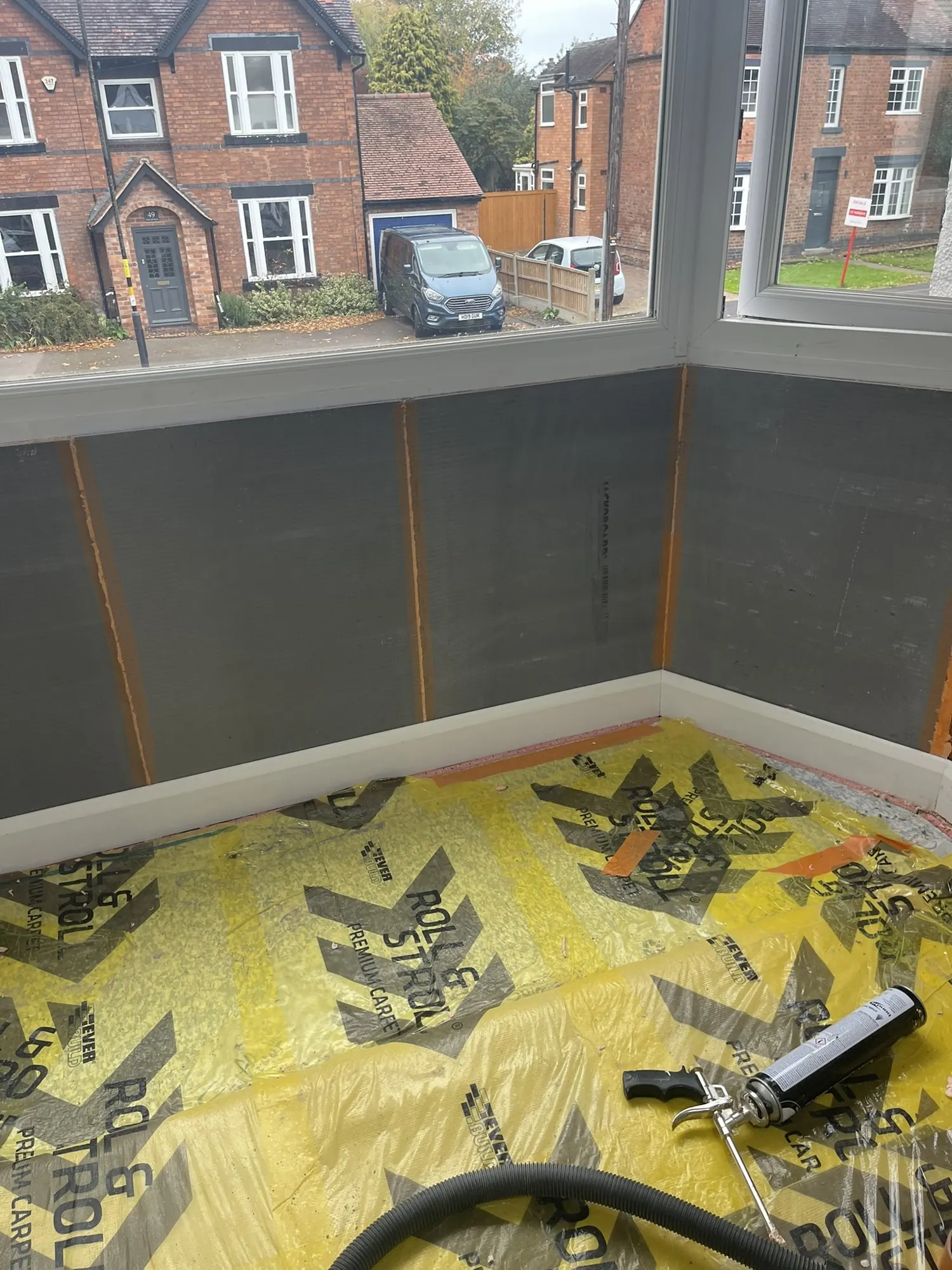
- Empty the room as far as you can: wardrobes, drawers, bed, curtains and pictures. Heavy items that cannot move can be pushed to the middle and covered.
- Take down curtains and blinds on the outside wall, and anything fixed to it: shelves, TV brackets, mirrors.
- Clear a route from the door to the room, and tell me about anything fragile on the way.
- Think about parking for a van near the house for loading and unloading.
- Decide on sockets and radiators. If you want a socket moved or a radiator in a different place, now is the moment. Electrics and plumbing are done by trades I trust, coordinated with my work.
Before the work starts you get a written quotation and a pre-start guide that sets out what will happen and what to have ready.
Will I have heating and water while the work is done?
Yes, in the rest of the house. The radiator in the room being insulated is taken off and capped, so the heating keeps working everywhere else. It goes back on the new wall at the end, sometimes on new brackets or a little further out. Water and electricity stay on, with short planned interruptions if a circuit or pipe needs moving.
Kitchens and bathrooms are different, because you need them every day. If the outside wall of your kitchen or bathroom is being insulated, we plan the order so you are not without a sink or a toilet longer than necessary, and it often makes sense to combine it with a refit.
What about children, pets and working from home?
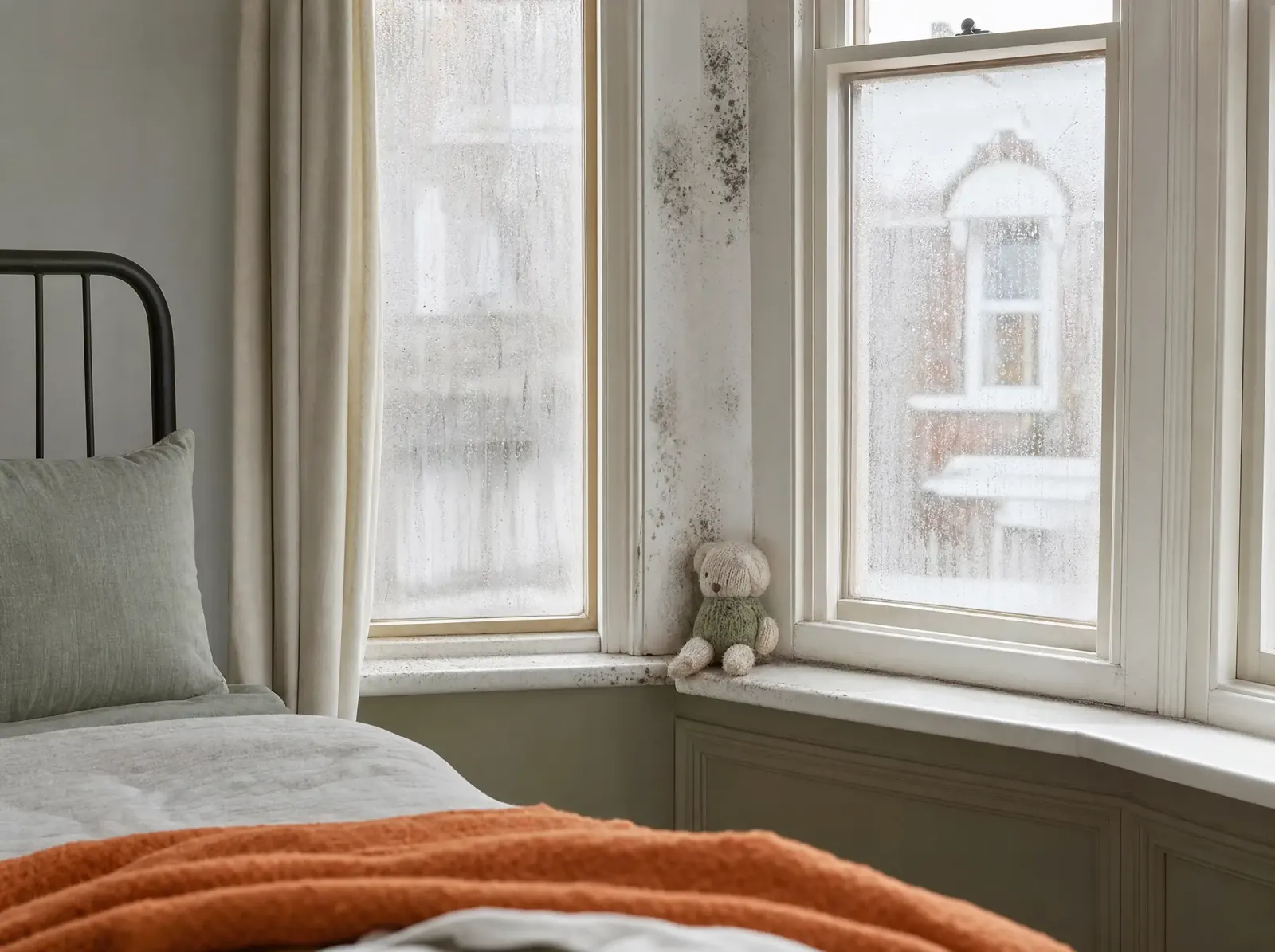
Children. If it is a child's bedroom, they will need to sleep somewhere else until the work is finished and the room is cleaned. Most families move the cot into their own room or swap rooms for the week. If you are dealing with mould in that room, read black mould in a child's bedroom first.
Pets. Keep them away from the work area and the open front door on loading days. Cats in particular like to investigate sealed rooms.
Working from home. The stripping day is the noisiest. If you have important calls, tell me and we can plan the loudest work around them, or you may prefer to work from another room at the far end of the house that day.
When can I decorate and move back in?
You can usually put furniture back once the room is finished and cleaned, keeping it a little away from the new plaster while it dries. Painting has to wait until the plaster has dried properly, and how long depends on the finish, the weather and the ventilation.
| Finish | Before decorating | Paint |
|---|---|---|
| Gypsum plaster on PIR or thermal plasterboard | Usually the quicker of the two | Mist coat, then standard emulsion |
| Lime plaster on wood fibre | Longer, lime cures slowly | Breathable paint only, such as limewash, clay or silicate paint |
I give you the drying time for your finish at handover. Using the wrong paint on a breathable wall can trap moisture, so check with me first. The differences are explained in lime plaster vs gypsum.
How much smaller will the room be?
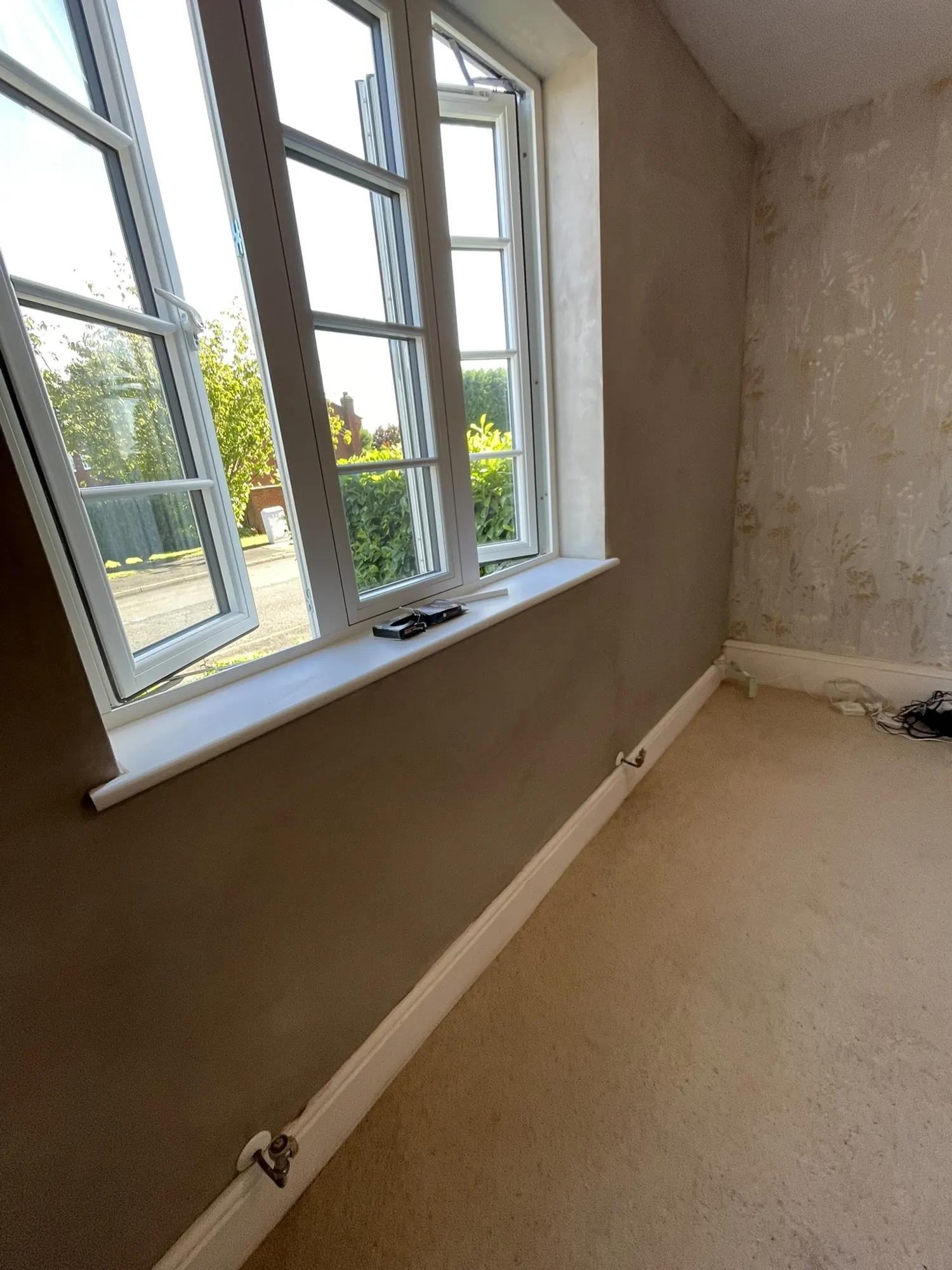
Usually about 20mm to 80mm off the outside wall, including plaster, depending on the system. In the 1930s bedroom case study I used 40mm of wood fibre on the main wall and 25mm on the wall next to the en-suite door, so the doorway did not need altering. I mark the finished line on the wall during the visit, so you can check that the wardrobe or bed still fits before anything starts.
What happens after the work is finished?
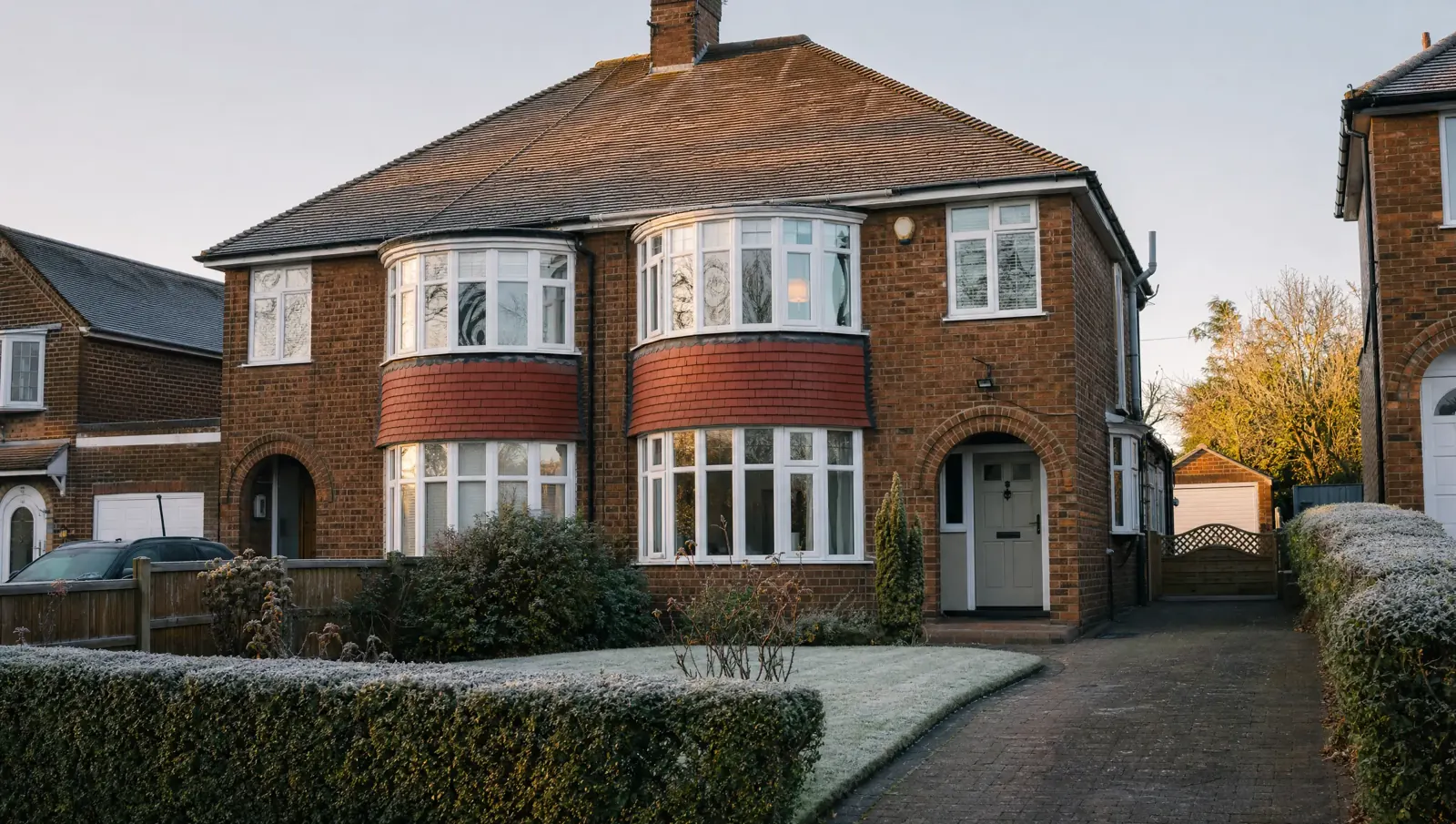
We walk round the room together at handover, and you get an aftercare and maintenance plan covering heating, ventilation and redecorating. I call about four weeks later to check everything is as it should be. If you are planning more rooms, the next one follows the same pattern, as set out in insulating a 1930s semi room by room.
To talk through your room, book a free home visit, read more about internal wall insulation, or call me on 07763 789272.
Common questions
Do I need to move out during internal wall insulation?
No. The work is done one room at a time, and only that room is out of use. The rest of the house stays usable, with the route in protected and cleaned every day.
How long does one room take?
One wall with PIR insulation usually takes 3 to 4 days, and a breathable wood fibre and lime system about five days. A room with two outside walls, or a bay as well as the main wall, takes longer. You get a timetable with the written quotation.
Will it be noisy?
On the stripping day, yes: removing old plaster is loud. Fixing boards and plastering are much quieter. If you work from home, tell me about important calls and I will plan the loudest work around them where I can.
Do I need to empty the room completely?
As much as you can. Everything on or near the outside wall has to move, including wardrobes, curtains and anything fixed to the wall. Heavy items that cannot be moved can be pushed to the middle and covered.
Can I use the room in the evenings during the work?
It is best not to. The room is sealed off, the radiator is off and there will be tools and materials in it. It is usually easiest to treat it as out of use from the first day until the handover.
When can I paint the new walls?
When the plaster has dried, which depends on the finish and the conditions. Gypsum is usually quicker than lime. Breathable lime walls need breathable paint. I give you the drying time and suitable paints at handover.