Mould & damp
Tenant reported mould? A landlord's checklist
When a tenant reports damp or mould, the best response is quick, in writing and aimed at the cause rather than the stain. Acknowledge it, inspect it, find out why that surface is wet, fix the cause and keep a record. This checklist sets out the steps in order, with the legal background for private landlords in England.

Wojtek Pankowski, Retrofit AssessorUpdated 19 October 2026 · 9 min read

On this page 8 sections
- What should I do in the first few days?
- What should the inspection check?
- What does the law require of private landlords in England?
- How do I fix the cause, not just the stain?
- What records should I keep?
- Can the work be done with the tenant living there?
- What does a lasting fix cost?
- How can I help as an independent assessor?
What should a landlord do when a tenant reports mould?
Acknowledge the report in writing straight away, arrange an inspection promptly, and find the cause: a leak, water getting in, poor ventilation or a cold wall. Fix the cause, not just the surface, tell the tenant what you are doing and when, and keep photos and notes. Under HHSRS and the Homes (Fitness for Human Habitation) Act 2018, damp and mould are already your responsibility to deal with.
What should I do in the first few days?
- Acknowledge in writing. Reply by email or message the same day, thank the tenant for reporting it and say when someone will look at it.
- Ask for photos. Where is it, how big, how long has it been there, and is anyone in the household unwell, pregnant, very young or elderly?
- Check for leaks you can rule out quickly: bath and shower seals, pipes under sinks, radiator valves, gutters above the affected wall.
- Book an inspection with proper notice to the tenant, and do it promptly. A small patch is cheap to deal with now and expensive after a winter.
- Give the tenant safe interim advice: clean small patches with a mask and a fungicidal wash, do not brush dry mould, keep trickle vents open.
Avoid replying with a leaflet on drying washing and opening windows as the whole answer. Government guidance on damp and mould in rented homes is clear that landlords should not assume a tenant's lifestyle is the cause, and should look for the underlying problem. See the gov.uk guidance on the health risks of damp and mould.
What should the inspection check?
A good inspection answers one question: why is that surface wet? Take this list with you.
- Pattern: mould high in corners, around windows and behind furniture usually means condensation. A tide mark low down or a patch that grows after rain points to water getting in. My guide to rising damp, penetrating damp and condensation explains the differences.
- Outside: gutters, downpipes, pointing, render, the bay roof and ground levels against the wall.
- Ventilation: do the bathroom and kitchen extractor fans actually pull air? Are trickle vents fitted and open? Is there a gap under internal doors?
- Heating: does every radiator work, and can the tenant afford to heat the home steadily?
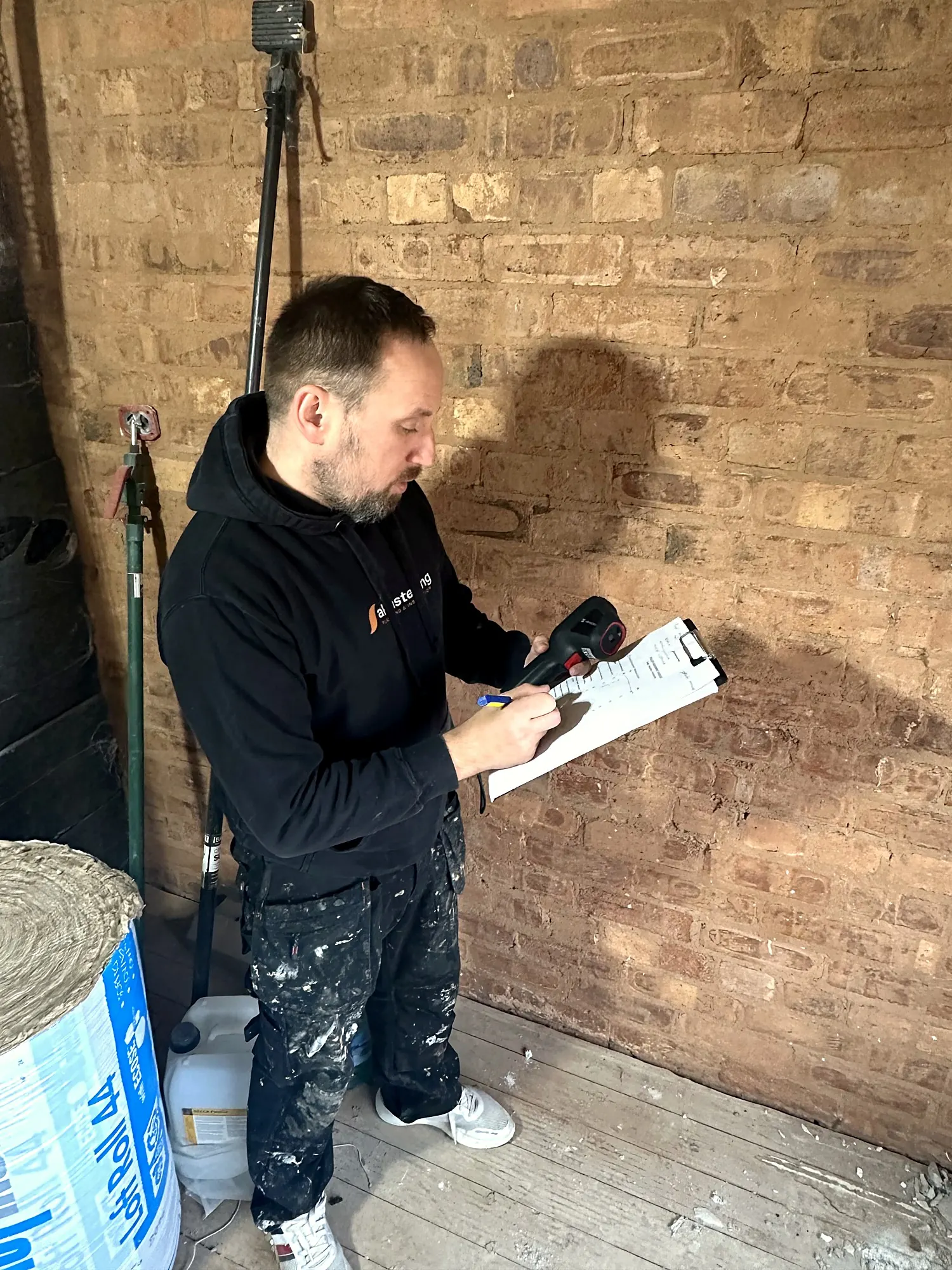
- Readings: room humidity with a hygrometer, and surface temperatures of the affected wall against an internal wall with an infrared thermometer.
- The wall itself: solid brick or cavity, and is it insulated?
Write down what you found, with photos and dates.
What does the law require of private landlords in England?
You already have legal duties on damp and mould today, regardless of what changes next. This is a short summary, not legal advice.
| Law or rule | What it means for you | Status for private landlords |
|---|---|---|
| Housing Health and Safety Rating System (HHSRS) | Damp and mould growth is one of the hazards councils assess. A serious hazard can lead to enforcement action | In force |
| Homes (Fitness for Human Habitation) Act 2018 | The home must be fit to live in at the start of the tenancy and throughout it. Tenants can take action if it is not | In force |
| Repairing obligations | Keeping the structure, exterior, and installations for water and heating in repair | In force |
| Awaab's Law | Fixed timescales to investigate and fix damp and mould hazards | In force for social landlords. Extension to private renting is expected but not in force at the time of writing |
| Minimum energy efficiency (EPC) | Private rented homes currently need an EPC of at least E, unless exempt. A rise to EPC C has been proposed | E in force, C proposed |
Rules and timetables change, so check gov.uk or get legal advice for your situation. My free landlord's damp and mould guide goes into the legal framework in more depth, with a response protocol and a record log.
How do I fix the cause, not just the stain?
Match the fix to what the inspection found:
| Cause | Fix |
|---|---|
| Leak or water getting in | Repair it first: gutters, pointing, flashing, seals, pipes. Let the wall dry, then make good the plaster |
| Poor ventilation | Extractor fans that work, ideally on a humidity sensor or overrun, trickle vents, door undercuts |
| Cold solid wall, mould returning every winter | Warm the wall: cork coating for slightly cold surfaces, internal wall insulation for cold solid walls |
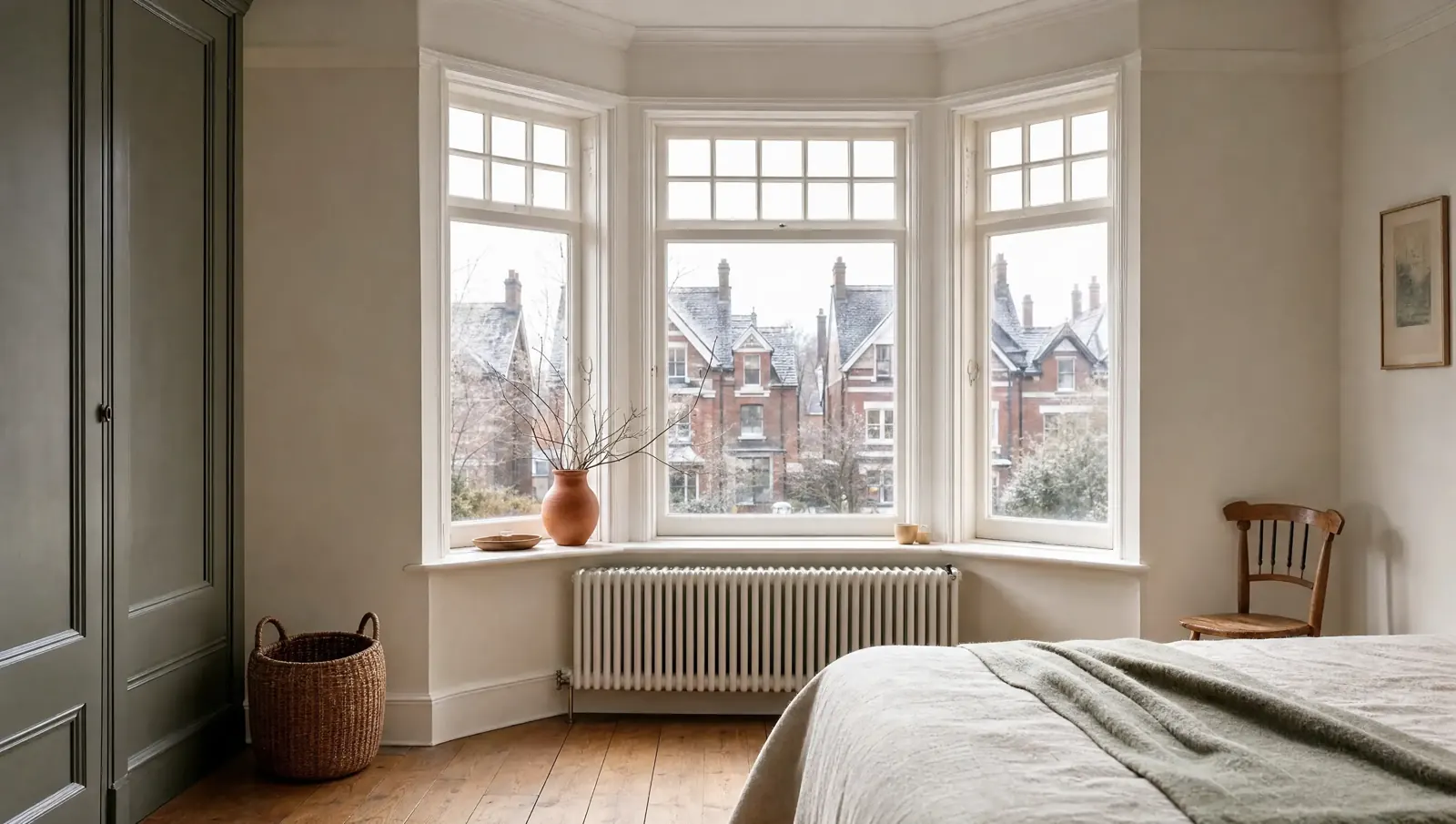
| Cold bay window in the front bedroom | Bay window insulation |
| Heating not working or not affordable to run | Repair the heating, and reduce heat loss so less heating is needed |
Painting over mould with anti-mould paint, or treating it with bleach, is not a fix. It hides the problem until the next cold spell, and the tenant reports it again.
What records should I keep?
- The tenant's report, with the date and time you received it.
- Your acknowledgement and every message after it.
- Inspection notes, photos, humidity and temperature readings.
- What you decided the cause was, and why.
- Quotes, invoices and the dates work was done.
- A follow-up check a few weeks later, ideally in cold weather, confirming the mould has not returned.
A clear record shows you took the report seriously and acted on the cause. It also helps the next time anything is reported in that property.
Can the work be done with the tenant living there?
Usually yes, room by room. A single wall with PIR insulation takes 3 to 4 days, and a breathable wood fibre and lime system about five days. Only that room is out of use, it is sealed off, and the route through the house is protected and cleaned daily. Bedrooms are the easiest. Kitchens and bathrooms need more planning with the tenant. Between tenancies is easier still if the timing works.
What tenants can expect during the work is set out in living at home during internal wall insulation, which is worth sending them in advance.
What does a lasting fix cost?
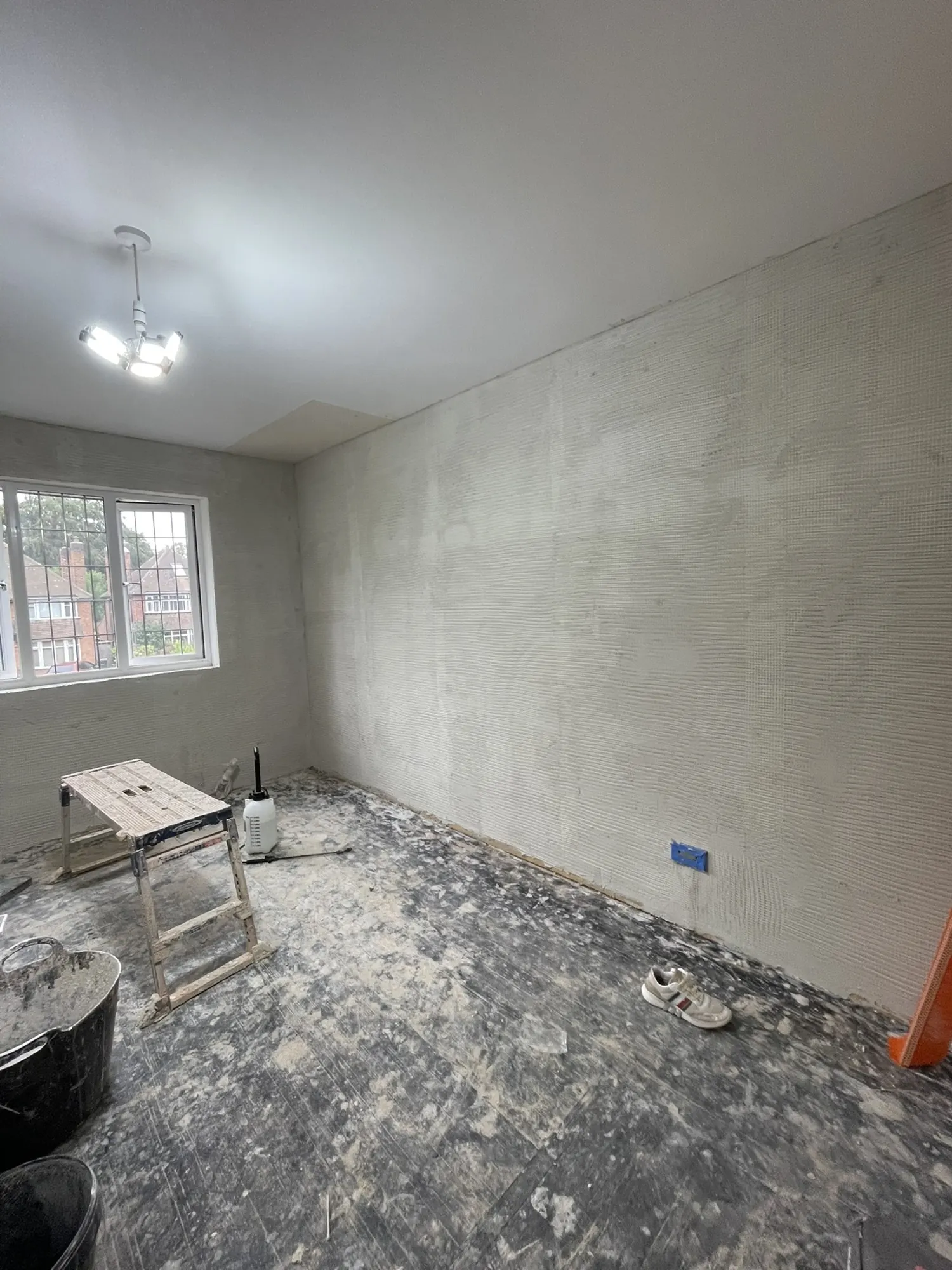
Ventilation and repairs are often modest. If the wall needs insulating, internal wall insulation starts from about £2,300 per wall: PIR £2,300 to £3,000 per wall, a breathable wood fibre and lime system around £3,000, and bay windows with PIR from £2,300. Mould removal and replastering are priced in a written quotation after a free visit. My internal wall insulation cost guide explains what is included.
Weigh that against the cost of repeat visits, redecoration every year, void periods and a dispute with a tenant. In a cold solid wall house, a warmer wall is usually what makes the reports stop.
How can I help as an independent assessor?
I am a Domestic Energy Assessor and Retrofit Assessor based in Bloxwich, Walsall. On a free visit I inspect the affected rooms and the outside, take readings, and explain in plain English what is causing the mould. You get the cause and any quotation in writing, which you can keep with your records.
I do not sell chemical damp treatments, so my recommendation is based on what the wall needs. If it is a leak or a ventilation problem, I will tell you, and I can organise ventilation through trades I trust. Book a visit or call 07763 789272.
Common questions
How quickly do I have to respond to a mould report?
As a private landlord you do not yet have the fixed timescales that Awaab's Law sets for social landlords, but you must keep the home fit to live in and deal with hazards. In practice, acknowledge the report the same day, inspect promptly and act on the cause. Delay makes the repair bigger and weakens your position if there is a dispute.
Is mould the tenant's fault if they dry washing indoors?
It can contribute, but it is rarely the whole story. Mould grows where surfaces are cold and ventilation is poor, which are features of the building. Government guidance says landlords should not simply blame lifestyle. Fix the building side first, and give practical advice alongside.
Does Awaab's Law apply to private landlords?
Not at the time of writing. It currently applies to social housing. The government has indicated that similar requirements are expected to be extended to private renting, but private landlords already have duties under HHSRS and the Homes (Fitness for Human Habitation) Act 2018.
Will insulating the walls help my EPC rating?
Insulating solid walls generally improves a home's energy rating, because it reduces heat loss. How much depends on the rest of the property. As a Domestic Energy Assessor I can explain what a measure is likely to do before you commit.
Can I just repaint with anti-mould paint between tenancies?
You can, but if the wall is cold the mould will come back, often in the first winter of the new tenancy. Find out why the wall is wet before redecorating, so the next tenant does not report the same problem.
Do you work for letting agents as well as landlords?
Yes. I can visit with or for a letting agent, inspect the property, and provide the cause and quotation in writing for the landlord.