Mould & damp
Mould behind the wardrobe: why it grows and what to do now
Mould grows behind a wardrobe because the wardrobe insulates the outside wall from the room. The wall behind it gets colder than anywhere else in the bedroom, the air in the gap does not move, and moisture settles there night after night. The fix is partly where the furniture goes and partly how cold the wall is.

Wojtek Pankowski, Retrofit AssessorUpdated 19 October 2026 · 8 min read
On this page 8 sections
- Why does a wardrobe make the wall so cold?
- I've just found it. What should I do first?
- Can I save clothes and shoes with mould on them?
- Where should the wardrobe go now?
- What about fitted wardrobes on an outside wall?
- Can I insulate just the patch behind the wardrobe?
- How much warmer would the wall be with insulation?
- When should I get the wall looked at?
Why is there mould behind my wardrobe?
Because the wardrobe blocks the room's heat from reaching that part of the outside wall, so it can be several degrees colder than the rest of the wall. In a bedroom at 20°C and 60% humidity, water condenses below about 12°C and mould can grow below roughly 15°C. An uninsulated solid brick wall is around 14.5°C on a freezing night before a wardrobe even goes against it.
Why does a wardrobe make the wall so cold?
Think of the wardrobe as a thick blanket hung on the wrong side. The room's warmth normally reaches the wall by moving air and by radiation from the radiator and the people in the room. Put a big box of clothes in front of it and both are blocked. The patch of wall behind loses heat to the outside just as fast, but gets far less heat from the room, so its surface temperature drops.
The air in the gap barely moves either. Damp air drifts in, cools against the wall and stays. That is why the mould often appears as a neat rectangle the shape of the wardrobe, darkest at the bottom corners and at the edge where the outside wall meets another outside wall or the floor.
The same happens behind a headboard, a cot, a chest of drawers or a sofa on an outside wall. The bigger and closer the furniture, the colder the wall behind it.
I've just found it. What should I do first?
- Empty the wardrobe and pull it away from the wall. Do it with the window open.
- Put on a mask (FFP2 or FFP3), gloves and eye protection before touching the mould.
- Wipe, do not brush. Use a fungicidal wash on the wall as the label directs, with a damp cloth. Never scrape or vacuum dry mould, as that spreads spores.
- Check the back of the wardrobe. Hardboard and MDF back panels soak up moisture. A light surface growth can be cleaned. A panel that is stained through, soft or smells musty is better replaced.
- Take photos and note the date. If you rent, send them to your landlord in writing.
Bleach is not a fix. It lightens the stain but does not reach mould in the plaster, and the patch returns as soon as the wall gets wet again. A large patch, or one in a child's room or in a house with someone with asthma, is worth handing to a professional. My condensation and mould service includes safe removal with a mask.
Can I save clothes and shoes with mould on them?
Most of the time, yes. Washable clothes can usually be rescued by washing at the hottest temperature the label allows, ideally twice, and drying them outside or in a tumble dryer rather than on a radiator indoors. Leather shoes, bags and belts can often be cleaned with a damp cloth outdoors and left to dry naturally, away from direct heat.
Items that still smell musty after washing, or delicate items that cannot be washed, are better professionally cleaned or let go. Do not put the clothes back until the wall and the wardrobe are dry, or the smell comes straight back.
Where should the wardrobe go now?
On an internal wall if you can. Internal walls have a heated room on the other side and stay close to room temperature, so mould rarely grows behind furniture on them.
If the only space is the outside wall:
- leave a gap of 5 to 10cm between the back of the wardrobe and the wall;
- raise it on legs or a plinth with a gap so air can move under and behind it;
- avoid packing it so tightly that air cannot move between the clothes;
- open the doors for a few minutes each morning when you air the room;
- keep a hygrometer in the room and aim for 40% to 60% humidity.
A gap helps a lot, but it does not warm the wall. On a cold solid brick wall the mould can return to the gap itself, just more slowly.
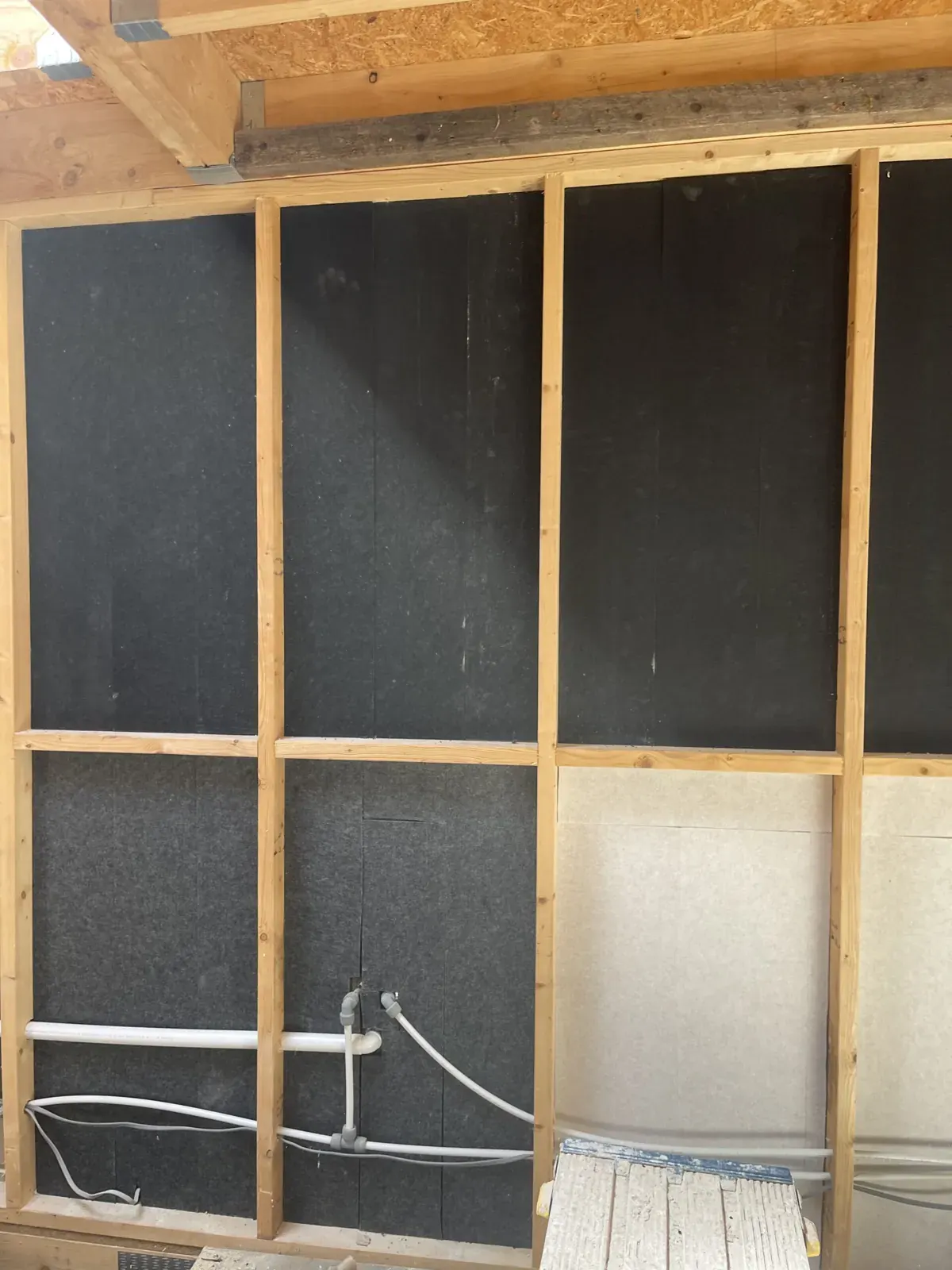
What about fitted wardrobes on an outside wall?
Fitted wardrobes are harder, because they are built tight to the wall, often floor to ceiling, with no gap at all. In 1930s houses they are commonly fitted along an outside wall or into the space beside a chimney breast, and those are often the coldest walls in the room.
Options, from simplest:
- drill or fit discreet vents at the top and bottom of the doors or the plinth so air moves through;
- fit a back panel with a ventilated gap behind it, if the carcass can be adjusted;
- warm the wall itself before the wardrobe goes back, with a thin cork coating or full internal wall insulation.
If you are about to have fitted wardrobes built on an outside wall, that is the moment to insulate it. It is far easier with the room empty than after the joiner has finished.
Can I insulate just the patch behind the wardrobe?
I would not. If you insulate only part of a cold wall, the cold simply moves to the edge of the insulation, where the warm insulated section meets the cold bare brick. That line can become the new place where condensation and mould appear.
The wall needs treating as a whole, from corner to corner and floor to ceiling, with the window reveals and junctions detailed properly. That is also where moisture modelling matters: I check how the new build-up will handle water vapour before choosing a system, so the brickwork can still dry out. My guide to thermal plasterboard vs wood fibre vs PIR compares the options.
How much warmer would the wall be with insulation?
A lot warmer, and that is what stops the mould. In my 1930s bedroom case study, the calculated inside surface temperature of a 225mm solid brick wall rose from about 14.5°C to about 18.4°C on a 0°C day with the room at 20°C, after 40mm of wood fibre and lime plaster. A wardrobe in front of a wall at 18.4°C has much less chance of pushing the surface down into the mould zone.
| Wall | Surface temperature (room 20°C, outside 0°C) | Mould risk at 60% humidity |
|---|---|---|
| Uninsulated solid brick, open to the room | about 14.5°C | Borderline, already below roughly 15°C |
| Same wall behind a wardrobe | colder, by an amount that depends on the gap | High |
| Insulated wall (case study) | about 18.4°C | Low |
For the physics behind these numbers, read condensation on bedroom walls.
When should I get the wall looked at?
When the mould comes back to the same place after you have cleaned it, moved the wardrobe and kept the room aired. That pattern means the wall is too cold, and the furniture was just the final push. It is also worth checking that the patch is not water getting in from outside, such as a leaking gutter above that part of the wall.
On a free home visit I check the outside, measure the wall and the room, and explain what is causing it. If the wall needs insulating, internal wall insulation starts from about £2,300 per wall, with a written quotation. Book a visit or call me on 07763 789272.
Common questions
How big a gap should I leave behind a wardrobe?
Around 5 to 10cm on an outside wall, with a gap underneath too if you can. That lets air move behind it. On an internal wall a smaller gap is usually fine, because the wall stays close to room temperature.
Is mould on the back of the wardrobe dangerous?
Mould spores are not something you want in a bedroom, especially for children or anyone with asthma. Clean small amounts with a mask and a fungicidal wash, and replace back panels that are stained right through or smell musty. If you are worried about symptoms, speak to your GP.
Why are my clothes smelling musty?
Usually because the air inside the wardrobe is damp, often because it stands against a cold outside wall. Pull it away from the wall, check the back panel and the wall for mould, and keep the room's humidity between 40% and 60%. Wash affected clothes before putting them back.
Will a moisture absorber in the wardrobe help?
A little, inside the wardrobe itself. Moisture absorber tubs take small amounts of water out of the air around the clothes. They do nothing for the cold wall behind, so they are a help rather than a fix.
Do I need to take fitted wardrobes out to insulate the wall?
Usually yes, at least the section on the outside wall. Insulation needs to run continuously across the wall, otherwise the cold moves to the edges. If you are planning new fitted wardrobes, insulate first and fit them afterwards.
I rent. Is mould behind the wardrobe my fault?
Not necessarily. Moving furniture and airing the room help, but if the wall is cold or there is a leak, that is a building issue. Report it to your landlord in writing with photos. Landlords have clear legal duties on damp and mould.