
Internal wall insulation · Kings Heath and Moseley
Internal wall insulation in Kings Heath and Moseley.
Kings Heath and Moseley are full of Victorian and Edwardian terraces: solid brick, a bay at the front and a narrow back addition behind. The back addition is usually the coldest, dampest part of the house. I insulate these homes with breathable materials, after a free home visit and moisture check.
Free home visit. Written quotation. No pressure.
5.0 from 37 reviews on Google
 Wojtek, Retrofit AssessorAssesses, designs and fits every job himself
On this page 7 sections
- What are Kings Heath and Moseley terraces usually built like?
- How do you insulate a back addition without losing too much space?
- We are planning a new kitchen. Should we insulate first?
- Do these houses need lime and breathable insulation?
- Can I insulate inside a house in the Moseley conservation area?
- The front bay and the back bedroom both have mould. Which first?
- Kings Heath is a long way from Walsall. Do you still come?
Why is the back addition of my Kings Heath terrace so cold?
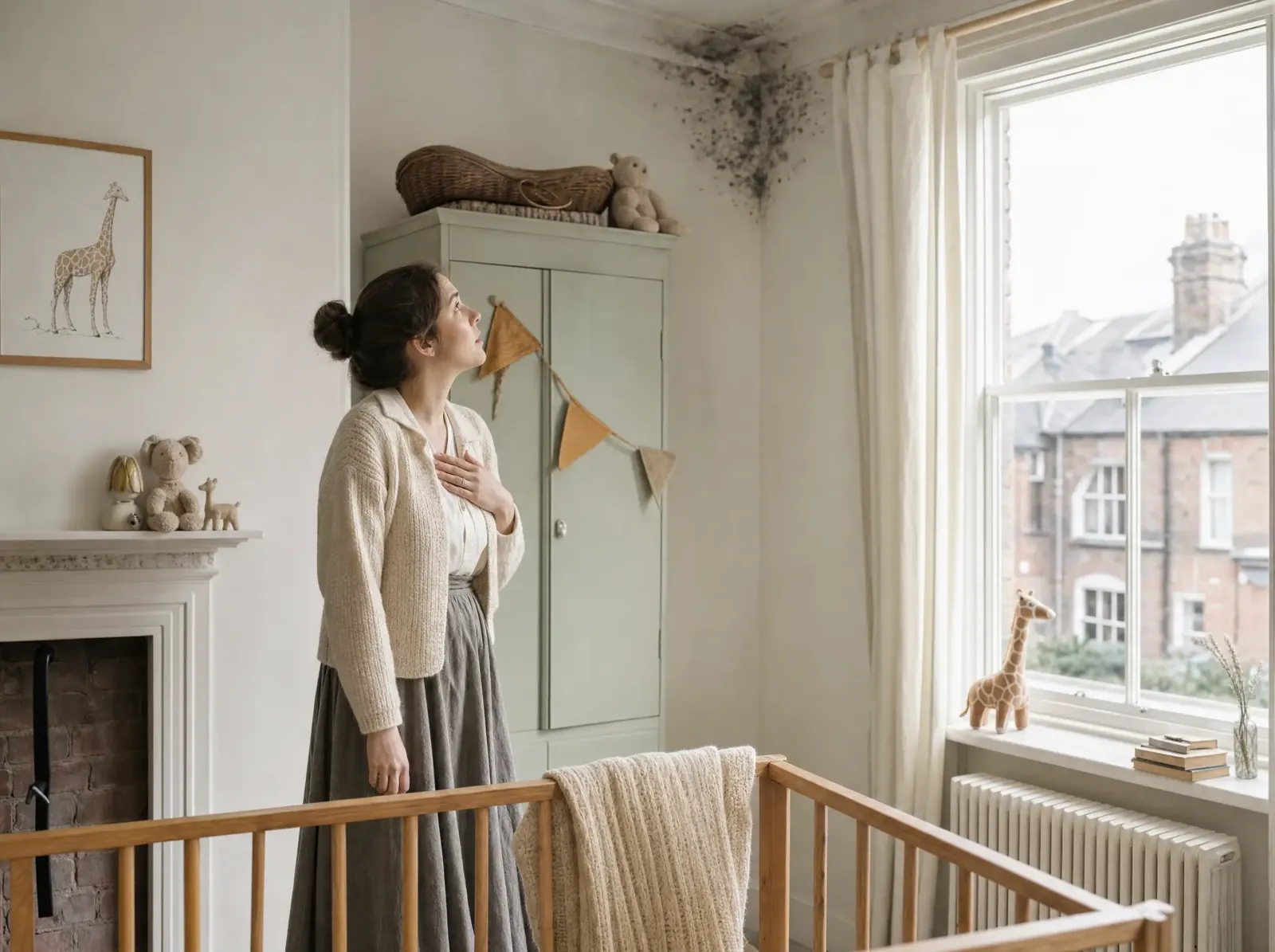
The back addition, the narrow rear wing, usually has three outside walls and sometimes a flat or lean-to roof, so it loses heat on almost every side. It also holds the kitchen and bathroom, which produce the most steam. Cold walls plus moisture make condensation, which is why mould so often starts there.
What are Kings Heath and Moseley terraces usually built like?
Most were built in the late Victorian and Edwardian period with solid brick walls, typically around 225mm thick, laid in lime mortar. A typical layout is a front room with a bay, a middle room, and a back addition with the kitchen downstairs and a bathroom or small bedroom above. Larger villas in Moseley have taller rooms and more original detail.
Many have been modernised over the years with gypsum plaster, cement pointing and sealed windows. Those changes can affect how the walls handle moisture, so I look at them before choosing a system.
How do you insulate a back addition without losing too much space?
Carefully, because the rooms are narrow. A galley kitchen or small bathroom can lose noticeable width if both long walls are insulated thickly. I weigh three things: how cold the wall is, how much space you can spare and how much moisture the room produces.
| Room | Usual approach |
|---|---|
| Back bedroom over the kitchen | Full insulation on outside walls, ventilation checked |
| Bathroom | Thinner build-up, strong extraction, moisture-safe finish |
| Galley kitchen | Best done when the kitchen is refitted, so units go back on the new wall |
Thickness is typically 20mm to 80mm per wall including plaster. Moisture modelling tells me how far I can go safely on each wall.
We are planning a new kitchen. Should we insulate first?
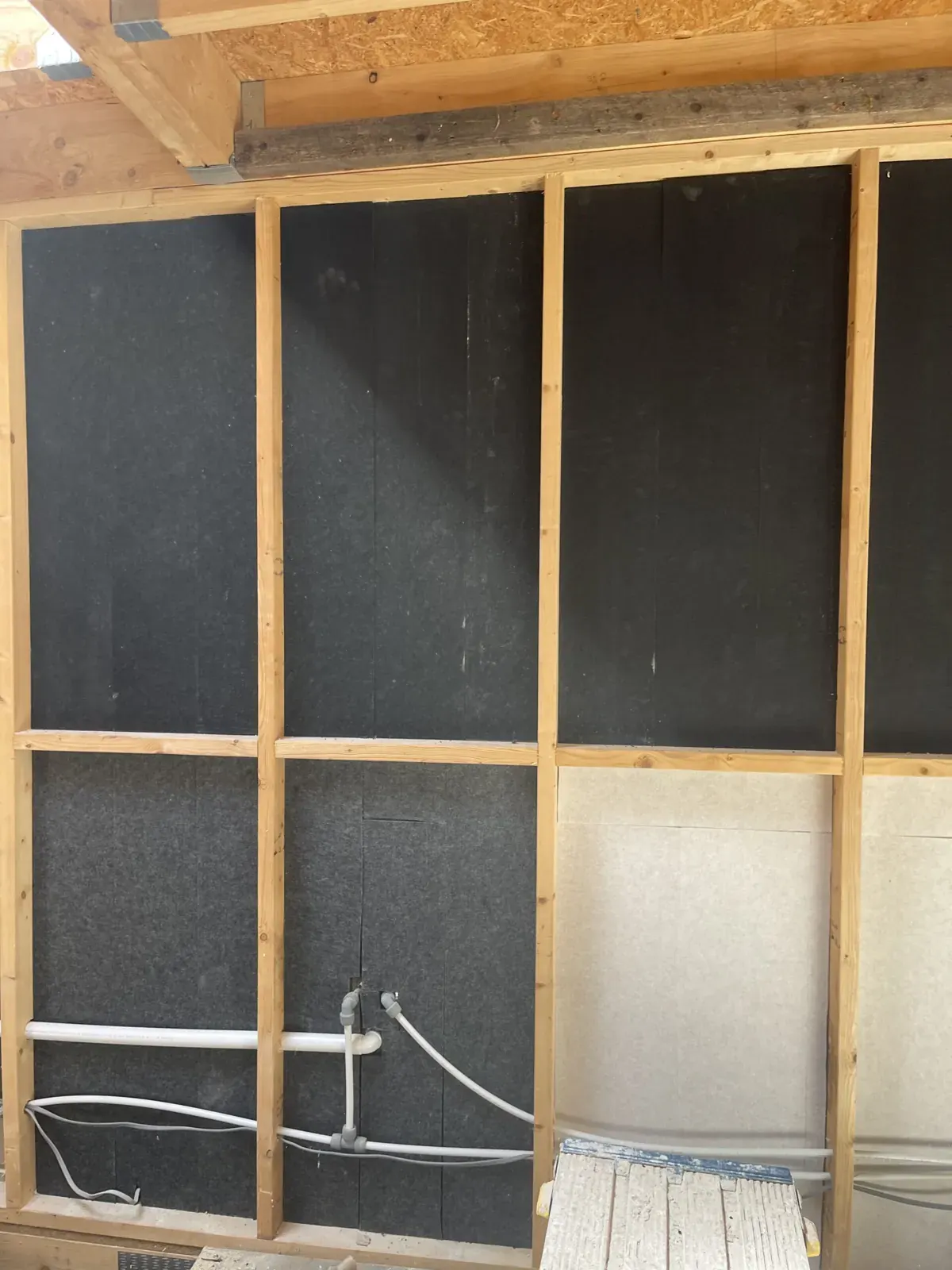
Yes, if you can. Insulating while the old units are out saves taking them off and refitting them later, and the new kitchen is fitted to the new wall line from the start. It is one of the best moments to deal with a cold back addition.
I can work to your kitchen fitter's timetable so the walls are insulated and plastered before they arrive. Ventilation, such as a proper extractor, is worth planning at the same time. The guide to living at home during the work explains how the house stays usable.
Do these houses need lime and breathable insulation?
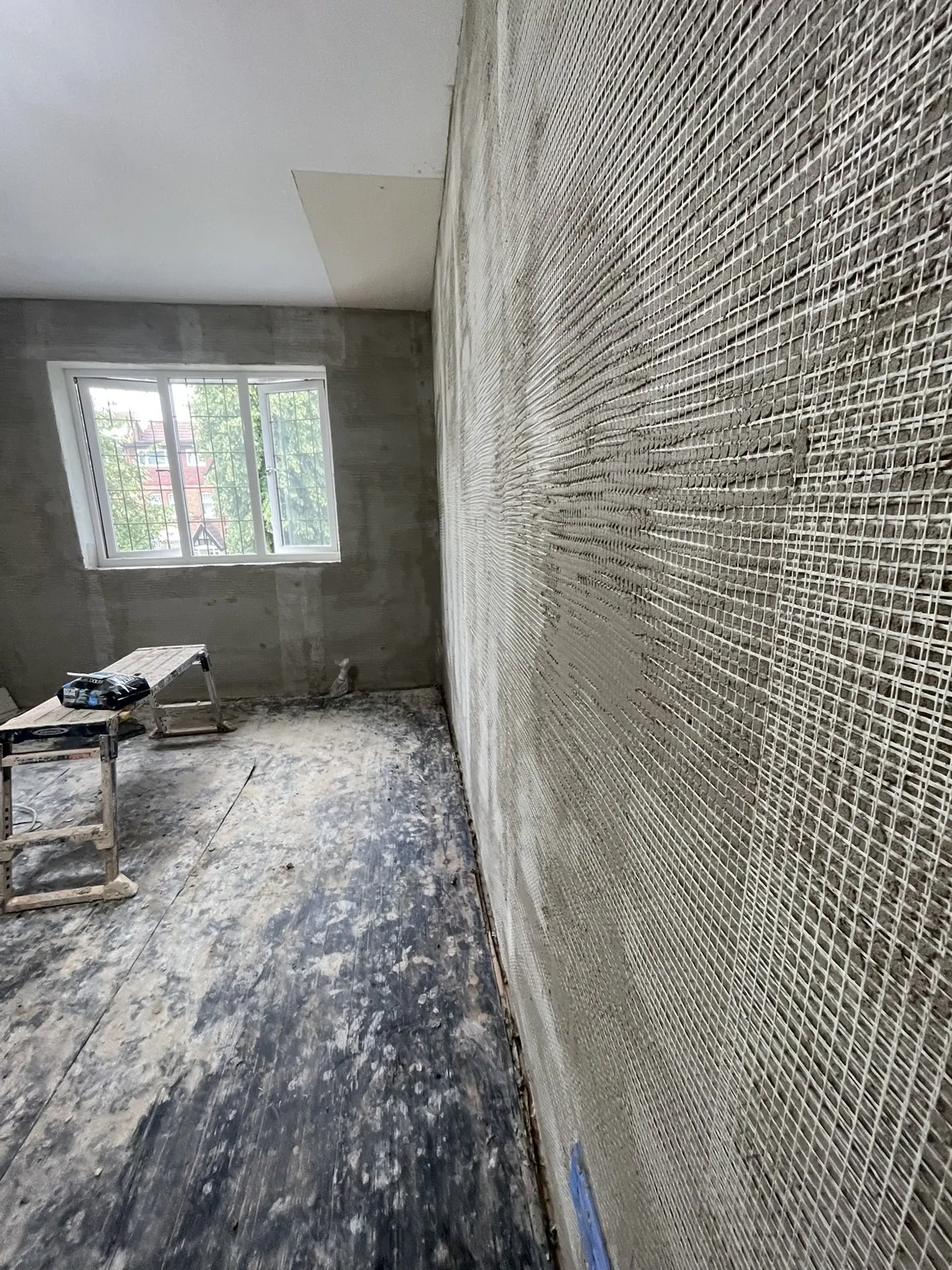
Often, yes. Old solid walls built with lime mortar move moisture through them, and a breathable system lets that continue. My usual choice here is wood fibre boards finished in lime, around £3,000 per wall and about five days. PIR, usually £2,300 to £3,000 over three to four days, can suit a sound, dry wall, but only after a moisture check.
The lime versus gypsum guide and the Victorian home insulation guide explain why I am cautious with impermeable materials on old walls.
Can I insulate inside a house in the Moseley conservation area?
Usually, yes. Internal insulation does not normally need planning permission because the outside of the house does not change. Listed buildings need listed building consent for internal work. In conservation area houses I take extra care with cornices, ceiling roses, picture rails, deep skirtings and sash window reveals, and I finish in lime where the original plaster is lime.
The front bay and the back bedroom both have mould. Which first?
Usually the back bedroom, because the back addition combines the coldest walls with the most moisture. But a Victorian brick bay can also be cold, especially around the angled corners and the window reveals. The Birmingham bay window insulation page explains how brick bays differ from the lightweight bays in 1930s semis.
If mould keeps appearing behind furniture, the guide to mould behind a wardrobe explains why it is often the first sign of a cold wall. Existing mould should be removed safely, with a mask, before any work.
Kings Heath is a long way from Walsall. Do you still come?
Yes. It is usually 40 to 45 minutes from Bloxwich, and I plan surveys in advance so the journey is not an issue. The process is the same as anywhere: free home visit, moisture check, written quotation, pre-start guide and a follow-up call about four weeks after the job.
I also cover Hall Green, Harborne and the rest of Birmingham. See the full process.
Homeowners who called me.
Real reviews from homeowners across the West Midlands, all 5 stars on Google, where you can read every one.
“We had insulation done in our main bedroom, outside wall including bay. From his initial visit, to quotation process and actually doing the work, he was very efficient. It was a pleasure to have Wojtek working in our house.”
“We had our house insulated recently and the difference is honestly amazing. Before, it used to take forever to warm the house up, we’d got to the point where we were even talking about selling because it was just that cold.”
“We’d had black mould forming on our bay window for years and had almost given up trying to clean it off. Nothing we tried ever worked. Then we came across Wojtek at aPlastering.”
“We recently had two rooms insulated by aPlastering, and honestly, they were brilliant from start to finish. They explained everything clearly, the communication was great, and the price was straightforward with no surprises.”
“Our experience with aPlastering was exceptional from start to finish. Wojciech did a thorough survey prior to providing a quote and was crystal clear on what was required. The price was fair for the work required.”
“A very professional and reliable service throughout. From initial enquiry to completion, communication was prompt, with a clear quotation and timeline provided.”
“Excellent professional service, great time keeping, and perfect job. I had insulated plasterboard fitted, soundproof plasterboard and all skimming to a large ground floor, excellent finish throughout and more importantly 3 years in and no cracks.”
“We were let down last minute and he came out to provide a quote the very same day and had our bedroom beautifully plastered the following day, all to an incredibly high standard.”
Free download · 14 pages
Before anyone insulates your walls, ask these 15 questions.
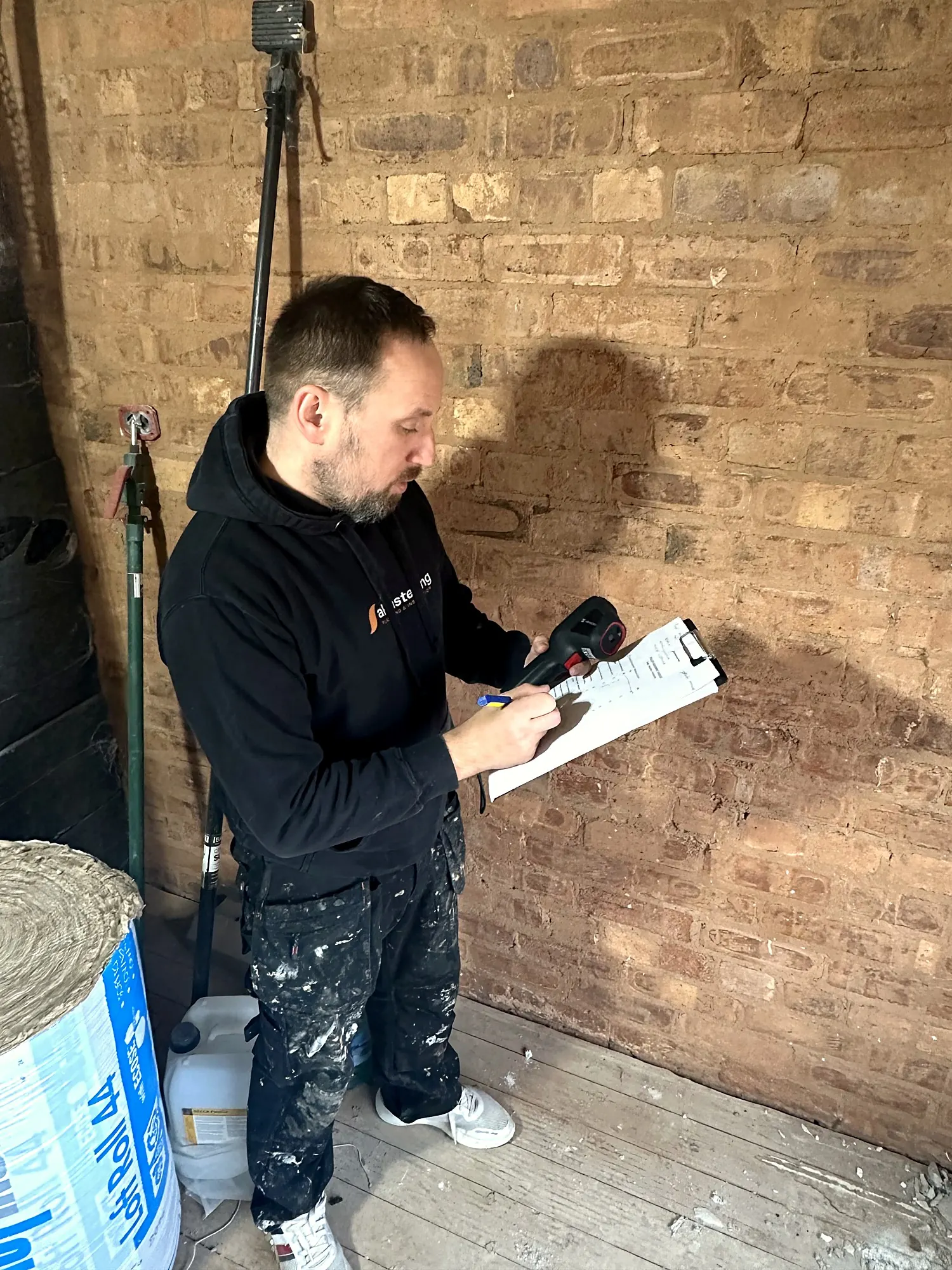
Most of the quality in internal wall insulation ends up hidden behind new plaster. This free buyer's guide from Retrofit Assessor Wojtek Pankowski gives you the questions to ask every installer, what a good answer sounds like and the red flags to watch for.
Get the free guideYour questions, answered.
Anything else, ring me on 07763 789272. Happy to talk it through.
Get a free quoteHow much does it cost to insulate a back addition?
Internal wall insulation starts from about £2,300 per wall. A breathable system is around £3,000 per wall and about five days. A back addition has several short walls and windows, so it is priced wall by wall in a written quotation after a free home visit.
Will I lose too much space in my narrow kitchen?
Typically 20mm to 80mm per wall including plaster. In a galley kitchen I may use a thinner build-up or insulate only the outside wall, and moisture modelling confirms what is safe.
Can you work around a planned kitchen refit?
Yes. It is the best time to insulate a back addition. I can schedule the insulation and plastering before your kitchen fitter arrives.
Do I need permission in the Moseley conservation area?
Internal insulation does not normally need planning permission because the outside is unchanged. Listed buildings need listed building consent for internal work. I flag anything worth checking with the council at the visit.
Is external wall insulation better for a terrace?
On a terrace it changes the street frontage and needs neighbours to join up, and it is often restricted in conservation areas. It can sometimes suit the rear. Internal insulation is often the practical option for the front and the back addition.
Do you remove the mould first?
Yes, existing mould is removed safely, wearing a mask, and the wall is dried before insulation. Bleach alone is not a long-term fix, because the wall stays cold.
You might also need.
Warm up the back of the house, too.
Free, no-obligation quote. I'll come and look at the room, tell you honestly what's going on and give you a written quotation.
- TodayI read your message and call or WhatsApp you back.
- This weekA free home visit at a time that suits you.
- Within daysA clear written quote. No pressure, no chasing.
Wojtek, Retrofit AssessorUsually replies the same day
Tell me what's going on. It takes about a minute.
Get a free quote 07763 789272 Or send photos on WhatsApp